
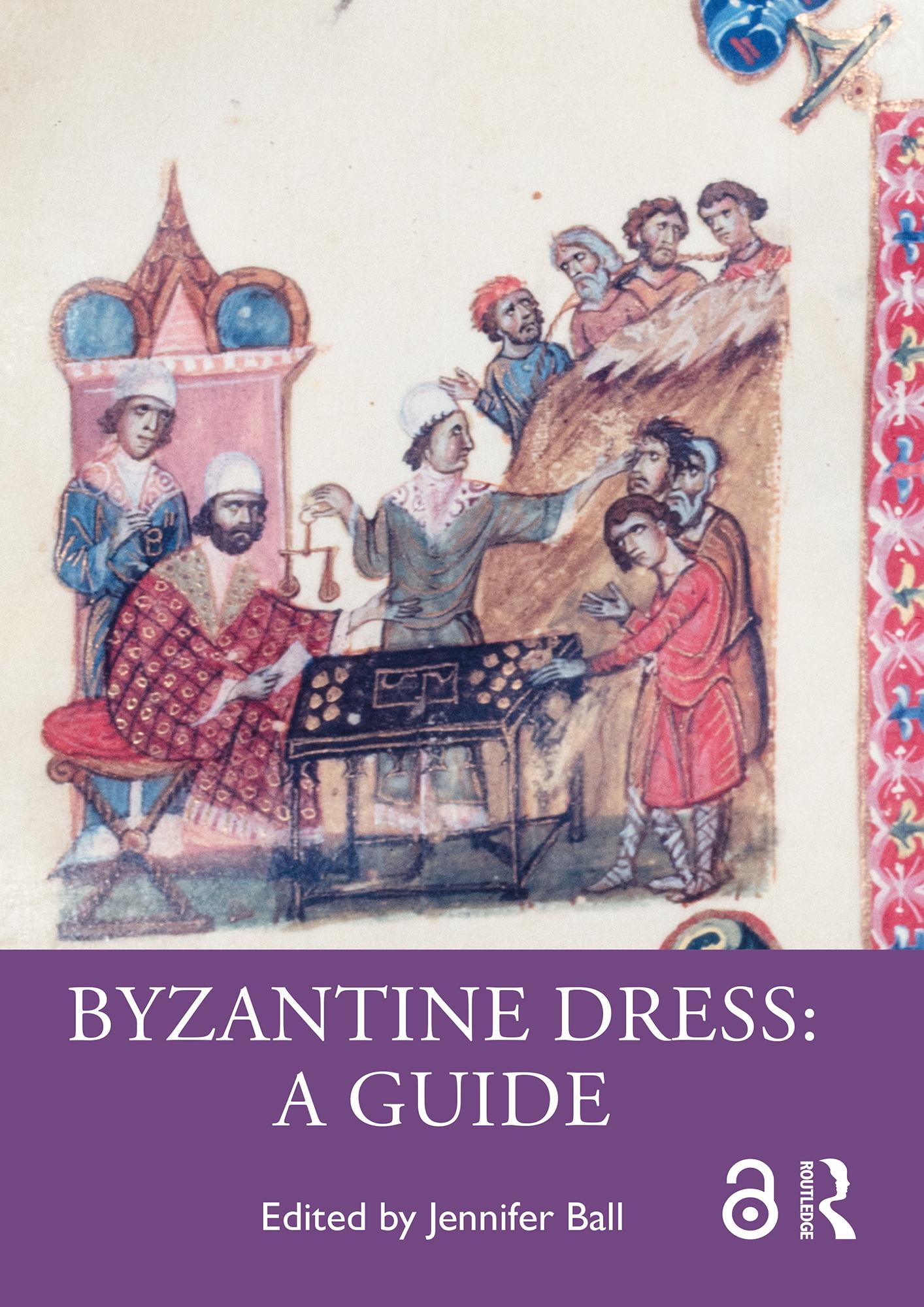
This book offers approaches to the study of Byzantine dress of elites and non-elites, in sacred and secular modes, from the beginning of the Empire in the fourth century until the fifteenth century. Byzantine dress is considered from within and outside of the Empire and examines both artifactual remains as well as emphasizing studies that elucidate Byzantine dress when few or no artifacts exist.
Byzantine Dress: A Guide tackles current conceptual frameworks in the first three chapters and considers identity and sartorial signaling among Byzantines as well as foreigners in images as well as actual items of dress. A second section addresses material considerations, reflecting on construction and its effect on value. The interpretation of archaeological material is analyzed, along with reconstruction and context. Dress as part of rituals—at court, church, and in various ceremonies—is the focus of the third section. The final two chapters bring Byzantine dress into conversation with dress studies more broadly. A discursive chapter argues for a fashion system within the Byzantine Empire, which has been largely seen as pre-dating the notion of fashion. The final chapter concerns the display, interpretation, and conservation of fragmentary material in a museum context.
This book aims toward a general audience new to the subject of Byzantine dress. Specialists in Byzantine studies and dress studies more generally will find the attention to current scholarship and archaeological interpretation invaluable for research, and the book will also appeal to an audience new to the subject of Byzantine dress.
Betal enkelt med kort, Klarna, Apple Pay eller Google Pay. Ikke fornøyd? Du har alltid 14 dagers angrerett. Les mer i våre vilkår. Har du spørsmål, send oss en e-post på hello@memmo.org.
Memmo gjør det enklere å studere – uansett hvor du er i verden. Hos oss samler du pensumbøker og smarte studieverktøy på ett og samme sted: sammendrag, quizer, podkaster og flashcards. Og så Ted, din studiekompis som svarer på alt du lurer på. Over 50 000 studenter studerer allerede her – bygget for at du skal lære raskere og stresse mindre.