
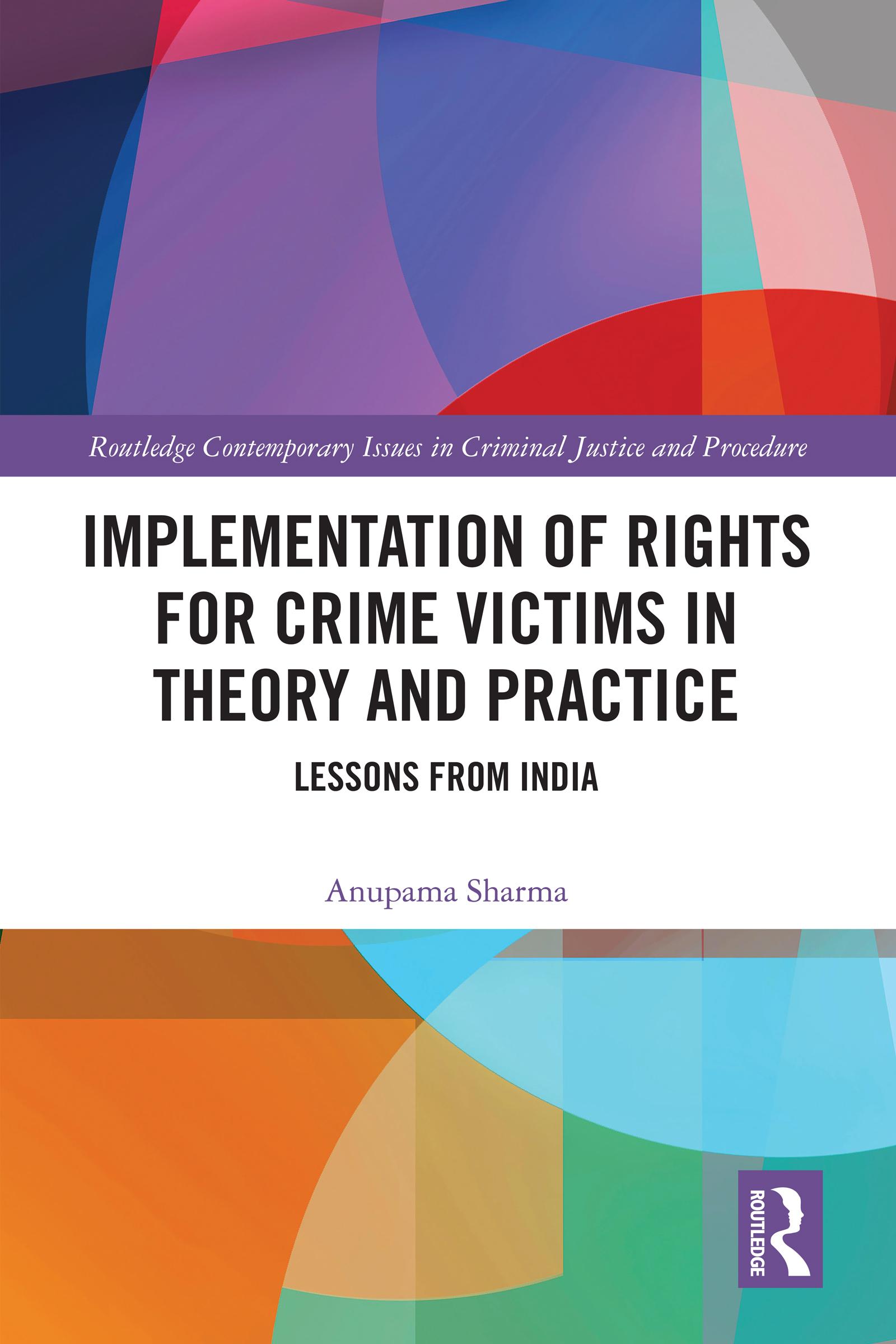
There are many different ways in which victims’ rights can be implemented. The implementation pattern may vary depending on the type of rights a jurisdiction offers and the purposes it seeks to achieve via these rights. However, there are a few basic aspects that remain common to the variation in the implementation patterns across jurisdictions. This book provides a theoretical and practical overview of such implementation patterns, their features and underlying differences. It presents theoretical models capturing the different types of implementations of victims’ rights and the purposes that they can achieve. The book also offers a framework comprising the essential aspects involved in implementation of rights such as drafting and presentation, their visibility and accessibility to victims, enforcement of rights in case of breach, and assessment and evaluation of rights to ensure constant monitoring and improvement in implementation. The framework is tested by a sample case study in New Delhi, India, which showcases how the framework can be molded and applied to assess the existing implementation of victims’ rights and the scope for reform. The book will be of interest to those working in the areas of criminal justice, criminal procedure, victimology and human rights.
Betal enkelt med kort, Klarna, Apple Pay eller Google Pay. Ikke fornøyd? Du har alltid 14 dagers angrerett. Les mer i våre vilkår. Har du spørsmål, send oss en e-post på hello@memmo.org.
Memmo gjør det enklere å studere – uansett hvor du er i verden. Hos oss samler du pensumbøker og smarte studieverktøy på ett og samme sted: sammendrag, quizer, podkaster og flashcards. Og så Ted, din studiekompis som svarer på alt du lurer på. Over 50 000 studenter studerer allerede her – bygget for at du skal lære raskere og stresse mindre.
Du vil kanskje også like
Kjøp boken0