
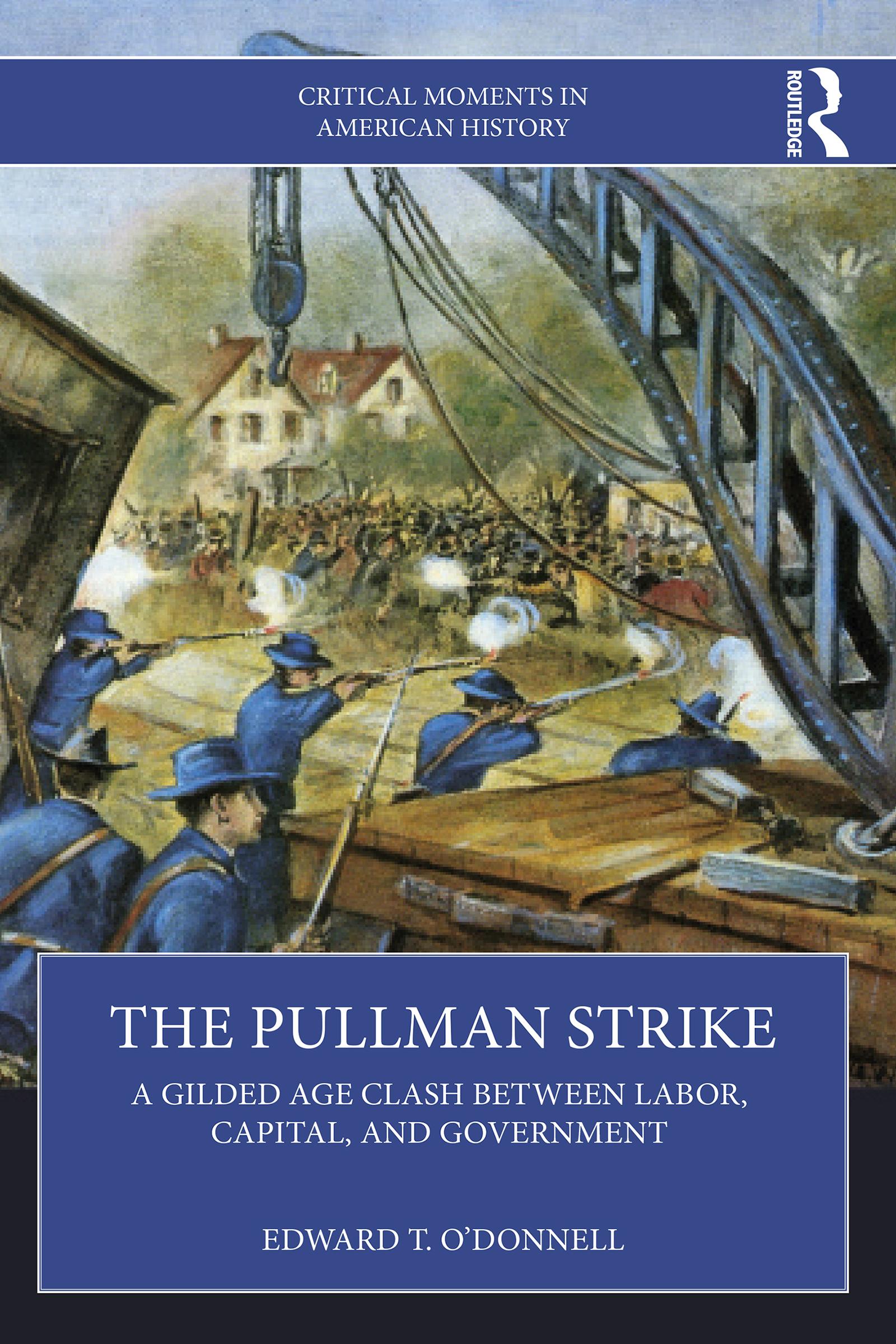
This book examines the 1894 Pullman Strike, one of the most consequential clashes between labor and capital that paralyzed America’s railroad system.
The Gilded Age saw rapid economic growth, expansion of industrialization, and real wage growth. Yet between 1800 and 1900 there were nearly 37,000 strikes, and the Pullman Strike reflected the broad dissatisfaction and unrest among American workers. The book consists of an engaging narrative, analysis of existing scholarship, sidebars, and primary source documents which collectively answer why the Pullman Strike is so critical to the American Experience: it exposed the limits of paternalistic capitalism, revealed the extraordinary power of big business, introduced the use of injunctions to stop strikes, and launched the career of the iconic labor leader Eugene Debs. Overall, it reveals what struggles workers encountered when forming unions, the changing role of government regarding the economy, and the threat that unchecked big business posed to democracy.
The Pullman Strike is useful for all undergraduate students who study the Gilded Age, industrial relations, and labor, urban, and economic history in the United States.
Betal enkelt med kort, Klarna, Apple Pay eller Google Pay. Ikke fornøyd? Du har alltid 14 dagers angrerett. Les mer i våre vilkår. Har du spørsmål, send oss en e-post på hello@memmo.org.
Memmo gjør det enklere å studere – uansett hvor du er i verden. Hos oss samler du pensumbøker og smarte studieverktøy på ett og samme sted: sammendrag, quizer, podkaster og flashcards. Og så Ted, din studiekompis som svarer på alt du lurer på. Over 50 000 studenter studerer allerede her – bygget for at du skal lære raskere og stresse mindre.