
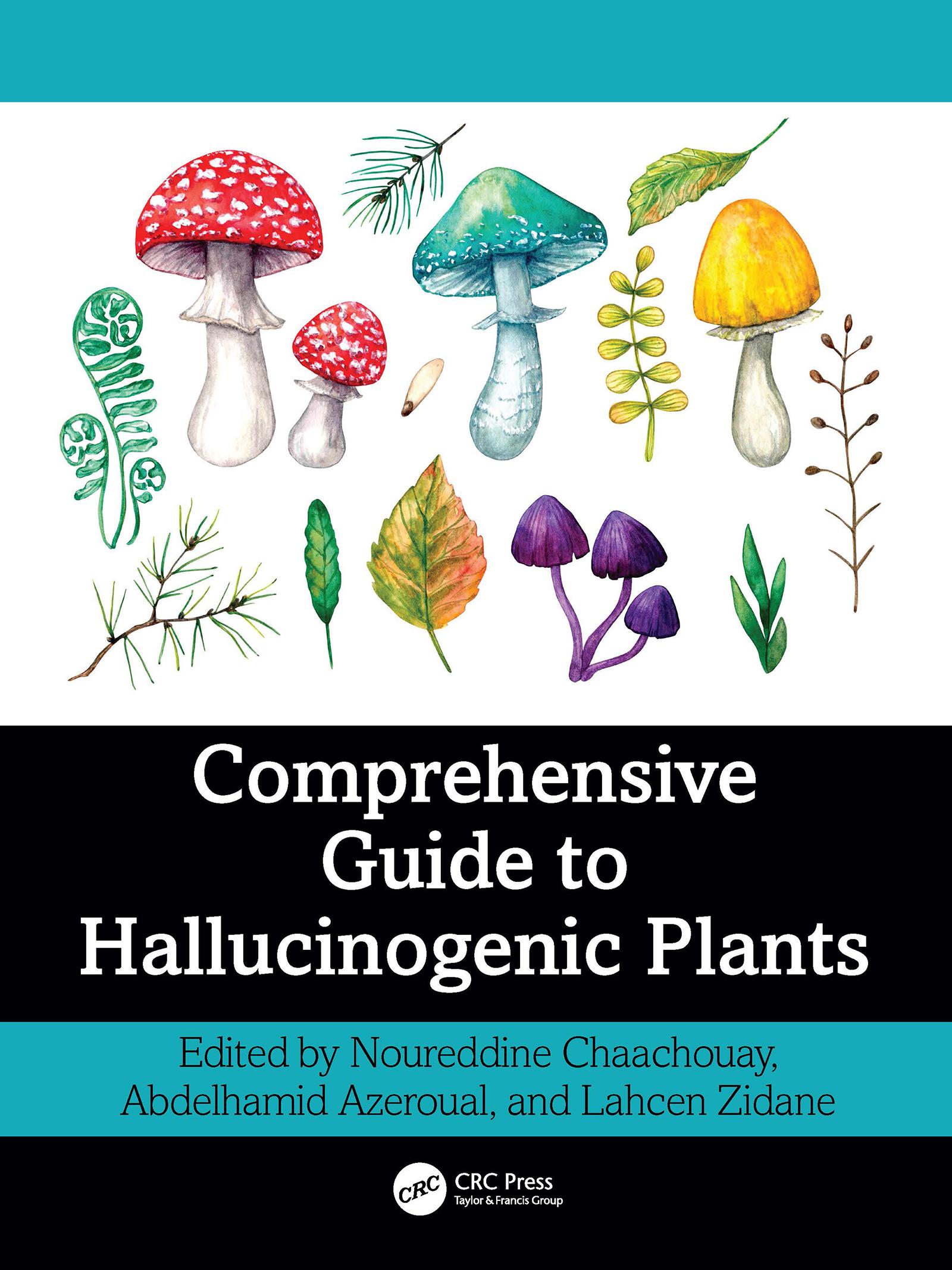
Hallucinogens have been traditionally used to encourage spiritual growth, heighten perception, inspire personal development, or expand reality. Comprehensive Guide to Hallucinogenic Plants focuses on ethnobotanical aspects of hallucinogenic plant species, featuring history on how they were used in ancient societies, identifying chemical compounds, and explaining modern medicinal uses, as well as conservation initiatives. The book emphasizes the importance of understanding the cultural, countrywide, environmental, and scientific importance of these medicinal plants.
Some of the 50 plants covered in this work include: ayahuasca, ginger, kanna, dream herb, iboga, peyote, canary broom, coral tree, catnip, wild rue, kava, mandrake, and golden angel's trumpet. Each chapter includes information on historical plant use and identification of chemical compounds, and explains modern medicinal uses. The text highlights the importance of studying, evaluating, and utilizing these plants not in isolation, but from a global perspective.
Comprehensive Guide to Hallucinogenic Plants appeals to plant scientists, botanists, ethnobotanists, pharmacologists, and those with an interest in alternative or herbal medicine.
Betal enkelt med kort, Klarna, Apple Pay eller Google Pay. Ikke fornøyd? Du har alltid 14 dagers angrerett. Les mer i våre vilkår. Har du spørsmål, send oss en e-post på hello@memmo.org.
Memmo gjør det enklere å studere – uansett hvor du er i verden. Hos oss samler du pensumbøker og smarte studieverktøy på ett og samme sted: sammendrag, quizer, podkaster og flashcards. Og så Ted, din studiekompis som svarer på alt du lurer på. Over 50 000 studenter studerer allerede her – bygget for at du skal lære raskere og stresse mindre.