
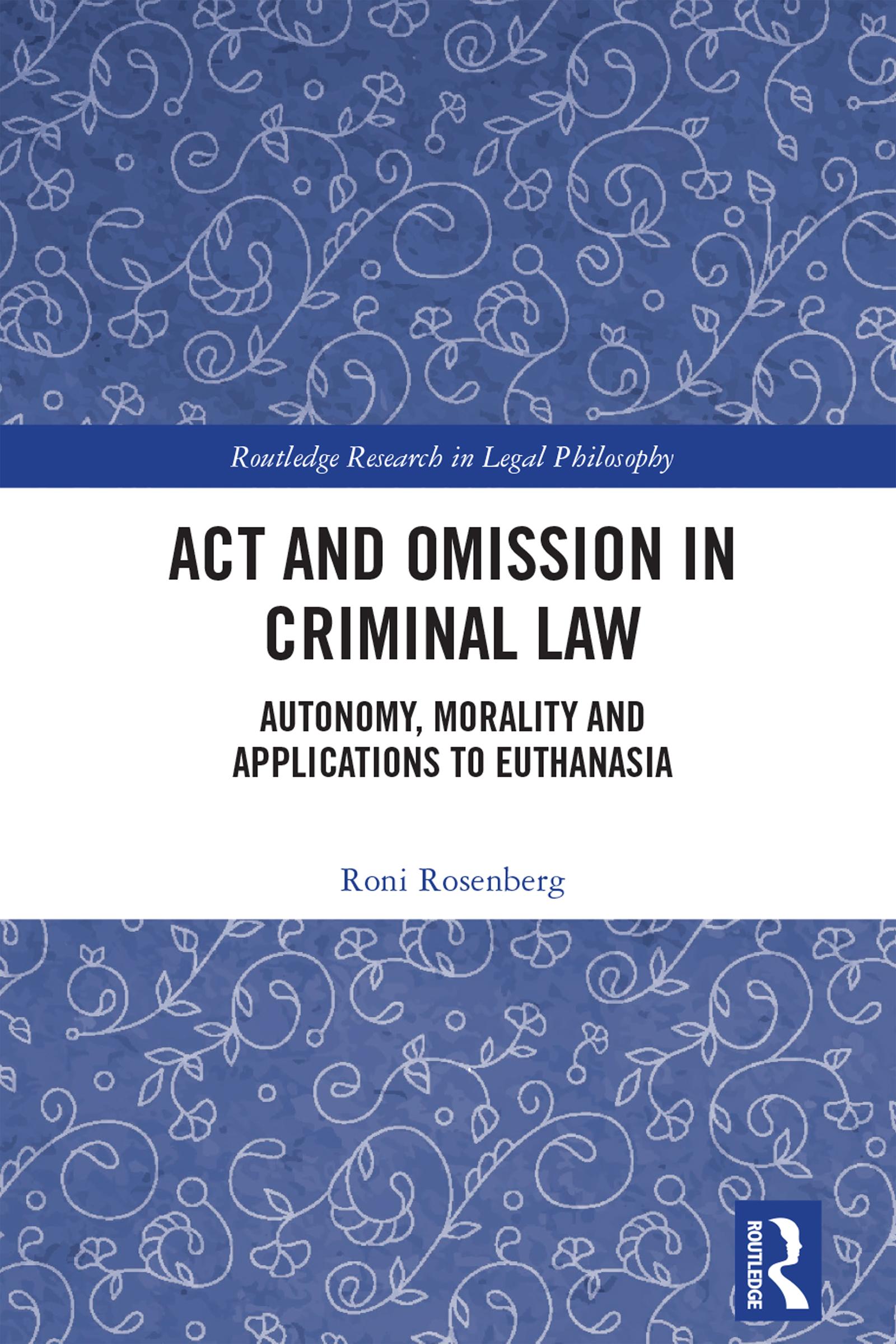
This book offers an innovative perspective on the critical distinction between acts and omissions in criminal law, a distinction that runs like a defining thread through all types of criminal offenses.
While any act that positively causes a prohibited harm is sufficient for a conviction, an omission that causes the very same harm warrants a conviction only when there is a legal duty to act. This fundamental distinction between acts and omissions is not just relevant to criminal law, but it is also deeply rooted in our moral thinking. Thus, it is commonly argued that the difference between acts and omissions is also applicable to the intuitive moral distinction between active euthanasia, forbidden in most countries, and passive euthanasia, permitted in many countries under certain circumstances. Hence, the significance of this book is threefold: First, it offers a comprehensive, coherent, and systematic discussion of the intersections between the philosophical-moral and the legal-criminal aspects of this fundamental topic. Second, it offers a novel rationale for the distinction between acts and omissions, based on the principle of autonomy. Finally, it demonstrates the influences of the theoretical discussion, on the most significant practical questions.
This book will be of interest to researchers, academics and policy-makers working in the areas of criminal law, moral philosophy, and bioethics.
Betal enkelt med kort, Klarna, Apple Pay eller Google Pay. Ikke fornøyd? Du har alltid 14 dagers angrerett. Les mer i våre vilkår. Har du spørsmål, send oss en e-post på hello@memmo.org.
Memmo gjør det enklere å studere – uansett hvor du er i verden. Hos oss samler du pensumbøker og smarte studieverktøy på ett og samme sted: sammendrag, quizer, podkaster og flashcards. Og så Ted, din studiekompis som svarer på alt du lurer på. Over 50 000 studenter studerer allerede her – bygget for at du skal lære raskere og stresse mindre.