
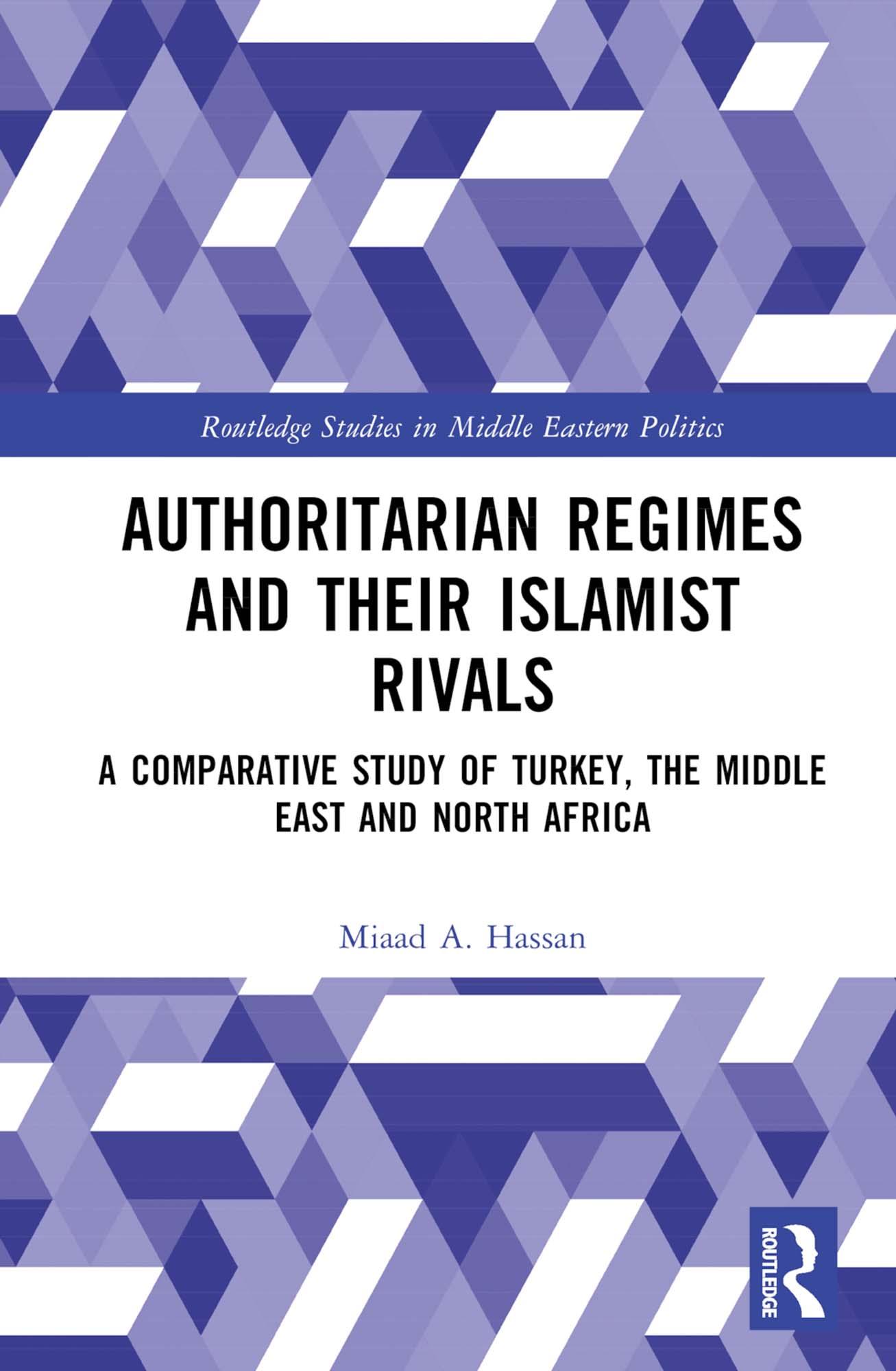
This book explores the political trajectories of various countries in the Middle East and North Africa (MENA) region, tracing the shifts in party systems and regime transitions along a model-like trajectory that spans from revolutionism to authoritarianism and electoral Islamism.
Adopting a comparative perspective, this book places patterns of party formation and developments in authoritarian and semi-authoritarian systems within a historical and regional context. It argues that during distinct periods, such as the prevalence of nationalism in the 1920s pre-independence era, the flourishing of pan-Arabism in the 1950s, and the rise of Islamism in the 1970s, ideologies have played a pivotal role in shaping the political landscape. While secular nationalism initially wielded a significant influence on political, social, and cultural change in the MENA region, the author argues that political Islam emerged as its primary rival. Even as secular leaders in MENA guided their republics through top-down reforms to establish a unified national ideology, many (though not all) eventually incorporated Islam to address popular demands. This book’s key contribution lies in conceptualizing Islamism as a form of dialectical ideology.
This book offers an in-depth analysis of politics, party systems, and regime transitions in the MENA region. It is poised to resonate with students and researchers in political science, history, and Middle East studies.
Betal enkelt med kort, Klarna, Apple Pay eller Google Pay. Ikke fornøyd? Du har alltid 14 dagers angrerett. Les mer i våre vilkår. Har du spørsmål, send oss en e-post på hello@memmo.org.
Memmo gjør det enklere å studere – uansett hvor du er i verden. Hos oss samler du pensumbøker og smarte studieverktøy på ett og samme sted: sammendrag, quizer, podkaster og flashcards. Og så Ted, din studiekompis som svarer på alt du lurer på. Over 50 000 studenter studerer allerede her – bygget for at du skal lære raskere og stresse mindre.