
May 11, 1997, was a watershed moment in the history of artificial intelligence (AI): the IBM supercomputer chess engine, Deep Blue, beat the world Chess champion, Garry Kasparov. It was the first time a machine had triumphed over a human player in a Chess tournament. Fast forward 19 years to May 9, 2016, DeepMind’s AlphaGo beat the world Go champion Lee Sedol. AI again stole the spotlight and generated a media frenzy. This time, a new type of AI algorithm, namely machine learning (ML) was the driving force behind the game strategies.
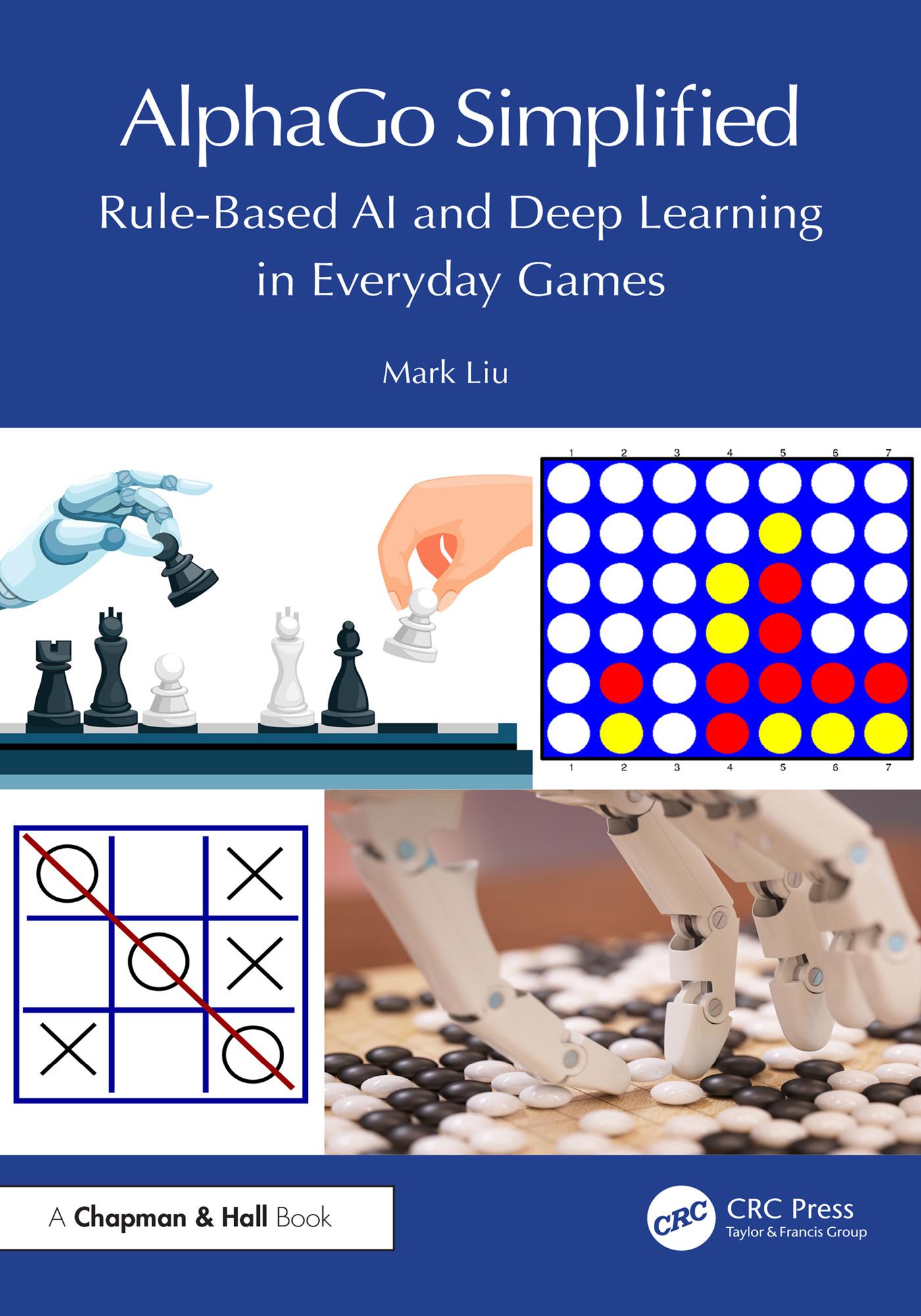
What exactly is ML? How is it related to AI? Why is deep learning (DL) so popular these days? This book explains how traditional rule-based AI and ML work and how they can be implemented in everyday games such as Last Coin Standing, Tic Tac Toe, or Connect Four. Game rules in these three games are easy to implement. As a result, readers will learn rule-based AI, deep reinforcement learning, and more importantly, how to combine the two to create powerful game strategies (the whole is indeed greater than the sum of its parts) without getting bogged down in complicated game rules.
Implementing rule-based AI and ML in these straightforward games is quick and not computationally intensive. Consequently, game strategies can be trained in mere minutes or hours without requiring GPU training or supercomputing facilities, showcasing AI's ability to achieve superhuman performance in these games. More importantly, readers will gain a thorough understanding of the principles behind rule-based AI, such as the MiniMax algorithm, alpha-beta pruning, and Monte Carlo Tree Search (MCTS), and how to integrate them with cutting-edge ML techniques like convolutional neural networks and deep reinforcement learning to apply them in their own business fields and tackle real-world challenges.
Written with clarity from the ground up, this book appeals to both general readers and industry professionals who seek to learn about rule-based AI and deep reinforcement learning, as well as students and educators in computer science and programming courses.
Betal enkelt med kort, Klarna, Apple Pay eller Google Pay. Ikke fornøyd? Du har alltid 14 dagers angrerett. Les mer i våre vilkår. Har du spørsmål, send oss en e-post på hello@memmo.org.
Memmo gjør det enklere å studere – uansett hvor du er i verden. Hos oss samler du pensumbøker og smarte studieverktøy på ett og samme sted: sammendrag, quizer, podkaster og flashcards. Og så Ted, din studiekompis som svarer på alt du lurer på. Over 50 000 studenter studerer allerede her – bygget for at du skal lære raskere og stresse mindre.