
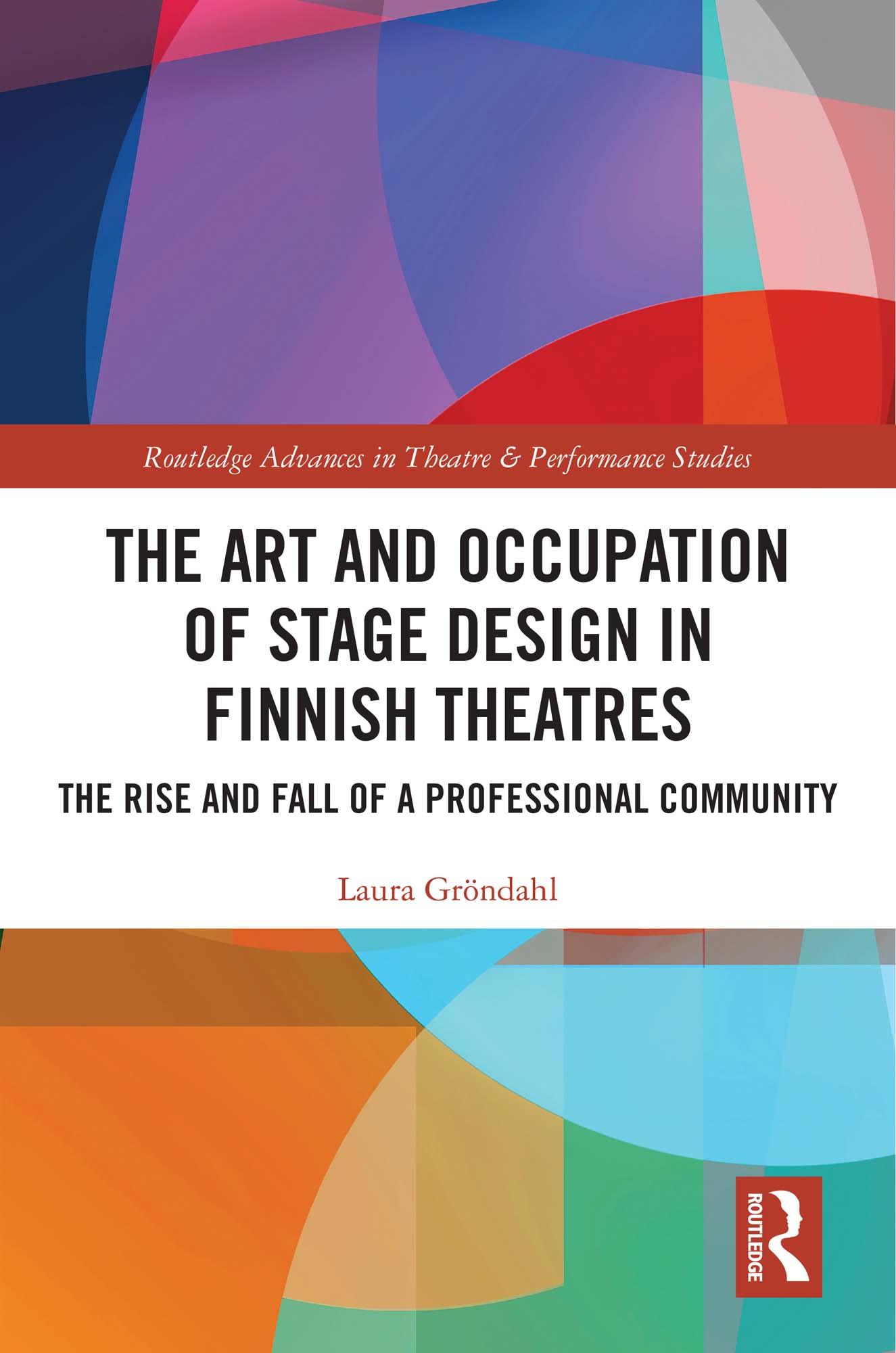
This study explores the formation, establishment, expansion, and disintegration of stage design as a modern profession and a recognized artform in Finnish theatres.
Drawing on oral or written recollections and thoughts of stage designers from different decades, the author asks how their artistic agencies, occupational identities, and theoretical self-understanding have been constituted. She analyses Finnish theatre history from new perspectives by shifting the focus from finished performances to largely unknown practices behind the scenes. This book examines the cultural institutions that have constituted the stage designers’ role and position, like the professional city theatre system, the craft union, and education. This research shows how modern and postmodern scenographic innovations have been assimilated to local contexts, and how material and cultural circumstances have reshaped the artistic practices. Without bypassing canonical trendsetters or hegemonic cultural mindsets, the focus is directed on the everyday grassroot level of stage design practices. Personal interviews with over 20 designers make visible an ample repertoire of unwritten knowledge stored in habitual ways of working and dealing creatively with the complex system of theatre making.
This book will be of great interest to students and scholars in theatre and performance studies with a focus on scenography.
Betal enkelt med kort, Klarna, Apple Pay eller Google Pay. Ikke fornøyd? Du har alltid 14 dagers angrerett. Les mer i våre vilkår. Har du spørsmål, send oss en e-post på hello@memmo.org.
Memmo gjør det enklere å studere – uansett hvor du er i verden. Hos oss samler du pensumbøker og smarte studieverktøy på ett og samme sted: sammendrag, quizer, podkaster og flashcards. Og så Ted, din studiekompis som svarer på alt du lurer på. Over 50 000 studenter studerer allerede her – bygget for at du skal lære raskere og stresse mindre.