
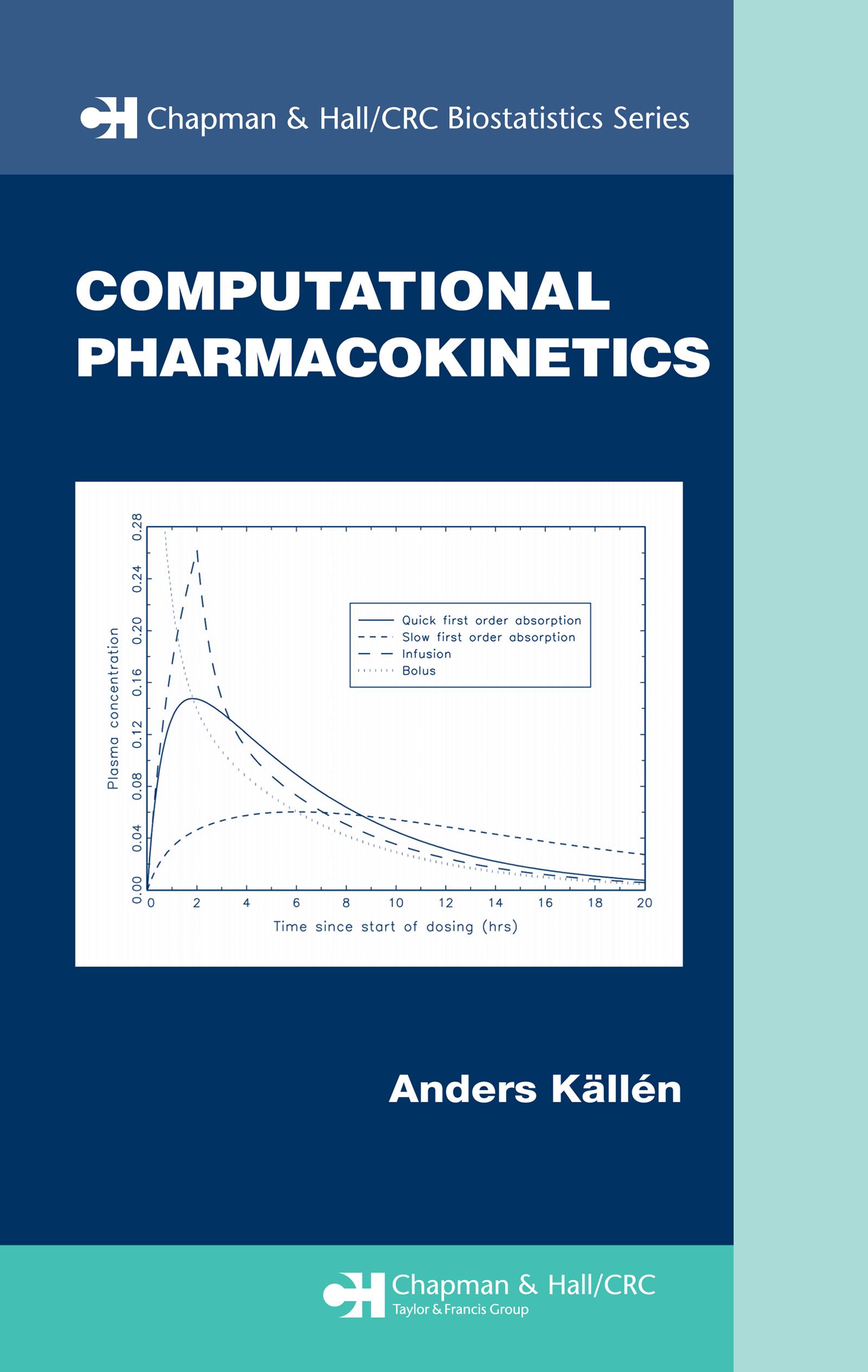
Being that pharmacokinetics (PK) is the study of how the body handles various substances, it is not surprising that PK plays an important role in the early development of new drugs. However, the clinical research community widely believes that mathematics in some way blurs the true meaning of PK. Demonstrating that quite the opposite is true, Computational Pharmacokinetics outlines the fundamental concepts and models of PK from a mathematical perspective based on clinically relevant parameters.
After an introductory chapter, the book presents a noncompartmental approach to PK and discusses the numerical analysis of PK data, including a description of an absorption process through numerical deconvolution. The author then builds a simple physiological model to better understand PK volumes and compares this model to other methods. The book also introduces compartmental models, discusses their limitations, and creates a general-purpose type of model. The final chapter looks at the relationship between drug concentration and effect, known as PK/pharmacodynamics (PD) modeling.
With both a solid discussion of theory and the use of practical examples, this book will enable readers to thoroughly grasp the computational factors of PK modeling.
Betal enkelt med kort, Klarna, Apple Pay eller Google Pay. Ikke fornøyd? Du har alltid 14 dagers angrerett. Les mer i våre vilkår. Har du spørsmål, send oss en e-post på hello@memmo.org.
Memmo gjør det enklere å studere – uansett hvor du er i verden. Hos oss samler du pensumbøker og smarte studieverktøy på ett og samme sted: sammendrag, quizer, podkaster og flashcards. Og så Ted, din studiekompis som svarer på alt du lurer på. Over 50 000 studenter studerer allerede her – bygget for at du skal lære raskere og stresse mindre.