
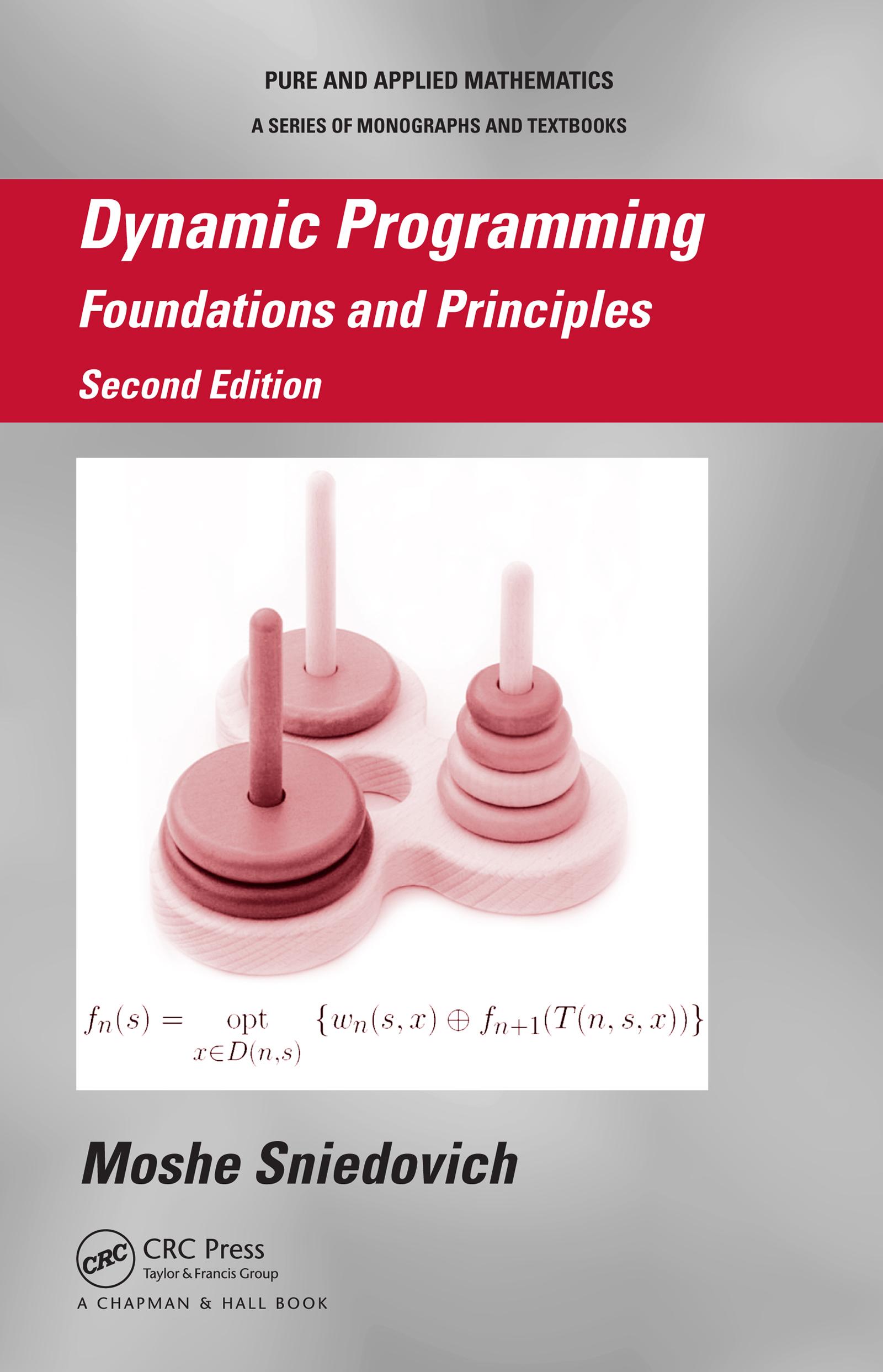
Incorporating a number of the author’s recent ideas and examples, Dynamic Programming: Foundations and Principles, Second Edition presents a comprehensive and rigorous treatment of dynamic programming. The author emphasizes the crucial role that modeling plays in understanding this area. He also shows how Dijkstra’s algorithm is an excellent example of a dynamic programming algorithm, despite the impression given by the computer science literature.
New to the Second Edition
- Expanded discussions of sequential decision models and the role of the state variable in modeling
- A new chapter on forward dynamic programming models
- A new chapter on the Push method that gives a dynamic programming perspective on Dijkstra’s algorithm for the shortest path problem
- A new appendix on the Corridor method
Taking into account recent developments in dynamic programming, this edition continues to provide a systematic, formal outline of Bellman’s approach to dynamic programming. It looks at dynamic programming as a problem-solving methodology, identifying its constituent components and explaining its theoretical basis for tackling problems.
Betal enkelt med kort, Klarna, Apple Pay eller Google Pay. Ikke fornøyd? Du har alltid 14 dagers angrerett. Les mer i våre vilkår. Har du spørsmål, send oss en e-post på hello@memmo.org.
Memmo gjør det enklere å studere – uansett hvor du er i verden. Hos oss samler du pensumbøker og smarte studieverktøy på ett og samme sted: sammendrag, quizer, podkaster og flashcards. Og så Ted, din studiekompis som svarer på alt du lurer på. Over 50 000 studenter studerer allerede her – bygget for at du skal lære raskere og stresse mindre.