
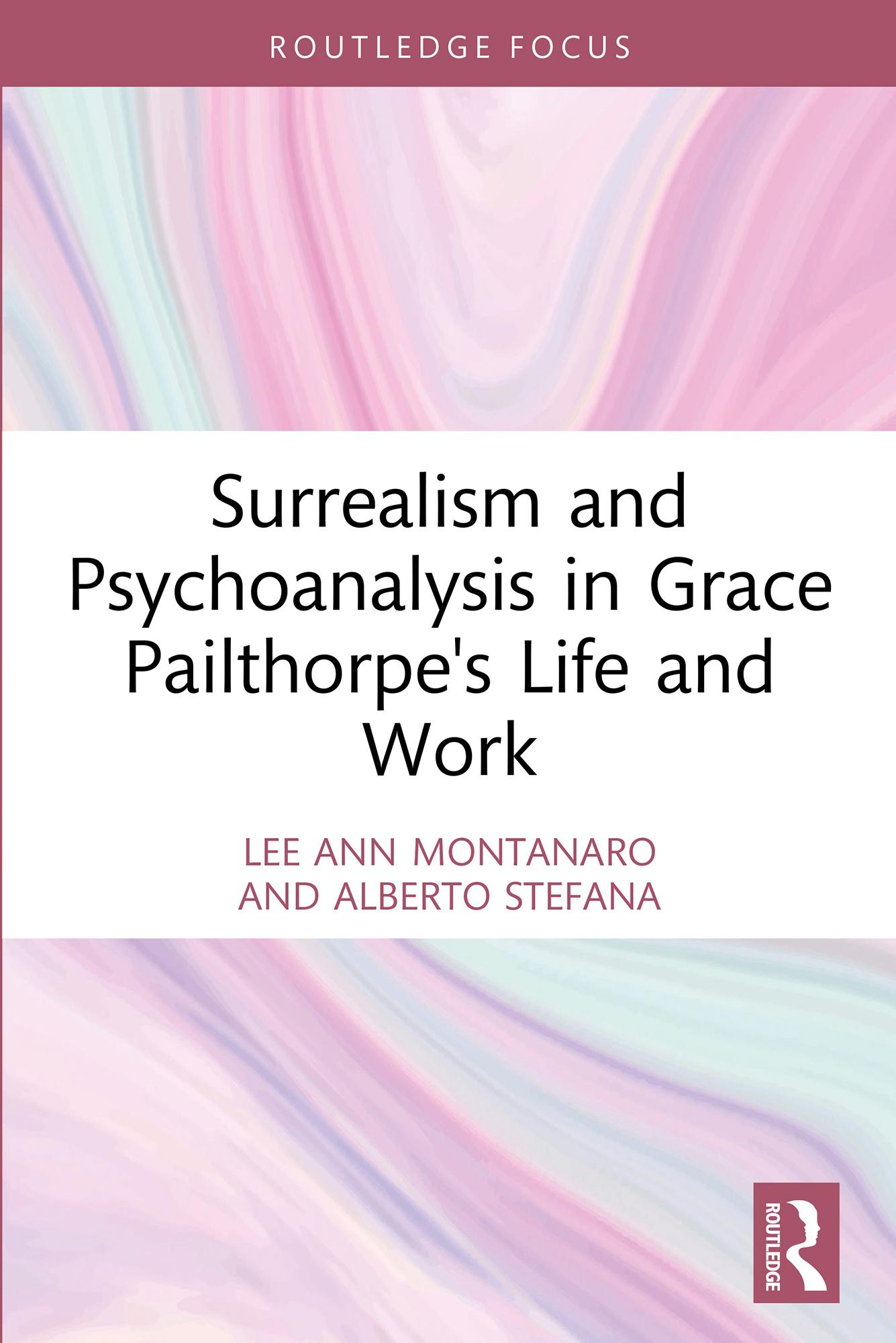
This book outlines the life and intellectual thought of the English surrealist artist and psychoanalyst, Dr Grace Pailthorpe (1883–1971). It gathers her published and unpublished writings, providing an in-depth study of the importance of Surrealism in her work and legacy.
Pailthorpe’s theoretical understanding of the psyche informed her approach to art, setting her work apart from other Surrealist artists by unifying artistic, scientific, and therapeutic aims. Pailthorpe considered Surrealism to be a method of investigation into unconscious mental life and believed that it was essential that the repressed part of our minds should find expression. Her theories were influenced by personal and professional experiences such as her work with female offenders, her psychoanalytic training, and her research project with Reuben Mednikoff. By bringing her artistic and theoretical work to light, Montanaro and Stefana reassert Pailthorpe’s significance to the histories of both psychoanalysis and Surrealism, rendering the cross-disciplinary relevance of her work accessible to a contemporary audience.
This book is a rich resource for scholars and students interested in psychoanalysis and art history and provides an invaluable case study for the continuing significance of visual artistic practices to clinical work.
Betal enkelt med kort, Klarna, Apple Pay eller Google Pay. Ikke fornøyd? Du har alltid 14 dagers angrerett. Les mer i våre vilkår. Har du spørsmål, send oss en e-post på hello@memmo.org.
Memmo gjør det enklere å studere – uansett hvor du er i verden. Hos oss samler du pensumbøker og smarte studieverktøy på ett og samme sted: sammendrag, quizer, podkaster og flashcards. Og så Ted, din studiekompis som svarer på alt du lurer på. Over 50 000 studenter studerer allerede her – bygget for at du skal lære raskere og stresse mindre.