
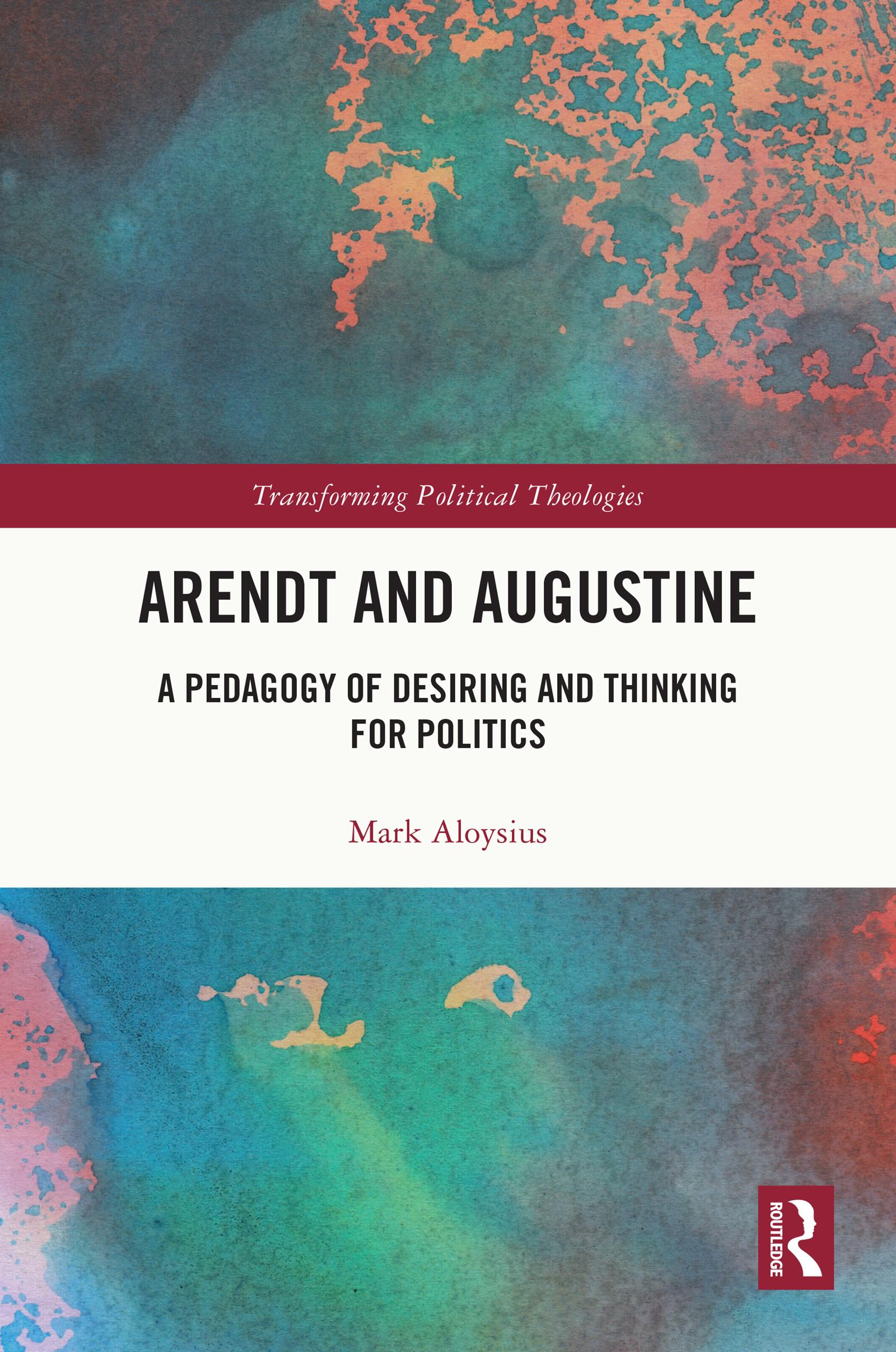
This book addresses a lacuna in scholarship concerning Hannah Arendt’s Augustinian heritage that has predominantly focused on her early work. It de-canonises the sources that political theology has appealed to by shifting the interpretive focus to her mature treatment in The Life of the Mind. Arendt’s initial criticism of Augustinian desiring is that it generates 'worldlessness'. In her later works, Arendt develops a more nuanced reading of the movements of thinking, desiring, and loving in her engagement with Augustine. This study attends to these movements and inspects the spatio-temporal framework which structure Arendt’s conception of the political. The author assesses the claim that Arendt’s conception of the political is drawn from a pedagogy of desiring and thinking from Augustine severed from his mystagogy. Although respecting the method of political theory, the author contends that Arendt’s severing of Augustinian pedagogy from mystagogy brings her to an insurmountable aporia. Instead, the author embeds these pedagogical practices within Augustine’s theology and suggests how that aporia might be overcome and used to develop a mystagogy for contemporary political life. The book will be of particular interest to scholars of political theology, as well as political theory, and political philosophy.
Betal enkelt med kort, Klarna, Apple Pay eller Google Pay. Ikke fornøyd? Du har alltid 14 dagers angrerett. Les mer i våre vilkår. Har du spørsmål, send oss en e-post på hello@memmo.org.
Memmo gjør det enklere å studere – uansett hvor du er i verden. Hos oss samler du pensumbøker og smarte studieverktøy på ett og samme sted: sammendrag, quizer, podkaster og flashcards. Og så Ted, din studiekompis som svarer på alt du lurer på. Over 50 000 studenter studerer allerede her – bygget for at du skal lære raskere og stresse mindre.