
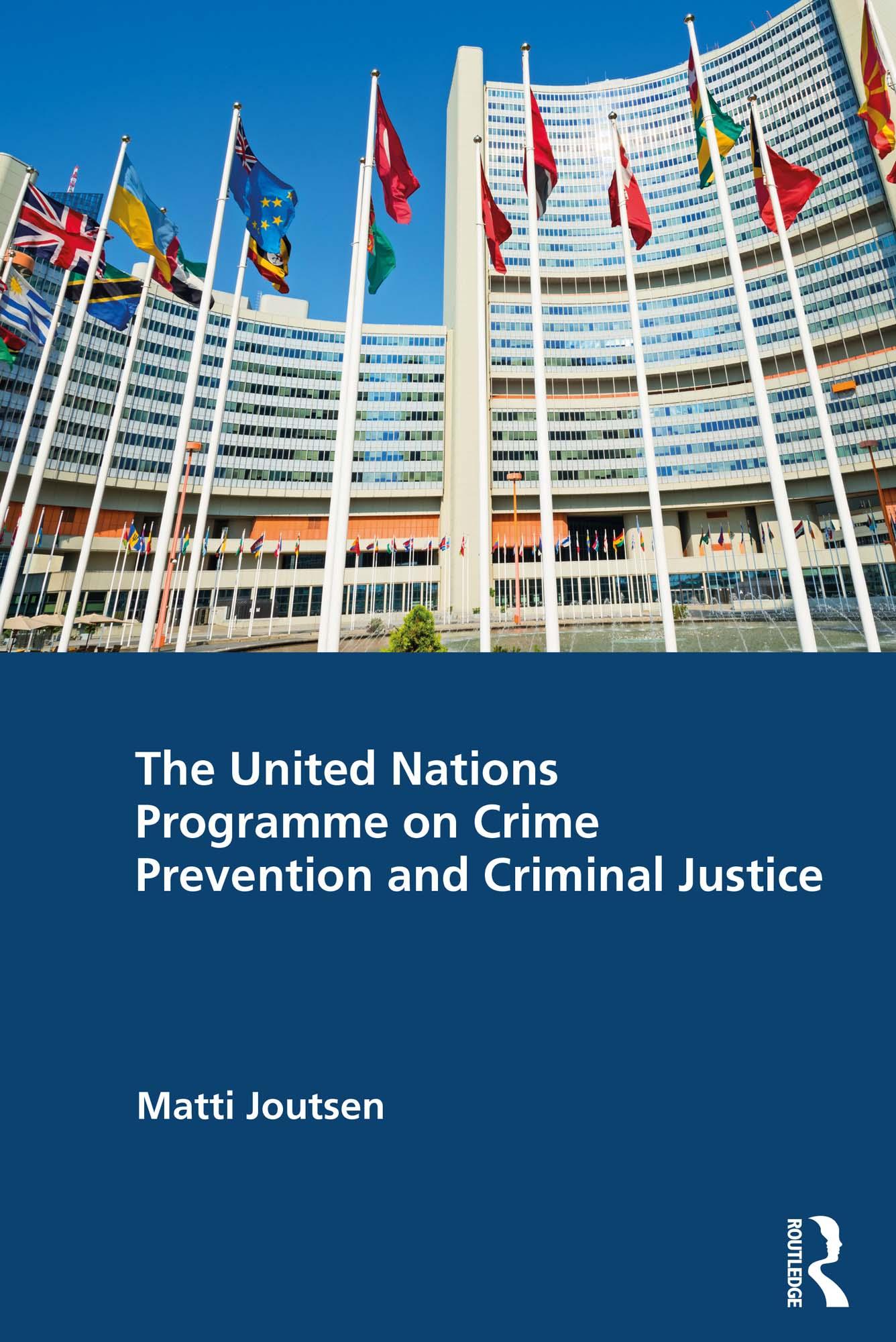
This book documents the evolution of the United Nations (UN) Crime Programme and its changing priorities, from the early focus on juvenile delinquency and correctional treatment, to the present preoccupation with transnational organized crime. It analyses what factors have contributed to this evolution, and to the shift from the original work on “soft law” resolutions and international standards, to “hard law” conventions, and to the expansion of technical assistance. It also examines the changing structure and working methods of the Programme, such as the UN Crime Commission and the UN Secretariat unit responsible for the Programme, the UN Crime Congresses, and the Programme Network Institutes. Drawing on almost 50 years of experience on the “inside” of the UN Crime Programme and his hands-on knowledge of the working of governmental and intergovernmental processes, Matti Joutsen explores the transitions that have taken place in the UN Crime Programme over the seven decades of its existence, assesses the changing impact of the Programme, and suggests possible future directions in international cooperation in crime prevention and criminal justice.
An accessible and compelling read, this book will appeal to students and scholars of criminology, sociology, politics, criminal justice, policy makers, and those interested in the evolution of the UN Crime Programme.
Betal enkelt med kort, Klarna, Apple Pay eller Google Pay. Ikke fornøyd? Du har alltid 14 dagers angrerett. Les mer i våre vilkår. Har du spørsmål, send oss en e-post på hello@memmo.org.
Memmo gjør det enklere å studere – uansett hvor du er i verden. Hos oss samler du pensumbøker og smarte studieverktøy på ett og samme sted: sammendrag, quizer, podkaster og flashcards. Og så Ted, din studiekompis som svarer på alt du lurer på. Over 50 000 studenter studerer allerede her – bygget for at du skal lære raskere og stresse mindre.