
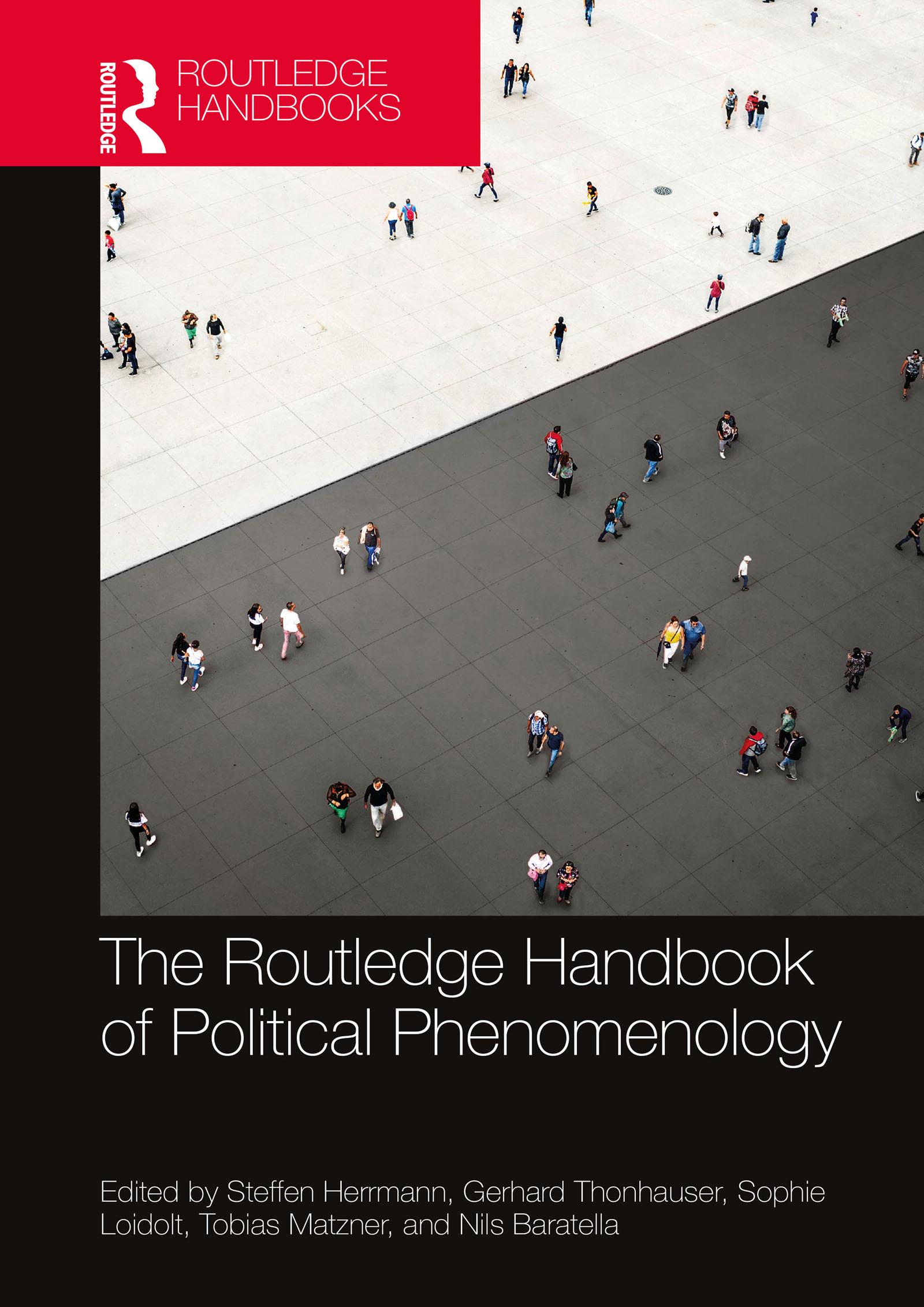
Phenomenology has primarily been concerned with conceptual questions about knowledge and ontology. However, in recent years, the rise of interest and research in applied phenomenology has seen the study of political phenomenology move to a central place in the study of phenomenology generally.
The Routledge Handbook of Political Phenomenology is the first major collection on this important topic. Comprising 35 chapters by an international team of expert contributors, the handbook is organized into six clear parts, each with its own introduction by the editors:
- Founders of Phenomenology
- Existentialist Phenomenology
- Phenomenology of the Social and Political World
- Phenomenology of Alterity
- Phenomenology in Debate
- Contemporary Developments.
Full attention is given to central figures in the phenomenological movement, including Husserl, Heidegger, Sartre, Merleau-Ponty, and Levinas, as well as those whose contribution to political phenomenology is more distinctive, such as Arendt, De Beauvoir, and Fanon. Also included are chapters on gender, race and intersectionality, disability, and technology.
Ideal for those studying phenomenology, continental philosophy, and political theory, The Routledge Handbook of Political Phenomenology bridges an important gap between a major philosophical movement and contemporary political issues and concepts.
Betal enkelt med kort, Klarna, Apple Pay eller Google Pay. Ikke fornøyd? Du har alltid 14 dagers angrerett. Les mer i våre vilkår. Har du spørsmål, send oss en e-post på hello@memmo.org.
Memmo gjør det enklere å studere – uansett hvor du er i verden. Hos oss samler du pensumbøker og smarte studieverktøy på ett og samme sted: sammendrag, quizer, podkaster og flashcards. Og så Ted, din studiekompis som svarer på alt du lurer på. Over 50 000 studenter studerer allerede her – bygget for at du skal lære raskere og stresse mindre.