
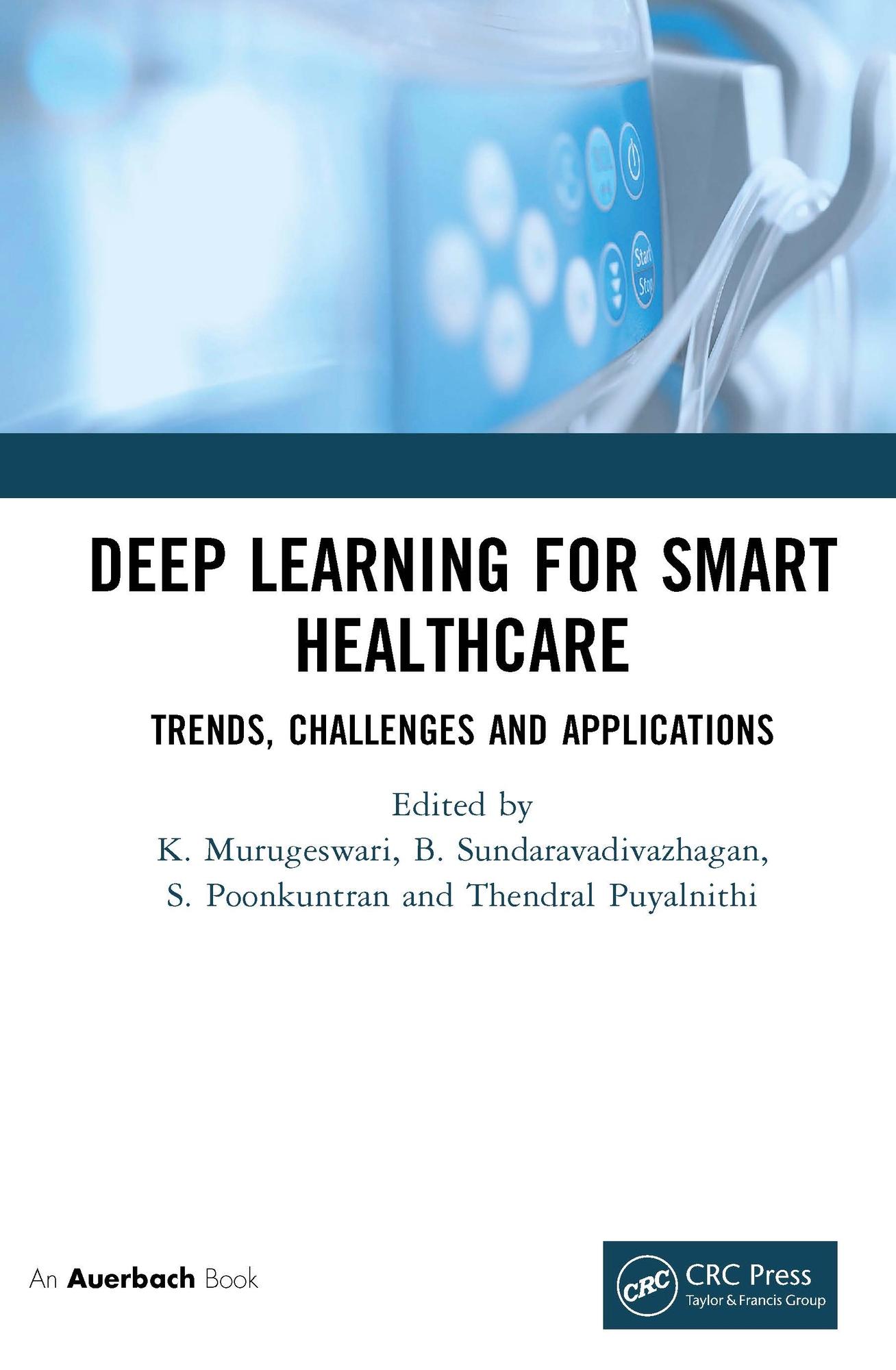
Deep learning can provide more accurate results compared to machine learning. It uses layered algorithmic architecture to analyze data. It produces more accurate results since learning from previous results enhances its ability. The multi-layered nature of deep learning systems has the potential to classify subtle abnormalities in medical images, clustering patients with similar characteristics into risk-based cohorts, or highlighting relationships between symptoms and outcomes within vast quantities of unstructured data.
Exploring this potential, Deep Learning for Smart Healthcare: Trends, Challenges and Applications is a reference work for researchers and academicians who are seeking new ways to apply deep learning algorithms in healthcare, including medical imaging and healthcare data analytics. It covers how deep learning can analyze a patient’s medical history efficiently to aid in recommending drugs and dosages. It discusses how deep learning can be applied to CT scans, MRI scans and ECGs to diagnose diseases. Other deep learning applications explored are extending the scope of patient record management, pain assessment, new drug design and managing the clinical trial process.
Bringing together a wide range of research domains, this book can help to develop breakthrough applications for improving healthcare management and patient outcomes.
Betal enkelt med kort, Klarna, Apple Pay eller Google Pay. Ikke fornøyd? Du har alltid 14 dagers angrerett. Les mer i våre vilkår. Har du spørsmål, send oss en e-post på hello@memmo.org.
Memmo gjør det enklere å studere – uansett hvor du er i verden. Hos oss samler du pensumbøker og smarte studieverktøy på ett og samme sted: sammendrag, quizer, podkaster og flashcards. Og så Ted, din studiekompis som svarer på alt du lurer på. Over 50 000 studenter studerer allerede her – bygget for at du skal lære raskere og stresse mindre.