
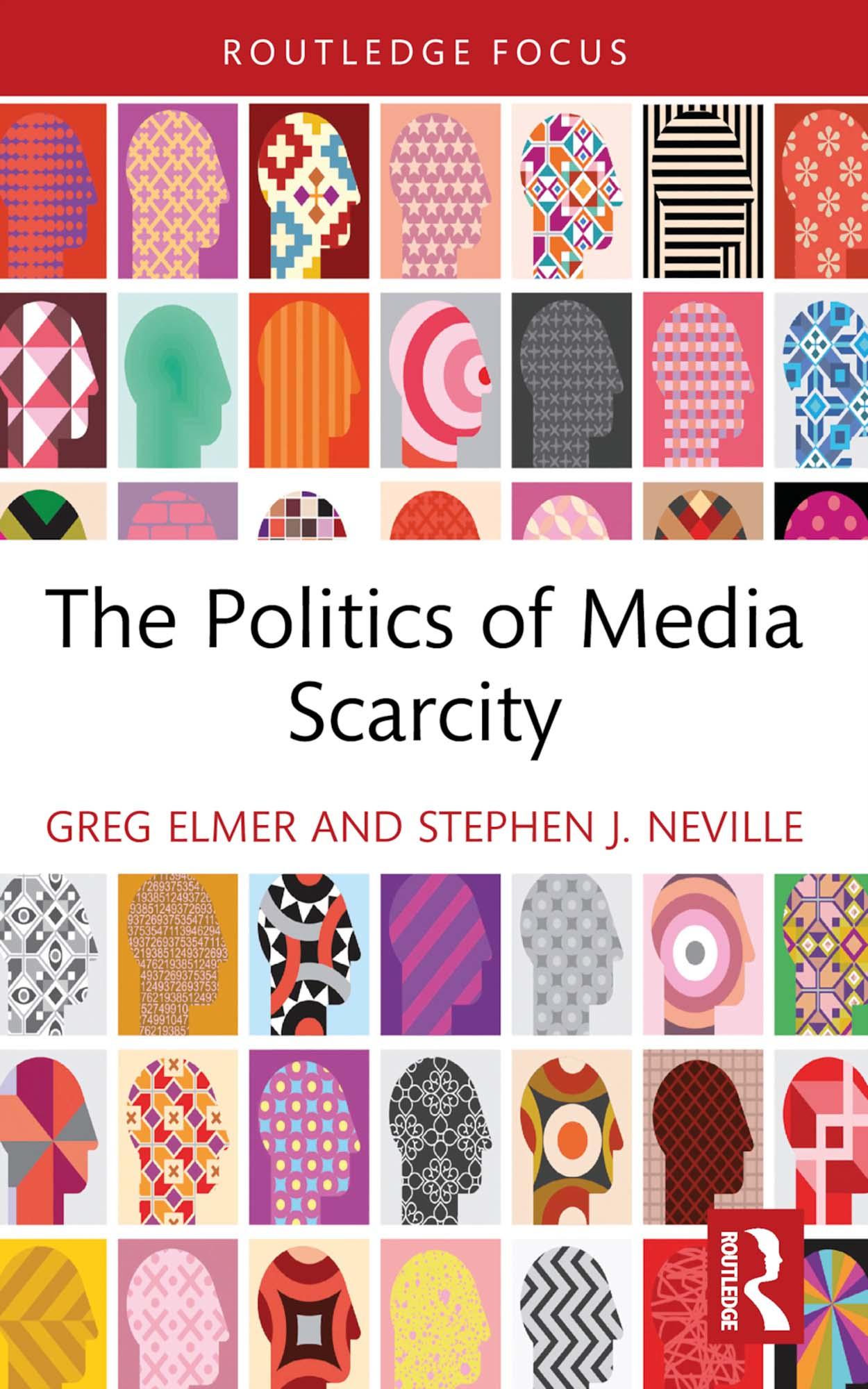
This book questions the predominance of “media abundance” as a guiding concept for contemporary mediated politics. The authors argue that media abundance is not a universal condition, and that certain individuals, communities, and even nations can more accurately be referred to as media scarce – where access to media technologies and content is limited, highly controlled, or surveilled.
Through case studies that focus on guerilla militants, incarcerated Indigenous people, and cold war‑era infrastructure, including Soviet “closed” or “secret” cities and Canadian nuclear bunkers, the book’s chapters interrogate how the once media scarce later “speak” to – and can be heard by – the predominant, abundant media culture. Drawing from several art projects and diverse cultural sites, the book highlights how media scarce communities negotiate and otherwise narrate their place in the world, their past experiences and lives, and escape from subjugation. To better understand media scarce politics, the book asks how and when communities become – by accident or force, by choice or necessity – media scarce.
This innovative and insightful text will appeal to students and scholars around the world working in the areas of media and politics, art and politics, visual studies, surveillance studies, and communication studies.
Betal enkelt med kort, Klarna, Apple Pay eller Google Pay. Ikke fornøyd? Du har alltid 14 dagers angrerett. Les mer i våre vilkår. Har du spørsmål, send oss en e-post på hello@memmo.org.
Memmo gjør det enklere å studere – uansett hvor du er i verden. Hos oss samler du pensumbøker og smarte studieverktøy på ett og samme sted: sammendrag, quizer, podkaster og flashcards. Og så Ted, din studiekompis som svarer på alt du lurer på. Over 50 000 studenter studerer allerede her – bygget for at du skal lære raskere og stresse mindre.