
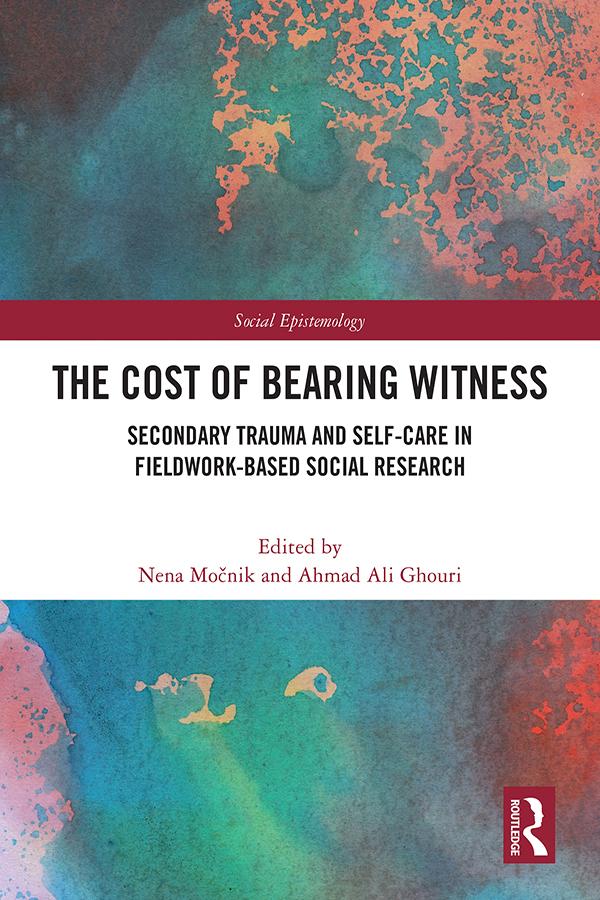
This highly interdisciplinary volume fills the gap in research ethics that has so far omitted to address the psychological, physiological, and socio-political impacts on researchers conducting field-based social research in traumatic environments.
The chapters in this book discuss various facets of secondary trauma from different methodological and theoretical perspectives, geographic, and historical contexts, and address a wide range of questions spanning from recent complex topics to semi-historical events and future concerns causing traumatic anxiety. While most chapters explore the process of healing and recovery from traumatic experiences during fieldwork-based research, few chapters also propose constructive approaches for developing personal and institutional methodologies and techniques to better prepare researchers to cope with secondary trauma.
The book offers useful insights and concrete changes in research methodologies that can help minimize the risk of trauma and new approaches to preventing and handling the consequences of conducting field-based social research in traumatic environments. It was originally published as a special issue of Social Epistemology.
Betal enkelt med kort, Klarna, Apple Pay eller Google Pay. Ikke fornøyd? Du har alltid 14 dagers angrerett. Les mer i våre vilkår. Har du spørsmål, send oss en e-post på hello@memmo.org.
Memmo gjør det enklere å studere – uansett hvor du er i verden. Hos oss samler du pensumbøker og smarte studieverktøy på ett og samme sted: sammendrag, quizer, podkaster og flashcards. Og så Ted, din studiekompis som svarer på alt du lurer på. Over 50 000 studenter studerer allerede her – bygget for at du skal lære raskere og stresse mindre.