
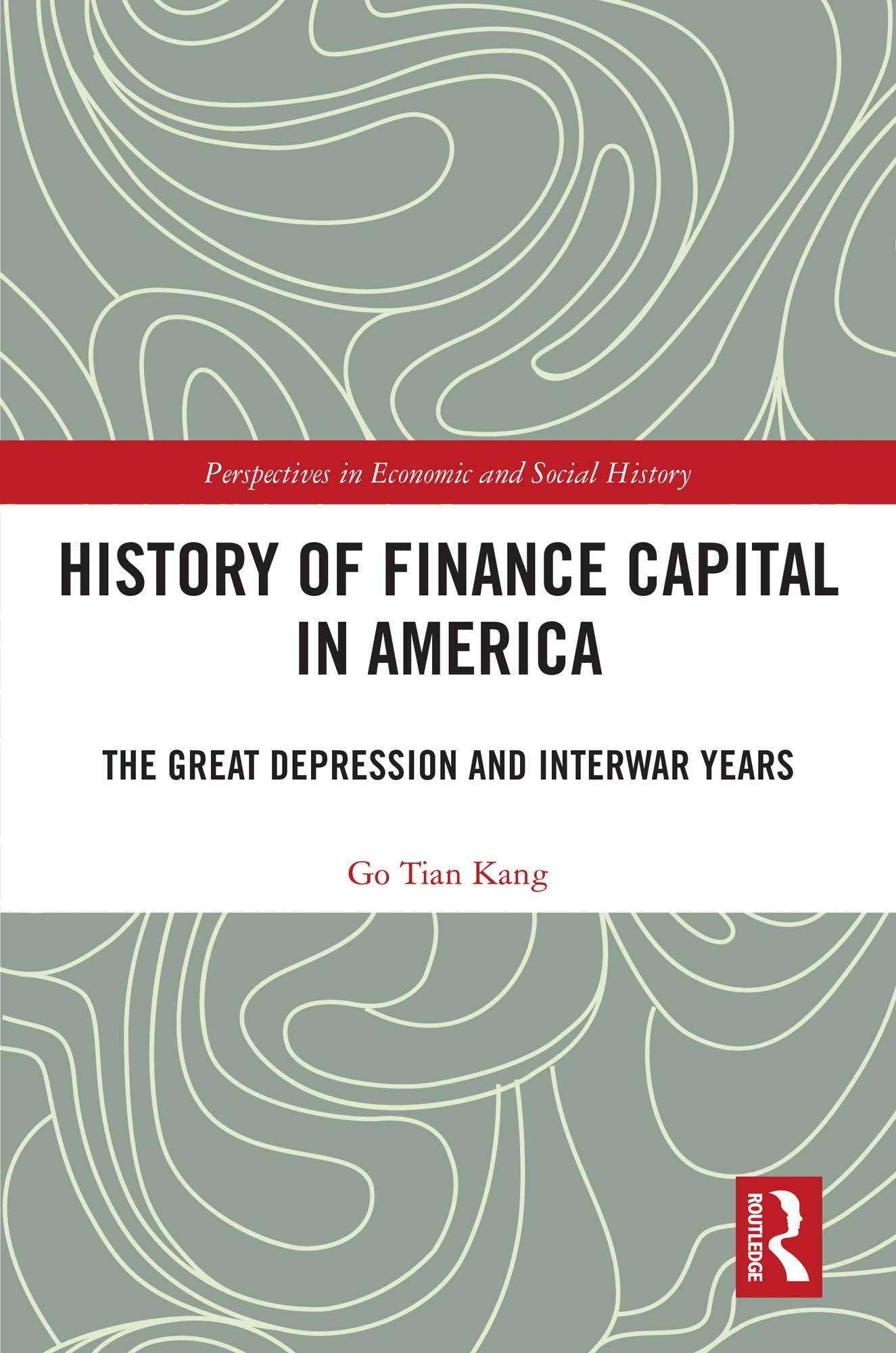
Go details through institutional analysis how major financial institutions (including banks and insurance companies), industries, and the U.S. government behaved and linked with each other during the Great Depression and interwar period.
Drawing on data that has not been widely used since the late thirties – including congressional hearings, financial data, and government reports concerning economic concentration in the Depression era – Go presents a general picture of American finance capital on the eve of World War II. He details the emergence of important new financial‑industrial powers in the 1920s that challenged the Wall Street’s established order on the eve of Great Depression, the response of the Wall Street’s finance capital to the challenge, and its renewed dominance as well as the growing community of interests between finance and industry under the Depression. He also points out the role of Wall Street’s finance capital in financing the Reconstruction Finance Corporation in 1932, the New Deal, and the emerging war economy.
With its coverage of primary sources, this book will interest researchers and advanced undergraduate students taking American history, political science, and institutional economics.
Betal enkelt med kort, Klarna, Apple Pay eller Google Pay. Ikke fornøyd? Du har alltid 14 dagers angrerett. Les mer i våre vilkår. Har du spørsmål, send oss en e-post på hello@memmo.org.
Memmo gjør det enklere å studere – uansett hvor du er i verden. Hos oss samler du pensumbøker og smarte studieverktøy på ett og samme sted: sammendrag, quizer, podkaster og flashcards. Og så Ted, din studiekompis som svarer på alt du lurer på. Over 50 000 studenter studerer allerede her – bygget for at du skal lære raskere og stresse mindre.