
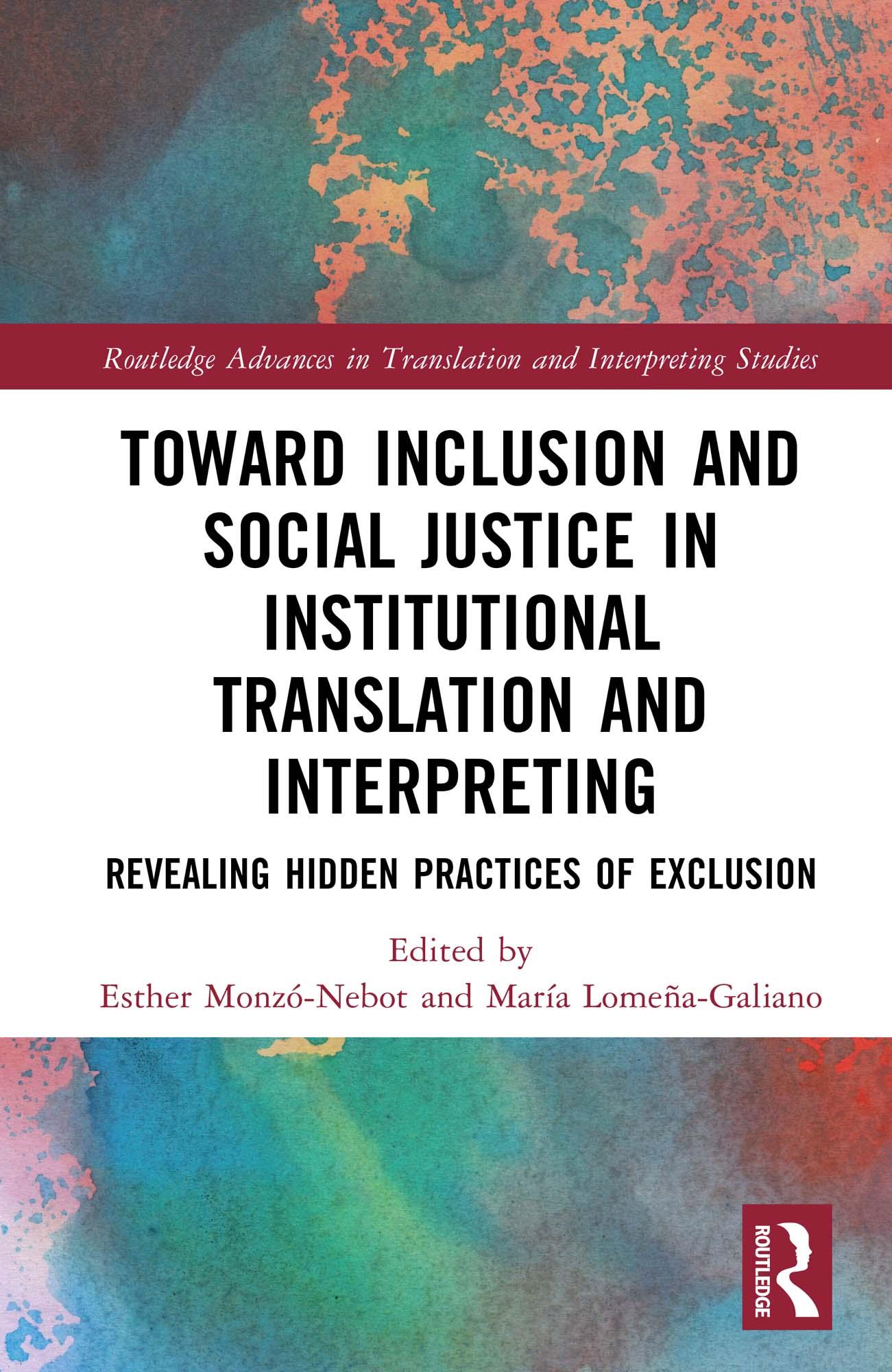
This collection re-envisions the academic study of institutional translation and interpreting (ITI), revealing oppression in established institutional spaces toward challenging existing policies and the myths which inhibit critical inquiry within the field.
ITI is broadly conceived here as translation and interpreting delivered in or for specific institutions, understood as social systems and spanning national, supranational, and international organizations as well as immigration detention centers, prisons, and national courts. The volume is organized around three parts, which explore ITI spaces and practices revealing oppressive practices, dispelling myths regarding translation and interpreting, and shedding light on institutional spaces that have remained invisible and hidden, and therefore underexplored. The chapters in this book vividly illustrate similarities and contrasts between the different contexts of ITI, revealing shared power dynamics that uphold social hierarchies. Throughout this comparison, the book makes a compelling case to consider the different contexts of ITI as equally contributing to actionable knowledge on how institutions shape translation and interpreting and how these are operated in sustaining such hierarchies.
Offering a window into previously underexplored spaces and generating new lines of inquiry within ITI studies, this book will be of interest to scholars and policymakers in translation and interpreting studies.
Betal enkelt med kort, Klarna, Apple Pay eller Google Pay. Ikke fornøyd? Du har alltid 14 dagers angrerett. Les mer i våre vilkår. Har du spørsmål, send oss en e-post på hello@memmo.org.
Memmo gjør det enklere å studere – uansett hvor du er i verden. Hos oss samler du pensumbøker og smarte studieverktøy på ett og samme sted: sammendrag, quizer, podkaster og flashcards. Og så Ted, din studiekompis som svarer på alt du lurer på. Over 50 000 studenter studerer allerede her – bygget for at du skal lære raskere og stresse mindre.