
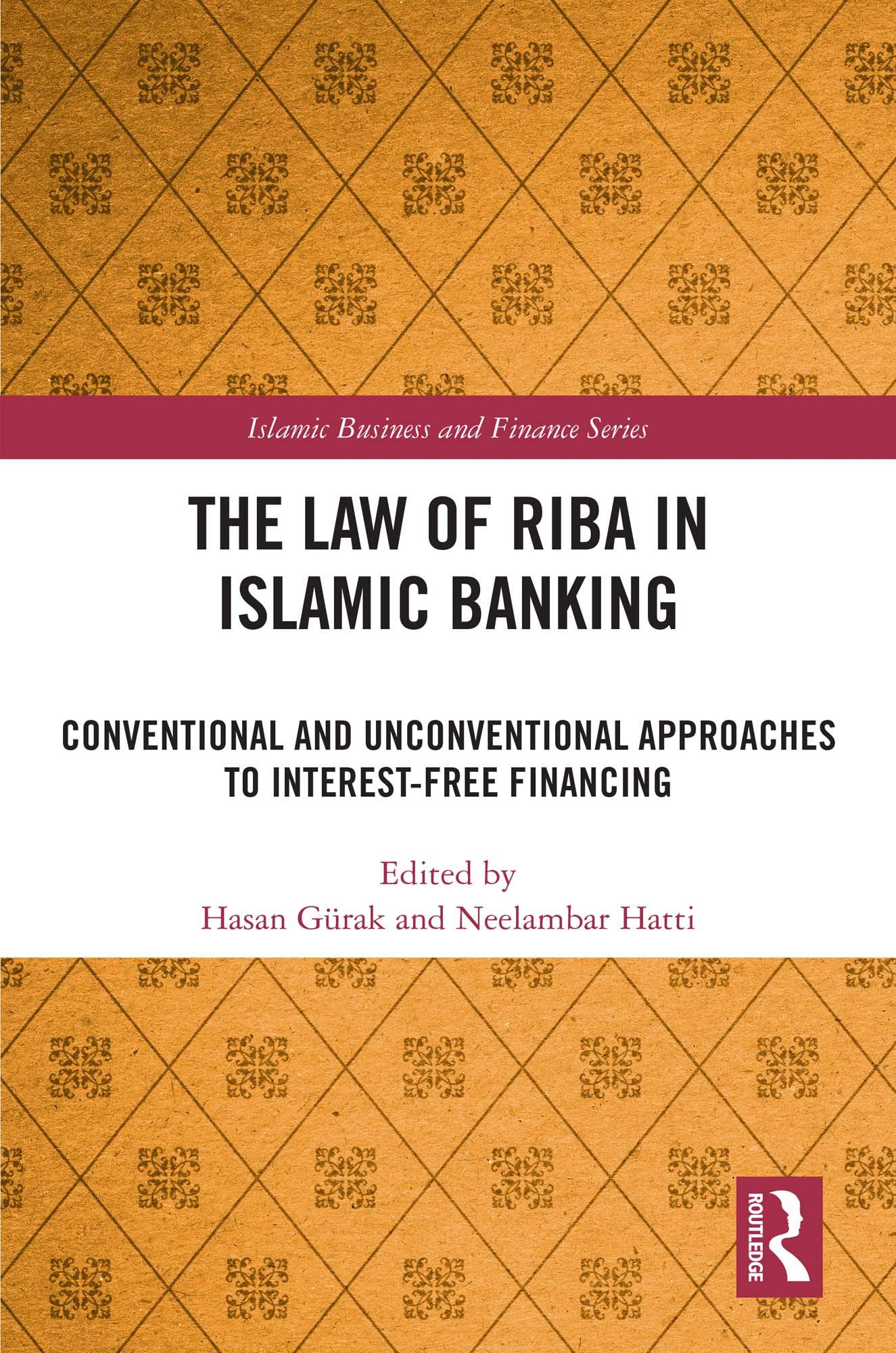
The issue of riba, that is, interest/the "excess" or "surplus" on loans is crucial for both Islamic and non-Islamic countries. Western economic systems use interest to distribute financial resources efficiently for investment and/or consumption, while Islamic economies pursue a completely different strategy for financing loans, which adheres to Islamic laws and prohibits the activities of conventional banking systems with regard to interest. This book argues that there is scope for new definitions and analysis based on alternative concepts which respect Islamic values and principles, yet pave the way for modification and debate.
The book comprises of two parts. Theoretical issues are dealt with in the first section. The first two chapters examine conventional Islamic views on the prohibition of riba, while Chapters 3 and 4 contain unprecedented and alternative theoretical analysis based on concepts such as "earned" (halal-permitted-legal) vs. "unearned" (haram-impermissible-illegal) income and SUKUK, that is, Islamic interest-free bonds. The second part of the book tackles another unconventional aspect of Islamic finance, that is, the concept of NAS. The book considers whether the NAS-influenced anti-inflationary interest policy was a success or failure. Empirical data is evaluated in terms of bank incomes, inflation rate, interest rate, and the distribution of income.
This book will be a useful guide for students, scholars, and researchers of Islamic banking and finance.
Betal enkelt med kort, Klarna, Apple Pay eller Google Pay. Ikke fornøyd? Du har alltid 14 dagers angrerett. Les mer i våre vilkår. Har du spørsmål, send oss en e-post på hello@memmo.org.
Memmo gjør det enklere å studere – uansett hvor du er i verden. Hos oss samler du pensumbøker og smarte studieverktøy på ett og samme sted: sammendrag, quizer, podkaster og flashcards. Og så Ted, din studiekompis som svarer på alt du lurer på. Over 50 000 studenter studerer allerede her – bygget for at du skal lære raskere og stresse mindre.