
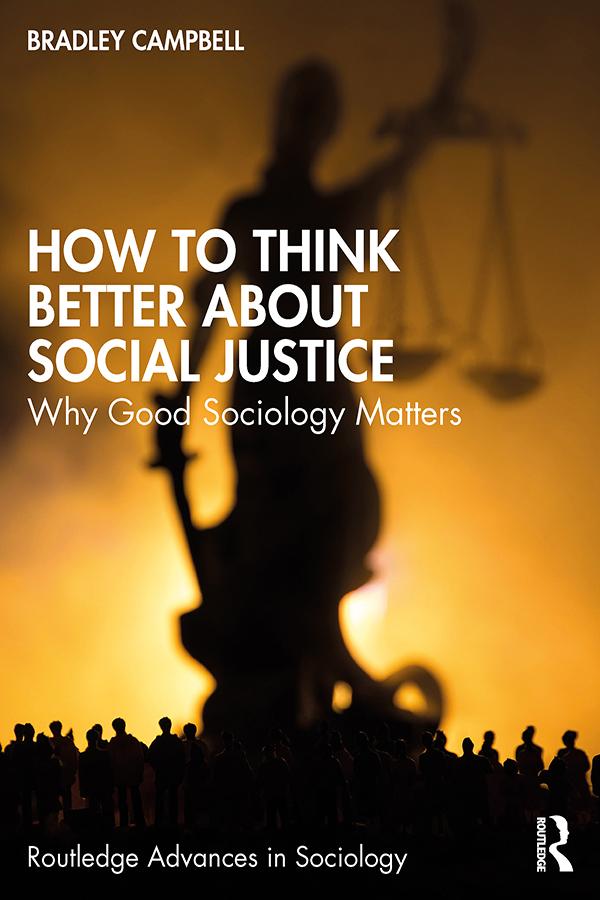
Those who are pursuing social justice too often fail to incorporate the insights of sociology, and when they do make use of sociology, they often draw heavily from claims that are highly contested, unsupported by the evidence, or outright false. This book shows why learning to think sociologically can help us to think better about social justice, pointing us toward possibilities for social change while also calling attention to our limits; providing us with hope, but also making us cautious. Offering a series of tips for thinking better about social justice, with each chapter giving examples of bad sociological thinking and making the case for drawing from a broader range of sociological theory and research to inform social justice efforts, it advocates an approach rooted in intellectual and moral humility, grounded in the normative principles of classical liberalism. A fresh approach to social justice that argues for the importance of sociological understanding of the world in our efforts to change it, How to Think Better About Social Justice will appeal to scholars and students of sociology with interests in social justice issues and the sociology of morality, as well as those working to bring about social change.
Betal enkelt med kort, Klarna, Apple Pay eller Google Pay. Ikke fornøyd? Du har alltid 14 dagers angrerett. Les mer i våre vilkår. Har du spørsmål, send oss en e-post på hello@memmo.org.
Memmo gjør det enklere å studere – uansett hvor du er i verden. Hos oss samler du pensumbøker og smarte studieverktøy på ett og samme sted: sammendrag, quizer, podkaster og flashcards. Og så Ted, din studiekompis som svarer på alt du lurer på. Over 50 000 studenter studerer allerede her – bygget for at du skal lære raskere og stresse mindre.