
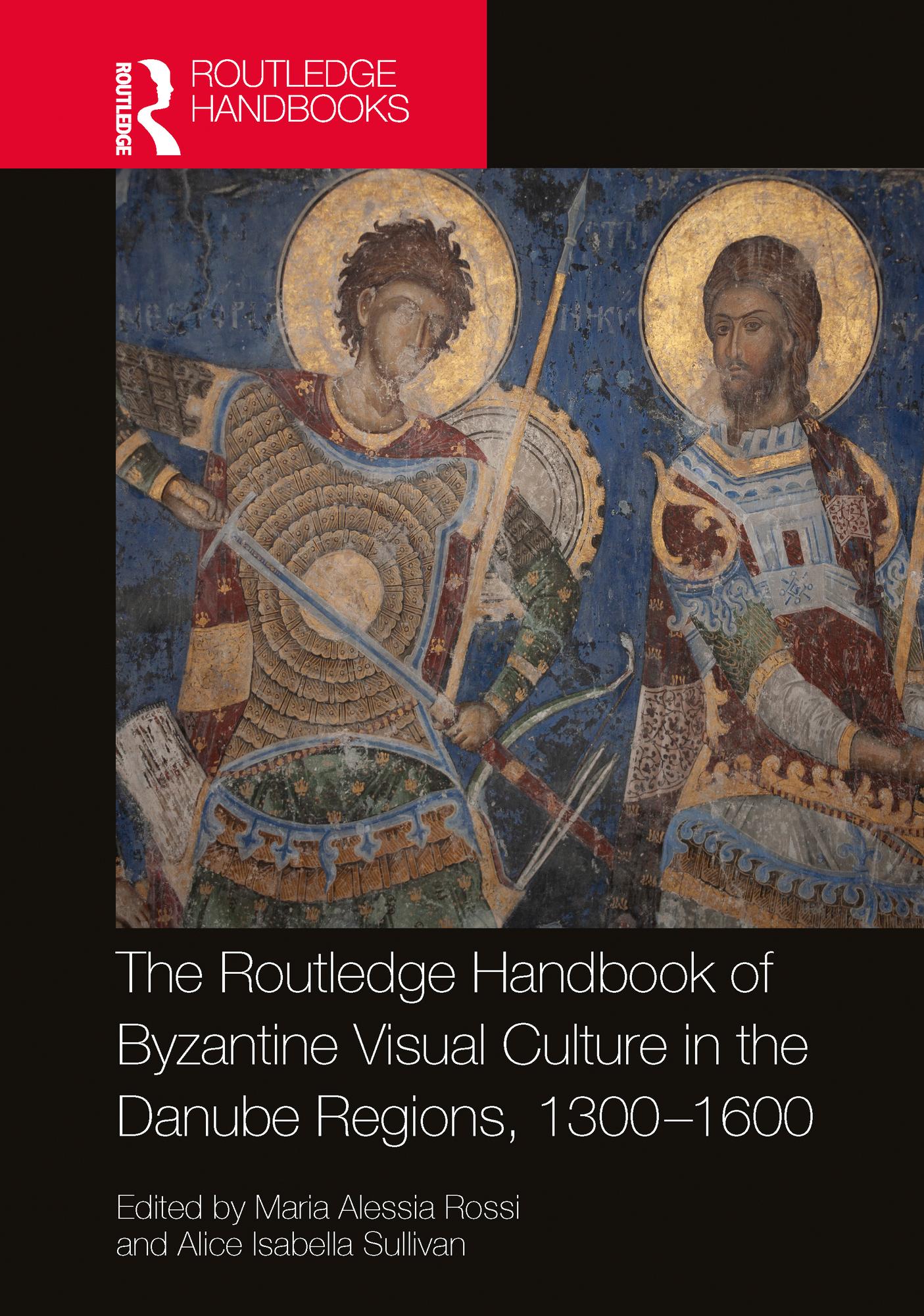
This volume aims to broaden and nuance knowledge about the history, art, culture, and heritage of Eastern Europe relative to Byzantium. From the thirteenth century to the decades after the fall of Constantinople in 1453, the regions of the Danube River stood at the intersection of different traditions, and the river itself has served as a marker of connection and division, as well as a site of cultural contact and negotiation.
The Routledge Handbook of Byzantine Visual Culture in the Danube Regions, 1300–1600 brings to light the interconnectedness of this broad geographical area too often either studied in parts or neglected altogether, emphasizing its shared history and heritage of the regions of modern Greece, Croatia, Serbia, Bulgaria, Romania, Hungary, Slovakia, and Czechia. The aim is to challenge established perceptions of what constitutes ideological and historical facets of the past, as well as Byzantine and post-Byzantine cultural and artistic production in a region of the world that has yet to establish a firm footing on the map of art history.
The 24 chapters offer a fresh and original approach to the history, literature, and art history of the Danube regions, thus being accessible to students thematically, chronologically, or by case study; each part can be read independently or explored as part of a whole.
Betal enkelt med kort, Klarna, Apple Pay eller Google Pay. Ikke fornøyd? Du har alltid 14 dagers angrerett. Les mer i våre vilkår. Har du spørsmål, send oss en e-post på hello@memmo.org.
Memmo gjør det enklere å studere – uansett hvor du er i verden. Hos oss samler du pensumbøker og smarte studieverktøy på ett og samme sted: sammendrag, quizer, podkaster og flashcards. Og så Ted, din studiekompis som svarer på alt du lurer på. Over 50 000 studenter studerer allerede her – bygget for at du skal lære raskere og stresse mindre.