
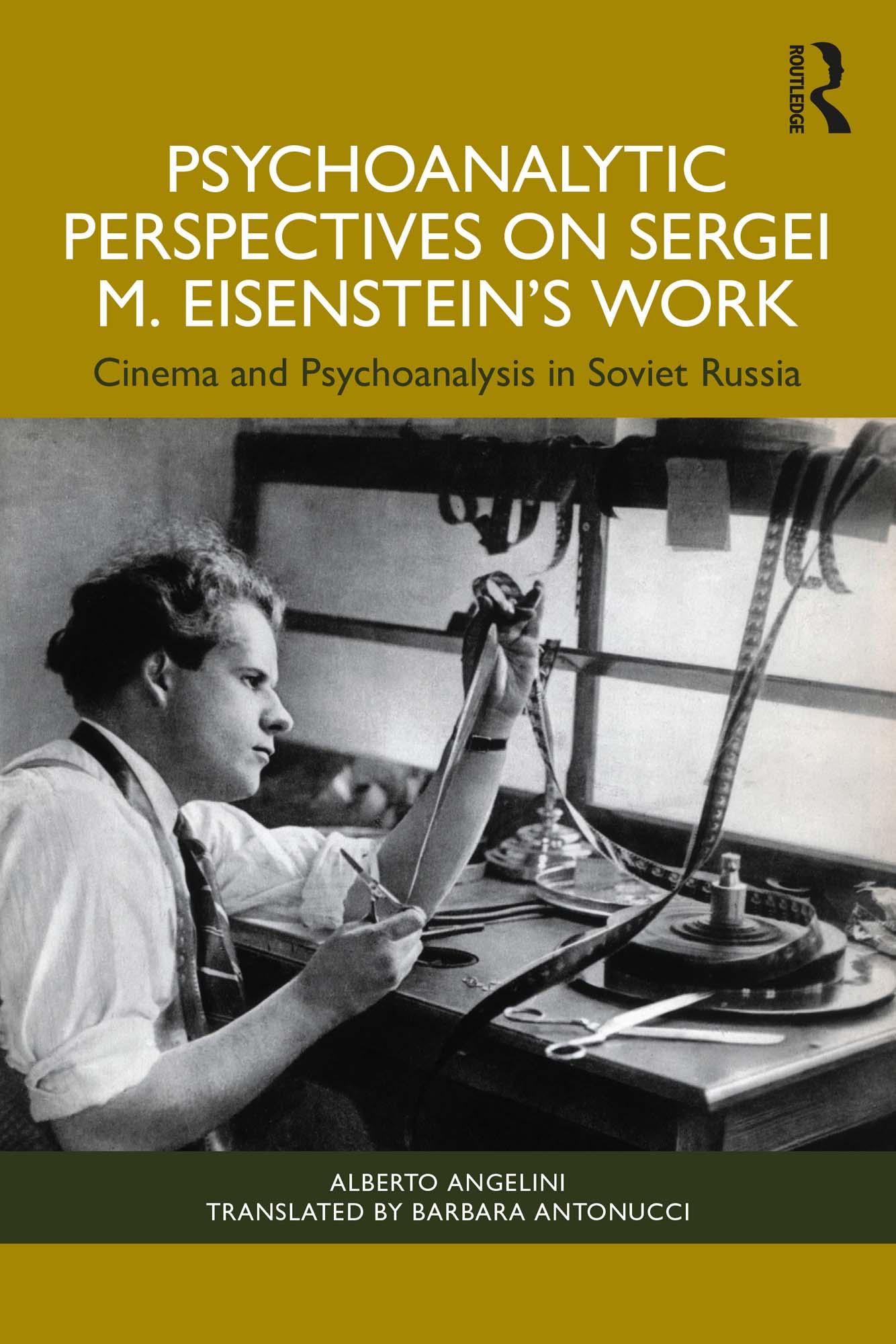
In this insightful book, Alberto Angelini shows the influence of psychoanalysis and psychology on Sergei M. Eisenstein, one of the most celebrated Russian directors, and his cinematic output.
Angelini situates Eisenstein’s life and oeuvre in the history and culture of twentieth-century Russia, drawing clear parallels between his networking with key figures such as Lev Vygotsky and Aleksandr Luria. He utilises the tools of psychology with the insight of psychoanalysis to illuminate the ways in which Eisenstein understood art as an anthropological enterprise while maintaining the same dialectical philosophy as the director in highlighting the many disciplines and figures that he drew inspiration from. Angelini also looks in depth at the influence psychoanalytic theories of regression had on Eisenstein’s approach to art, while examining the impact Stalinism had directly on both Eisenstein and psychoanalysis at large from the 1930s onwards.
This book is an essential resource for psychoanalysts, students, and scholars of film studies, as well as those interested in the intersection between psychoanalytic theory, cinema, and the arts.
Betal enkelt med kort, Klarna, Apple Pay eller Google Pay. Ikke fornøyd? Du har alltid 14 dagers angrerett. Les mer i våre vilkår. Har du spørsmål, send oss en e-post på hello@memmo.org.
Memmo gjør det enklere å studere – uansett hvor du er i verden. Hos oss samler du pensumbøker og smarte studieverktøy på ett og samme sted: sammendrag, quizer, podkaster og flashcards. Og så Ted, din studiekompis som svarer på alt du lurer på. Over 50 000 studenter studerer allerede her – bygget for at du skal lære raskere og stresse mindre.