
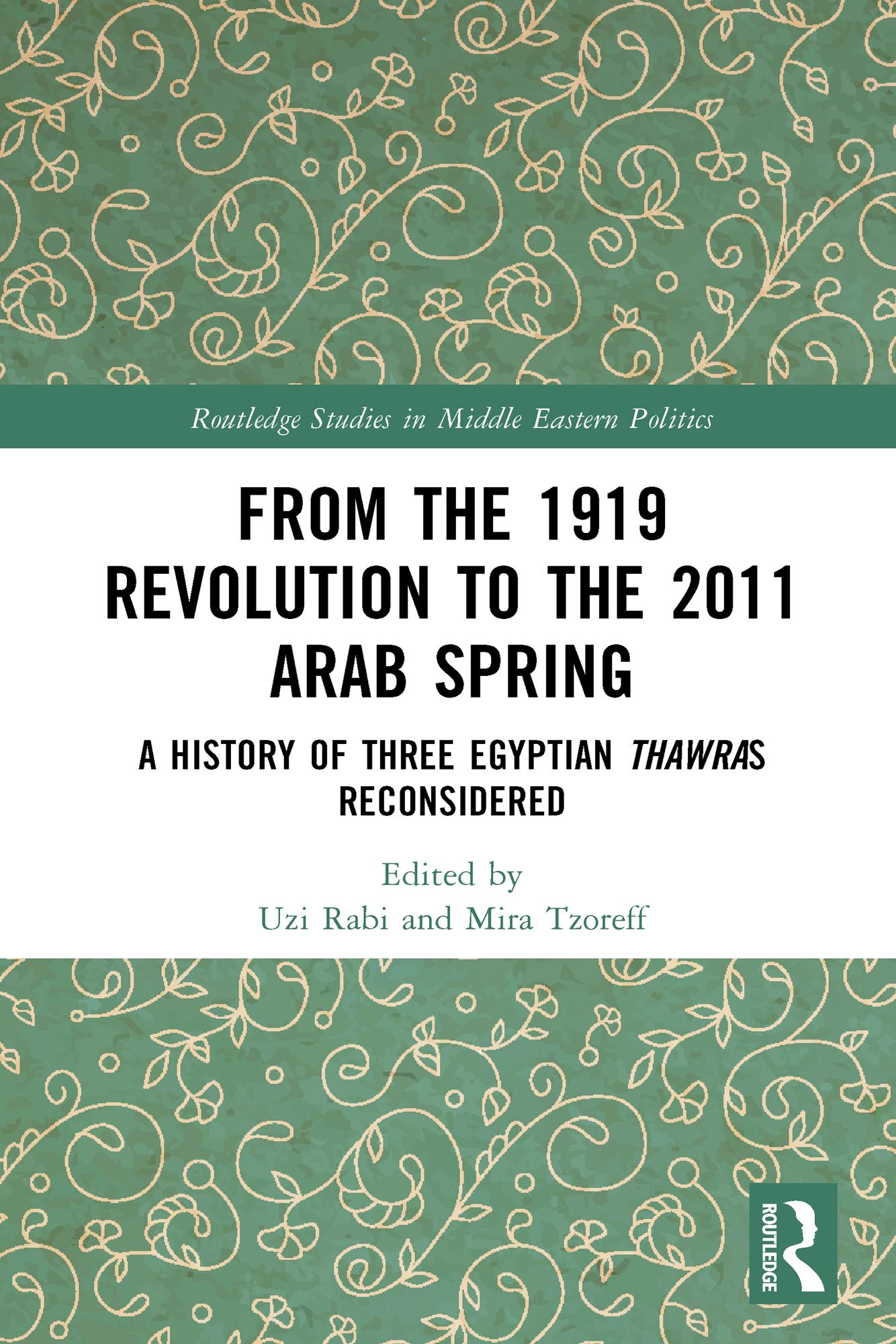
Focused on three Egyptian revolutions—in 1919, 1952, and 2011—this edited book argues that each of these revolutions is a milestone which represents a meaningful turning point in modern Egyptian history.
Revolutions are typically characterized by a fundamental change in political and social infrastructures as well as in the establishment of new values and norms. However, it should be noted that this may not be entirely applicable when examining the context of the three Egyptian revolutions: the 1919 revolution failed to liberate Egypt from British colonial hegemony; the 1952 revolution failed to rework the country’s social and economic systems and unify the Arab world; and the "Arab Spring" revolution of 2011 culminated in a chaotic economic and social catastrophe, thus failing to solve the young generation’s crisis. Nevertheless, by revisiting and re-defining these revolutions through diverse theoretical frameworks, the book proposes that each of them played a significant role in shaping Egypt’s political, social, and cultural identity.
This book is specifically of interest for students, historians, and social scientists with a keen interest in Egyptian history and the Middle East, offering fresh perspectives and insights into these transformative moments in Egypt’s history.
Betal enkelt med kort, Klarna, Apple Pay eller Google Pay. Ikke fornøyd? Du har alltid 14 dagers angrerett. Les mer i våre vilkår. Har du spørsmål, send oss en e-post på hello@memmo.org.
Memmo gjør det enklere å studere – uansett hvor du er i verden. Hos oss samler du pensumbøker og smarte studieverktøy på ett og samme sted: sammendrag, quizer, podkaster og flashcards. Og så Ted, din studiekompis som svarer på alt du lurer på. Over 50 000 studenter studerer allerede her – bygget for at du skal lære raskere og stresse mindre.