
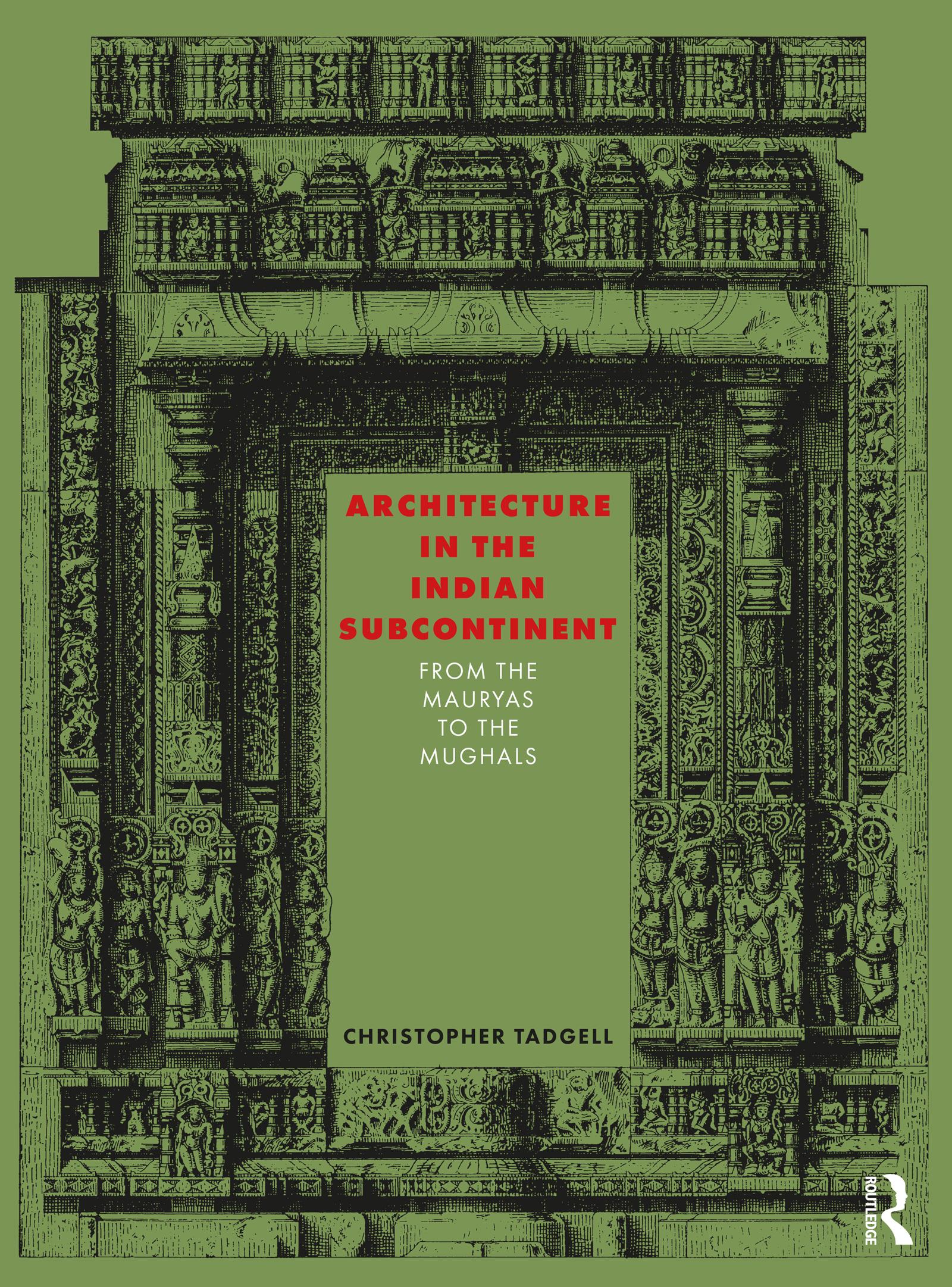
Dedicated to the tracing of continuity across sectarian divides, Christopher Tadgell’s History of Architecture in India (1989) was the first modern monograph to draw together in one volume all the strands of India’s pre-colonial architectural history – from the Vedic and Native traditions of early India, through Hindu, Buddhist, Islamic and secular architecture. This comprehensive revision, Architecture in the Indian Subcontinent: From the Mauryas to the Mughals, expands the structure to acknowledge the great advance in scholarship across this extremely complex subject over the last three decades.
An understanding of Indian history and religion is the basis for understanding the complex pattern of relationships in the evolution of architecture in the subcontinent. Therefore, background material covers major invasions, migrations, dynastic conflicts and cultural and commercial connections, the main religious developments and their significance and repercussions, and external architectural precedents. While avoiding the usual division of the subject into ‘Buddhist and Hindu’ and ‘Islamic’ parts in order to trace continuity, the importance of religion, symbolism and myth to the development of characteristic Indian architectural forms in all their richness and complexity is fully explained in this fully illustrated account of the subcontinent’s architecture.
Betal enkelt med kort, Klarna, Apple Pay eller Google Pay. Ikke fornøyd? Du har alltid 14 dagers angrerett. Les mer i våre vilkår. Har du spørsmål, send oss en e-post på hello@memmo.org.
Memmo gjør det enklere å studere – uansett hvor du er i verden. Hos oss samler du pensumbøker og smarte studieverktøy på ett og samme sted: sammendrag, quizer, podkaster og flashcards. Og så Ted, din studiekompis som svarer på alt du lurer på. Over 50 000 studenter studerer allerede her – bygget for at du skal lære raskere og stresse mindre.