
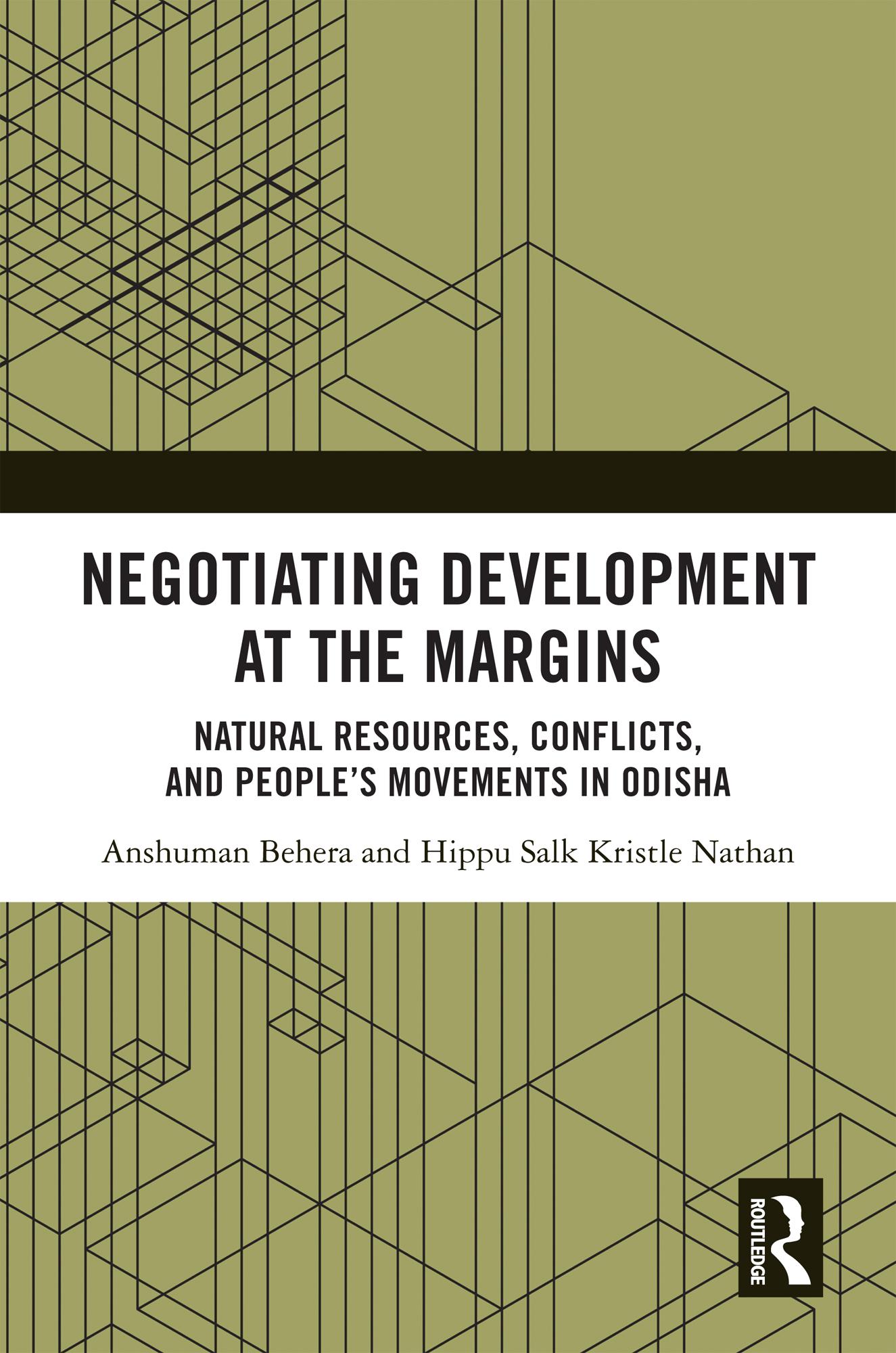
This book critically examines various facets of conflicts involving people and the state arising due to the uneven distribution of natural resources. It provides an overview of the people’s movements in Odisha, a resource-rich state in eastern India. Reflecting on the conceptual frameworks of conflict, it analyses violence, and struggle for rights over resources, and public policies around natural resources, alongside local strategies and governance.
Drawing from extensive field surveys in the villages of Kalahandi and undivided Koraput districts in Odisha, this volume explores the sociopolitical and economical aspects of people’s movements instead of solely viewing them as political and security threats. The authors demonstrate the misappropriations of these movements by both the state and non-state actors for their vested interests. This book offers recommendations for policymakers to draw up a more ready response to mitigate and minimize the conflict and violence and implement equitable policies around land and resources. While doing so, the book also provides some primers to development perspectives, the role of natural resources and conditions under which the natural resources can result in conflict, and principles and practices to overcome such conflicts.
The volume will be an indispensable read for researchers and students of social history, social reform, tribal and indigenous studies, postcolonial studies, exclusion studies, development studies, political sociology, and South Asian studies.
Betal enkelt med kort, Klarna, Apple Pay eller Google Pay. Ikke fornøyd? Du har alltid 14 dagers angrerett. Les mer i våre vilkår. Har du spørsmål, send oss en e-post på hello@memmo.org.
Memmo gjør det enklere å studere – uansett hvor du er i verden. Hos oss samler du pensumbøker og smarte studieverktøy på ett og samme sted: sammendrag, quizer, podkaster og flashcards. Og så Ted, din studiekompis som svarer på alt du lurer på. Over 50 000 studenter studerer allerede her – bygget for at du skal lære raskere og stresse mindre.