
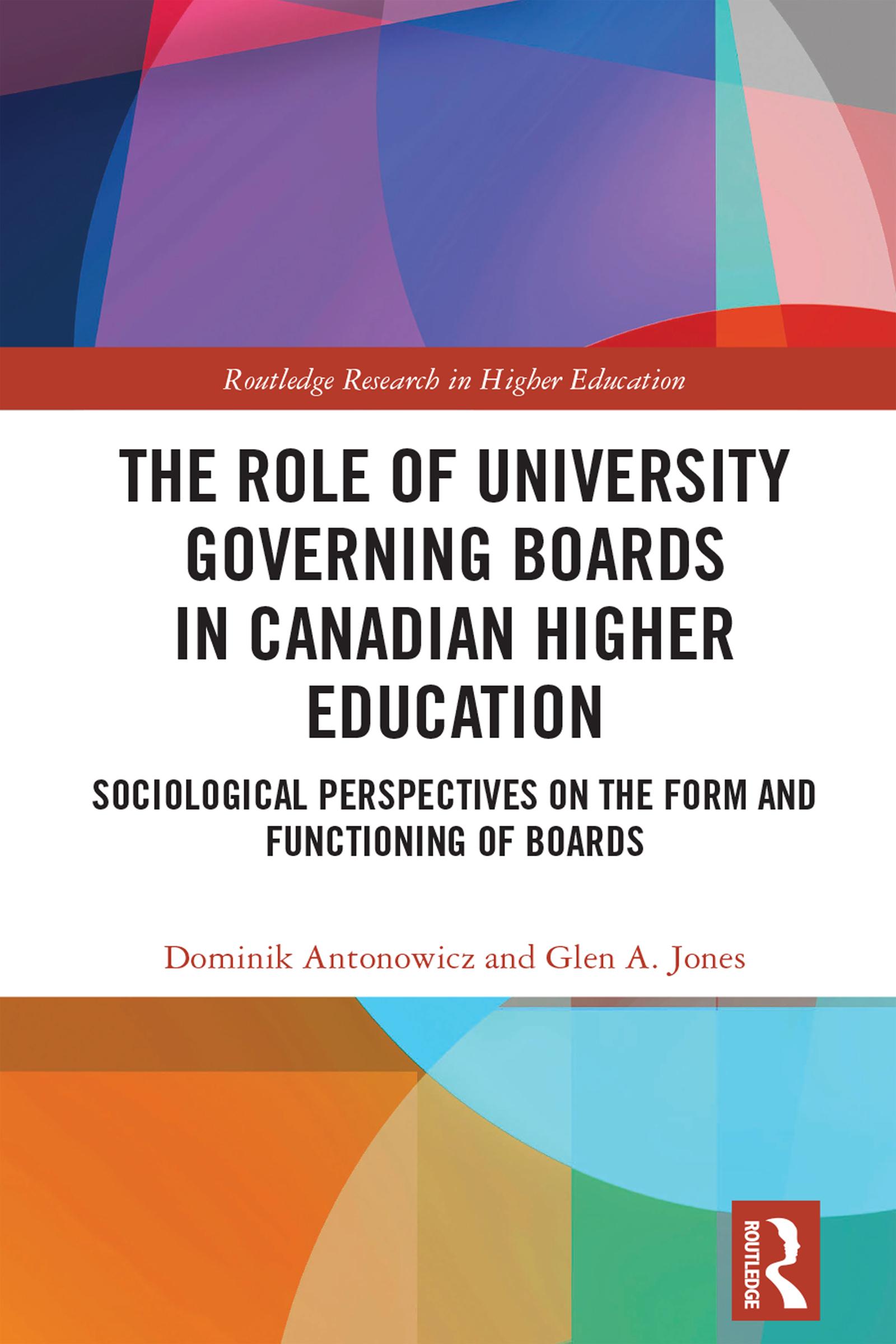
This book explores the historical and social foundations of Canadian higher education and provides a detailed analysis of university boards within this broader context of university governance. By examining rich empirical data from a sociological perspective, it offers unique insights into the role of boards, and the structures and practices that frame their work. It explores board composition, the professional backgrounds of board members, how members perceive their role, and the complex relationships between the board and the university president. The authors also compare and contrast the Canadian experience with governance reforms in Europe and other regions over recent decades.
Drawing on multiple theoretical perspectives, the authors provide a nuanced analysis of the role of boards in terms of oversight, protecting university autonomy, representing societal interests, and dealing with increasing complexity and expectations.
This innovative, original study makes an enormous contribution to our understanding of the role and work of Canadian university boards, and to international scholarship on higher education governance. It will appeal to scholars and researchers with interests across higher education, international and comparative education, and the sociology of education.
Betal enkelt med kort, Klarna, Apple Pay eller Google Pay. Ikke fornøyd? Du har alltid 14 dagers angrerett. Les mer i våre vilkår. Har du spørsmål, send oss en e-post på hello@memmo.org.
Memmo gjør det enklere å studere – uansett hvor du er i verden. Hos oss samler du pensumbøker og smarte studieverktøy på ett og samme sted: sammendrag, quizer, podkaster og flashcards. Og så Ted, din studiekompis som svarer på alt du lurer på. Over 50 000 studenter studerer allerede her – bygget for at du skal lære raskere og stresse mindre.