
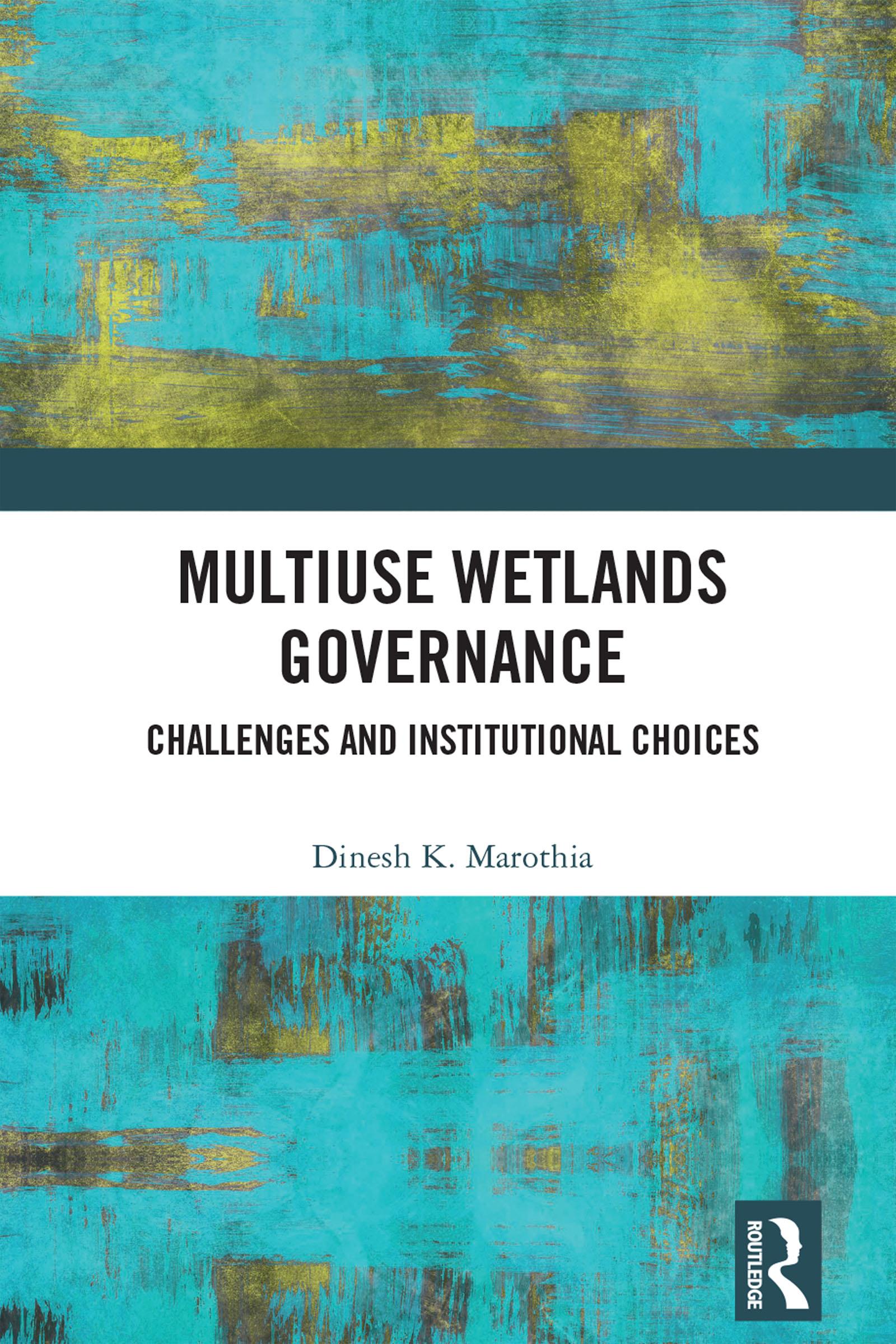
The Ramsar Convention was established in 1971 to ensure the conservation and wise use of wetlands across the world. India joined the Convention in 1982, however, in the past 50 years, despite Ramsar’s incredible achievements, the threat to wetlands across the globe, including India, has not diminished. This book studies the governance of multiuse wetlands in India.
The volume provides an exhaustive analysis of rural, peri-urban, and urban human-made wetlands to establish the relevance of institutional design and the effective role of authority in governing multiuse wetland ecosystem services. The author argues that the most challenging task in governing wetlands is to frame institutional choices that users and non-users comprehend, and agree to pursue under alternative property rights regimes.
Drawing on extensive fieldwork, the book provides a broad look into the causes and consequences of wetland ecosystem degradation and offers insights into improved sustainable management systems for different types of multiuse wetlands. It will be indispensable for students and researchers of environmental studies, sustainable development, biodiversity, conservation, and agricultural, natural, and environmental resource economics.
Betal enkelt med kort, Klarna, Apple Pay eller Google Pay. Ikke fornøyd? Du har alltid 14 dagers angrerett. Les mer i våre vilkår. Har du spørsmål, send oss en e-post på hello@memmo.org.
Memmo gjør det enklere å studere – uansett hvor du er i verden. Hos oss samler du pensumbøker og smarte studieverktøy på ett og samme sted: sammendrag, quizer, podkaster og flashcards. Og så Ted, din studiekompis som svarer på alt du lurer på. Over 50 000 studenter studerer allerede her – bygget for at du skal lære raskere og stresse mindre.