
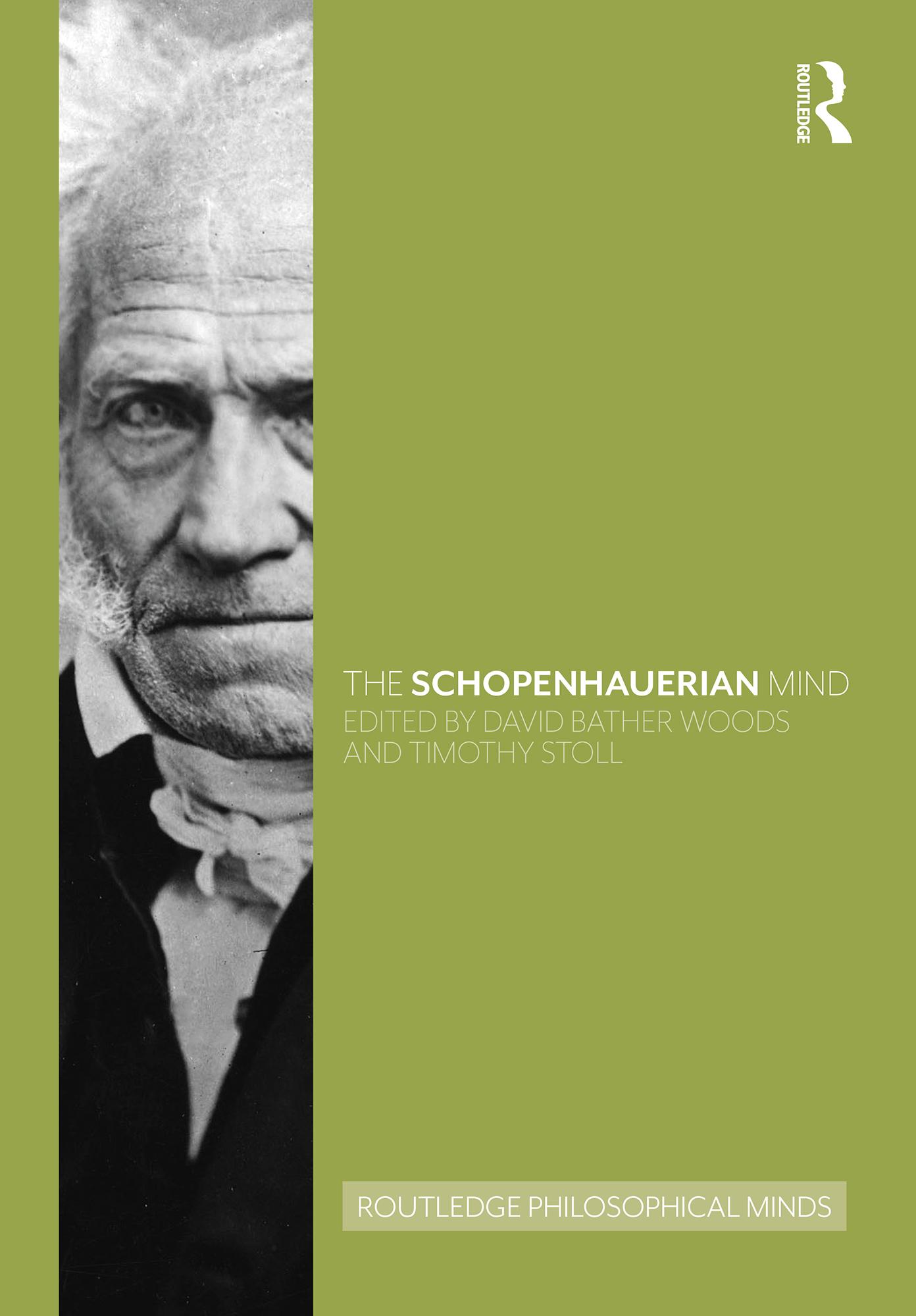
Arthur Schopenhauer (1788-1860) is now recognised as a figure of canonical importance to the history of philosophy. Schopenhauer founded his system on a highly original interpretation of Kant’s philosophy, developing an entirely novel and controversial worldview guided centrally by his striking conception of the human will and of art and beauty. His influence extends to figures as diverse as Fredrich Nietzsche, Ludwig Wittgenstein and Iris Murdoch within philosophy, and Richard Wagner, Thomas Hardy, Sigmund Freud, Thomas Mann, Samuel Beckett and Jorge Luis Borges outside it.
The Schopenhauerian Mind is an outstanding, wide-ranging collection that explores the rich nature of Schopenhauer's ideas, texts, influences, and legacy. Comprising 38 original chapters by an international team of contributors, the volume is organised into five clear parts:
- Knowledge and Reality
- Aesthetics and the Arts
- Ethics, Politics, and Salvation
- Before Schopenhauer
- After Schopenhauer
The Schopenhauerian Mind covers all the key areas and concepts of Schopenhauer’s philosophy, including fields omitted in previous studies. It is essential reading for students of nineteenth-century philosophy, Continental philosophy and philosophy of art and aesthetics, and also of interest to those in related disciplines such as literature and religion.
Betal enkelt med kort, Klarna, Apple Pay eller Google Pay. Ikke fornøyd? Du har alltid 14 dagers angrerett. Les mer i våre vilkår. Har du spørsmål, send oss en e-post på hello@memmo.org.
Memmo gjør det enklere å studere – uansett hvor du er i verden. Hos oss samler du pensumbøker og smarte studieverktøy på ett og samme sted: sammendrag, quizer, podkaster og flashcards. Og så Ted, din studiekompis som svarer på alt du lurer på. Over 50 000 studenter studerer allerede her – bygget for at du skal lære raskere og stresse mindre.