
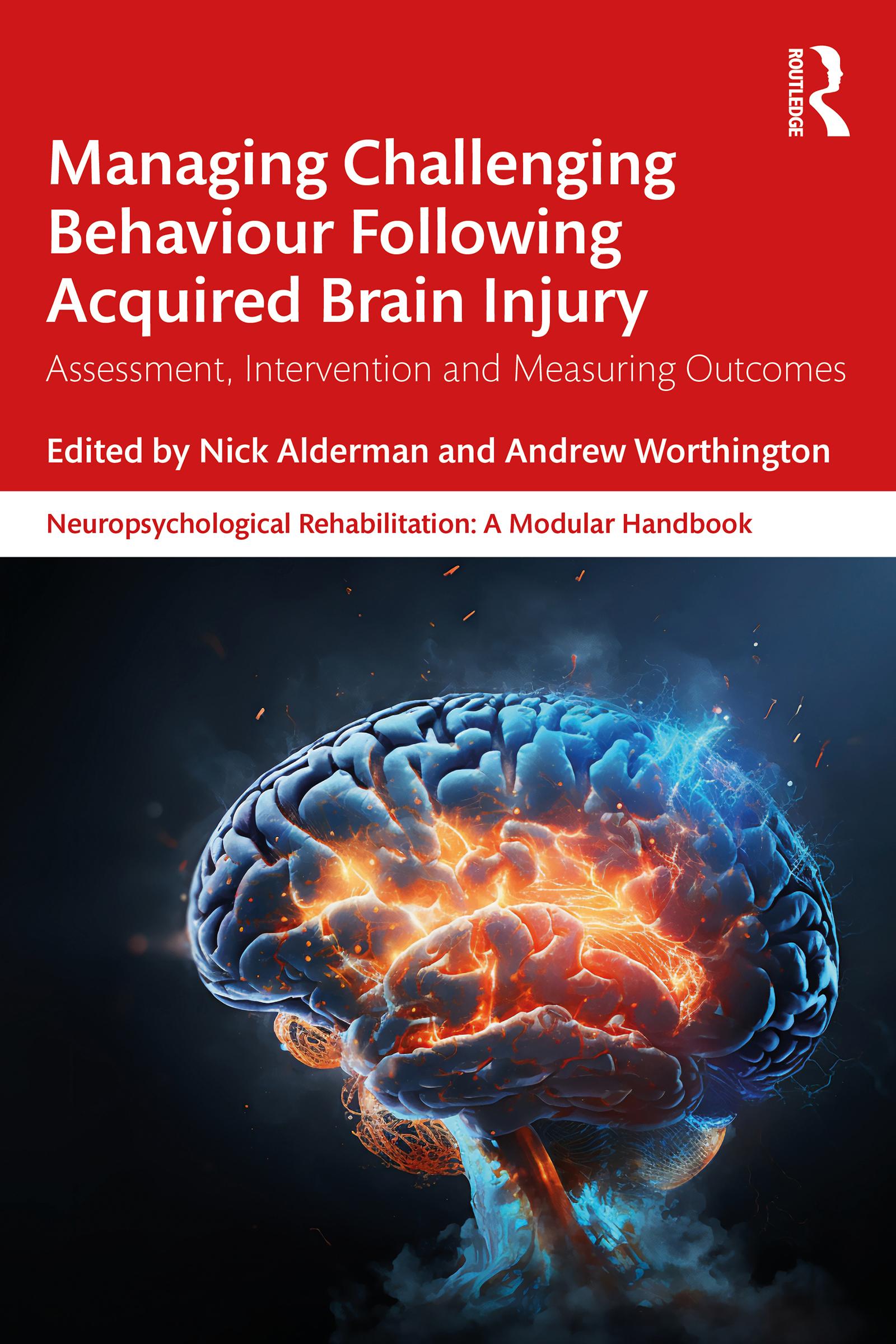
This empirically based book provides conceptual knowledge and practical advice to enable clinicians to implement evidence-based methods drawn from learning theory for managing the catastrophic effects of challenging behaviour as an enduring outcome of acquired brain injury (ABI).
Based on a conceptual framework of neurobehavioural disability, the book takes a holistic case formulation approach, incorporating functional assessment procedures arising from the operant learning tradition that underpins the design of treatment interventions. It bridges the knowledge gap in uniquely providing a single resource to enable practitioners to implement evidence-based methods to better manage ABI behaviour disorders. The authors, who are leading experts in the field, have described a model of intervention based on a functional analytic approach to understanding behaviour within an operant learning framework. The chapters provide a step-by-step approach to assessment, formulation, intervention and evaluation of behaviour support plans, and feature examples for specific challenging behaviours in a variety of different contexts. The book is organised to support the use of this model through expert contributions concerning the origins of challenging behaviour, assessment methods and formulation, and interventions.
The practical orientation of this book makes it an indispensable read for neuropsychologists, clinical psychologists and other rehabilitation specialists involved in the care of people with ABI as well as researchers in these fields.
Betal enkelt med kort, Klarna, Apple Pay eller Google Pay. Ikke fornøyd? Du har alltid 14 dagers angrerett. Les mer i våre vilkår. Har du spørsmål, send oss en e-post på hello@memmo.org.
Memmo gjør det enklere å studere – uansett hvor du er i verden. Hos oss samler du pensumbøker og smarte studieverktøy på ett og samme sted: sammendrag, quizer, podkaster og flashcards. Og så Ted, din studiekompis som svarer på alt du lurer på. Over 50 000 studenter studerer allerede her – bygget for at du skal lære raskere og stresse mindre.