
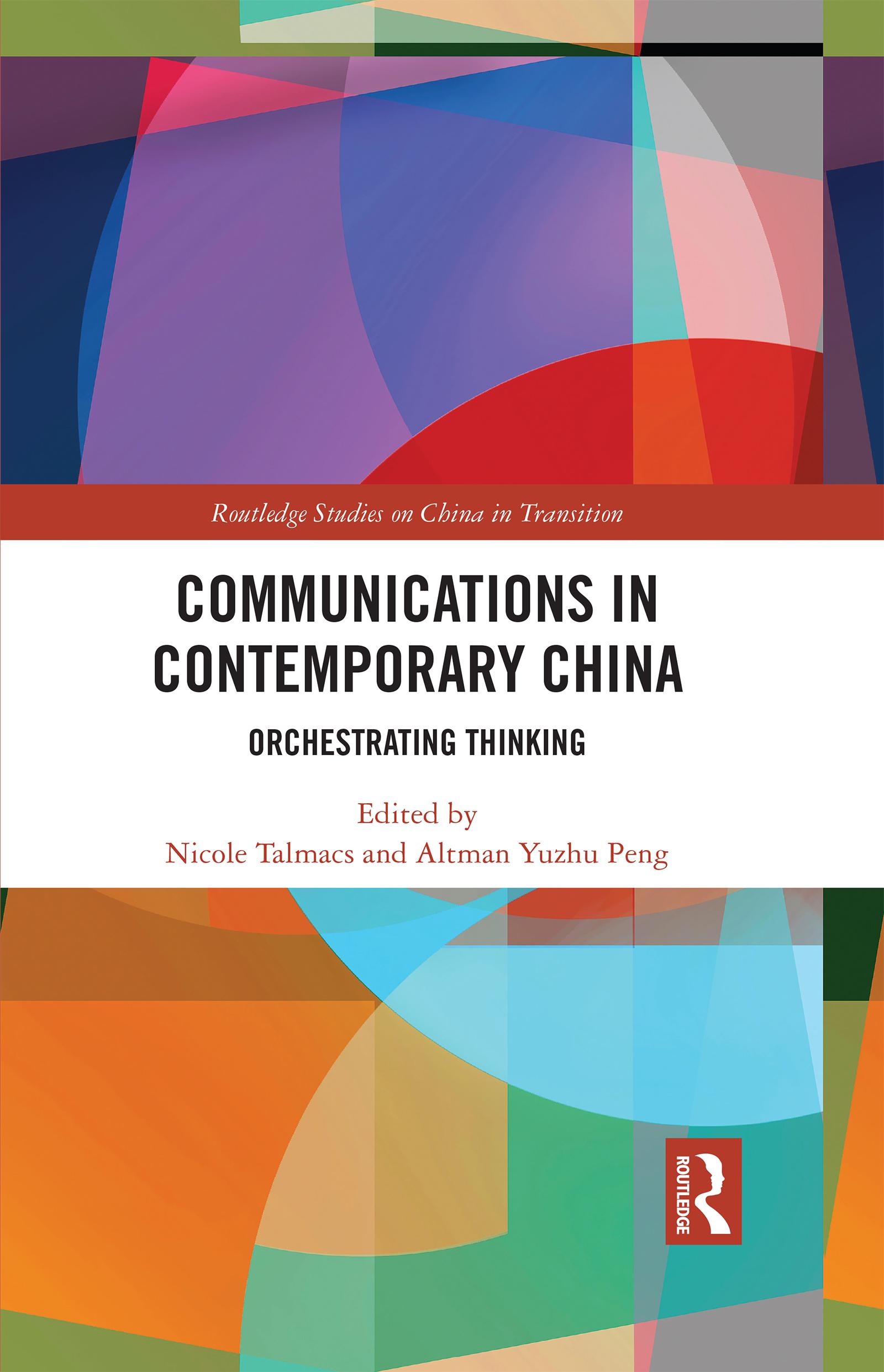
Using the analogy of an orchestra, the book looks at the ways in which the Party-state conducts communications in China.
Rather than treating China’s communications system as purely one of centralised top-down control, this book proffers that it is the combination of the government through its state policies, the propaganda bureau’s campaigns, commercial consumer culture, digital and traditional media platforms, celebrities, entertainers and journalists, educators, community interest groups, and family and friends, who all contribute to the evolution of how ideas are perpetuated, enforced, and legitimised in China.
Covering themes such as censorship, surveillance, national narratives onscreen and in everyday life, political agency, creative work, news production, and gender politics, this book gives an insight into the complex web of conditions, objectives, and challenges that the Chinese leadership and commercial interests face when orchestrating their visions for the nation’s future. As such, this volume will be of great interest to students and scholars of media and communication studies, Chinese politics, and Chinese Studies.
Betal enkelt med kort, Klarna, Apple Pay eller Google Pay. Ikke fornøyd? Du har alltid 14 dagers angrerett. Les mer i våre vilkår. Har du spørsmål, send oss en e-post på hello@memmo.org.
Memmo gjør det enklere å studere – uansett hvor du er i verden. Hos oss samler du pensumbøker og smarte studieverktøy på ett og samme sted: sammendrag, quizer, podkaster og flashcards. Og så Ted, din studiekompis som svarer på alt du lurer på. Over 50 000 studenter studerer allerede her – bygget for at du skal lære raskere og stresse mindre.