
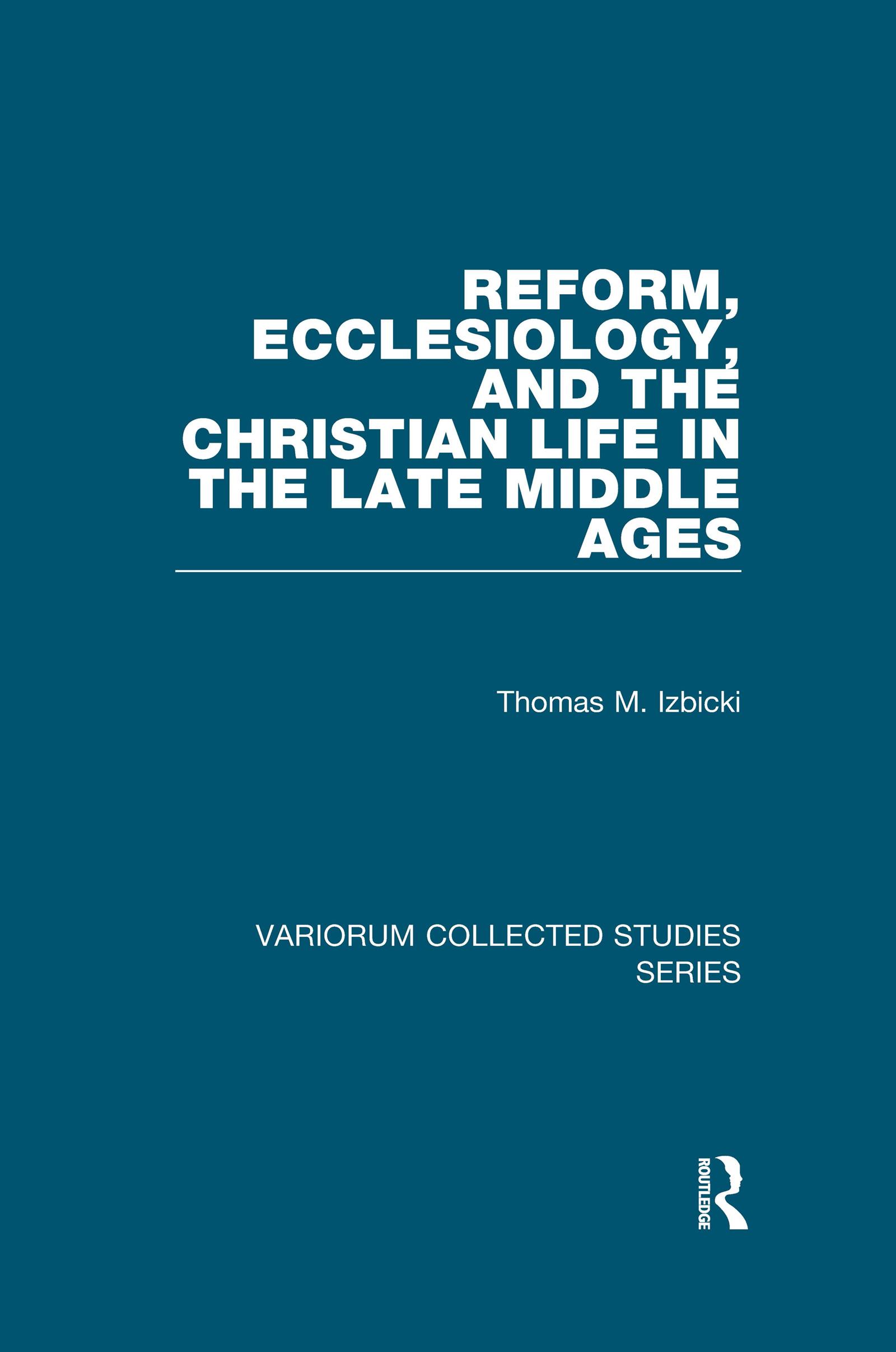
Philosophy was not an idle venture in the Renaissance. There were no clear-cut boundaries between theory and the practice. Theologians, jurists and humanists gave opinions on practical matters from within some larger intellectual context, and many held high office. Among the writers represented here are Pope Pius II (1458-1464), Nicholas of Cusa (d. 1464) and Juan de Torquemada OP (d. 1468). All of them, and the other writers dealt with, addressed the issues of their day creatively but from within different traditions, scholastic or humanistic. The present studies deal with issues of Reform, Ecclesiology [theories about the church and its mission] and the living of the Christian life. Among the specific issues covered are the canonization of Birgitta of Sweden, the status of converts from Judaism in Spain, acceptable forms of dress for clergy and laity, and the obedience due the pope. Also studied in this collection are the writings of Spanish theologians about the indigenous populations of the New World and the use of the name of Nicholas of Cusa by Elizabethan and Jacobean writers, both Catholic and Protestant, in polemics concerning right religious teaching and submission to the English crown, a paper hitherto unpublished.
Betal enkelt med kort, Klarna, Apple Pay eller Google Pay. Ikke fornøyd? Du har alltid 14 dagers angrerett. Les mer i våre vilkår. Har du spørsmål, send oss en e-post på hello@memmo.org.
Memmo gjør det enklere å studere – uansett hvor du er i verden. Hos oss samler du pensumbøker og smarte studieverktøy på ett og samme sted: sammendrag, quizer, podkaster og flashcards. Og så Ted, din studiekompis som svarer på alt du lurer på. Over 50 000 studenter studerer allerede her – bygget for at du skal lære raskere og stresse mindre.
Du vil kanskje også like
Kjøp boken0