
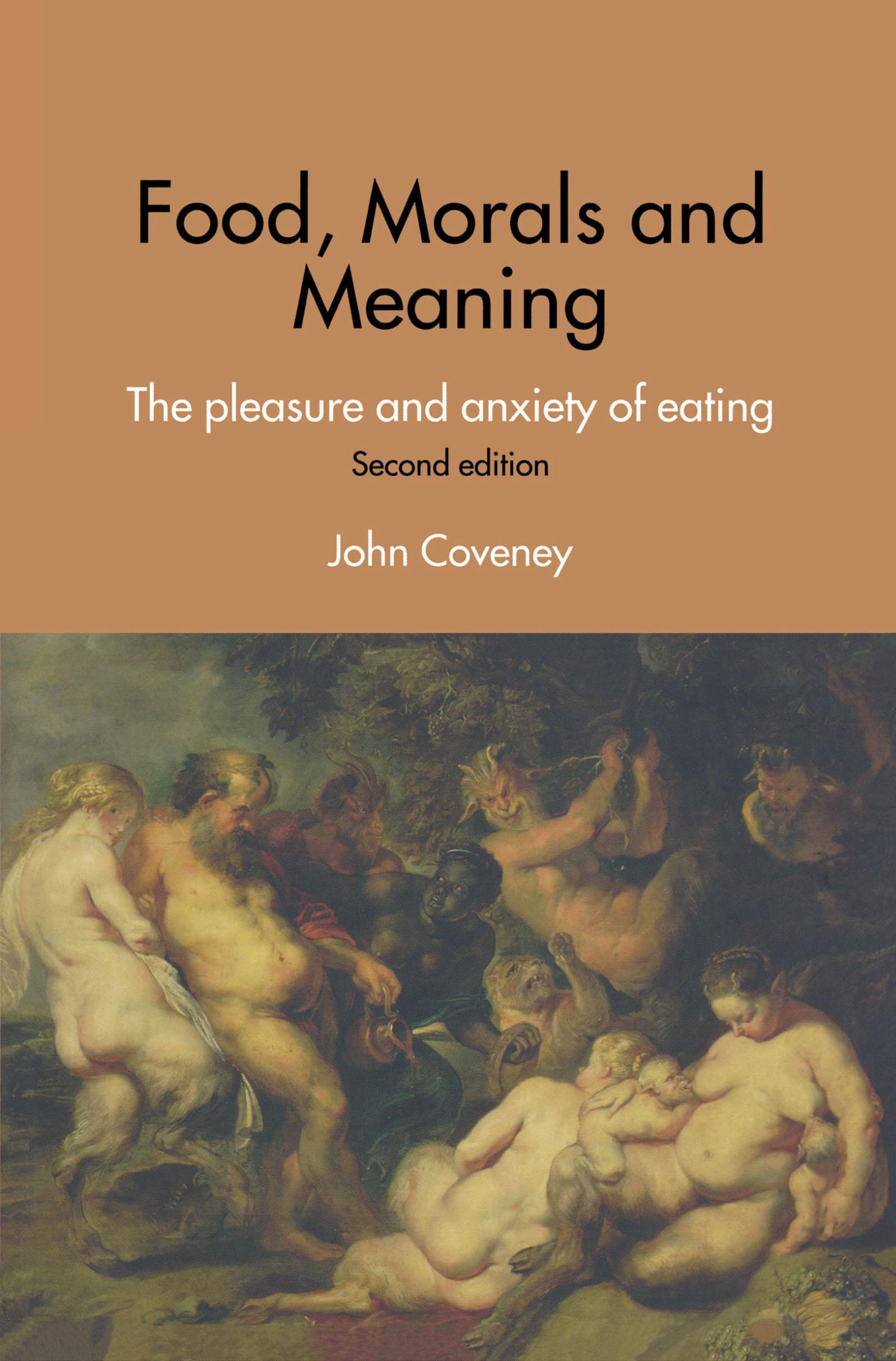
First published in 2006. Food, Morals and Meaning examines our need to discipline our desires, our appetites and our pleasures at the table. However, instead of seeing this discipline as dominant or oppressive it argues that a rationalisation of pleasure plays a positive role in our lives, allowing us to better understand who we are. The book begins by exploring the way that concerns about food, the body and pleasure were prefigured in antiquity and then how these concerns were recast in early Christianity as problems of 'natural' appetite which had to be curbed. The following chapters discuss how scientific knowledge about food was constructed out of philosophical and religious concerns about indulgence and excess in 18th and 19th Century Europe. Finally, by using research collected from in-depth interviews with families, the last section focuses on the social organisation of food in the modern home to illustrate the ways that the meal table now incorporates the principles of nutrition as a form of moral training, especially for children. Food, Morals and Meaning will be essential reading for those studying nutrition, public health, sociology of health and illness and sociology of the body.
Betal enkelt med kort, Klarna, Apple Pay eller Google Pay. Ikke fornøyd? Du har alltid 14 dagers angrerett. Les mer i våre vilkår. Har du spørsmål, send oss en e-post på hello@memmo.org.
Memmo gjør det enklere å studere – uansett hvor du er i verden. Hos oss samler du pensumbøker og smarte studieverktøy på ett og samme sted: sammendrag, quizer, podkaster og flashcards. Og så Ted, din studiekompis som svarer på alt du lurer på. Over 50 000 studenter studerer allerede her – bygget for at du skal lære raskere og stresse mindre.
Du vil kanskje også like
Kjøp boken0