
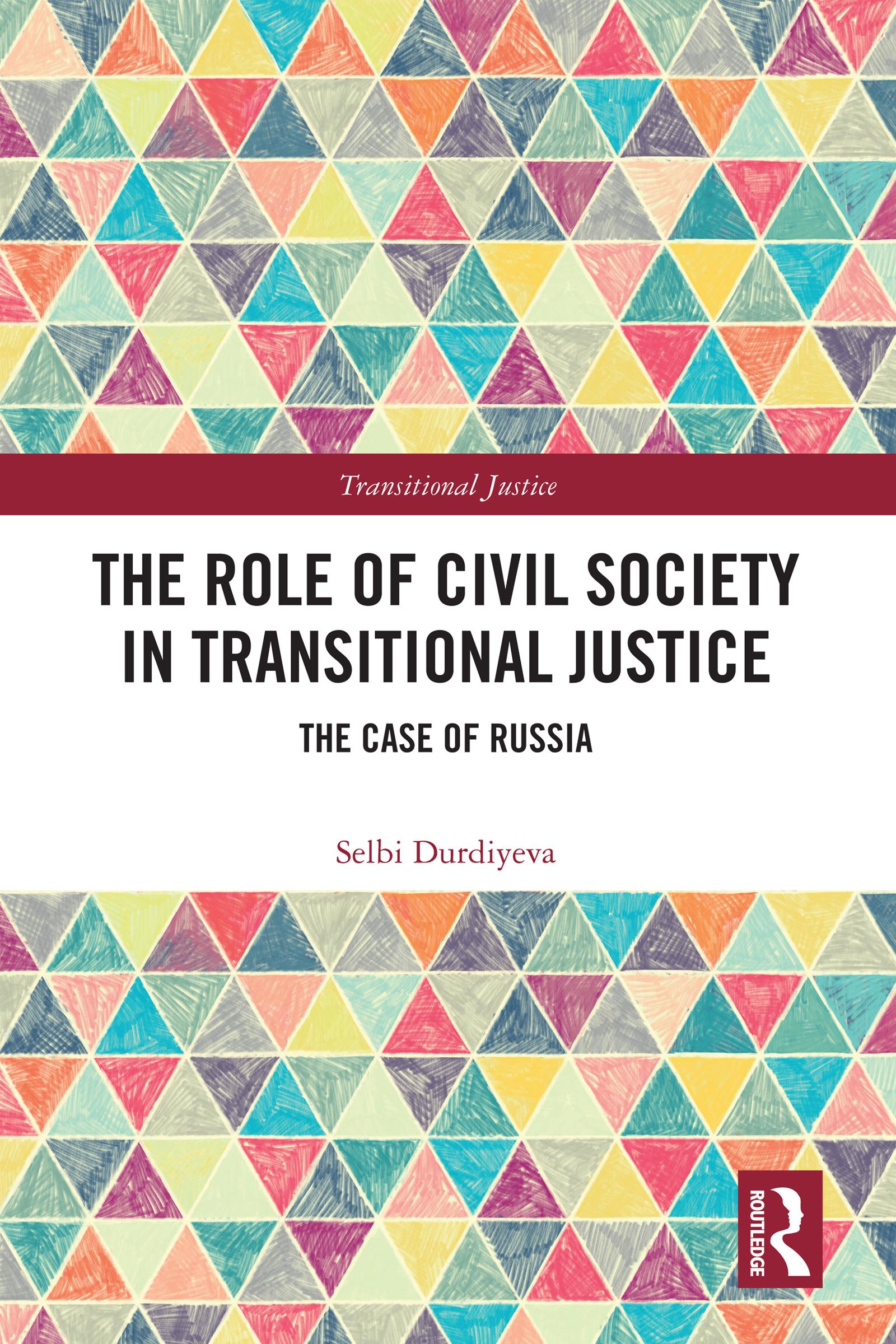
This book examines how civil society engages with transitional justice in Russia, demonstrating a broad range of roles civil society can undertake while operating in a restrictive political context.
Based on sociolegal research, the study focuses on three types of civil society groups dealing with the legacies of the Soviet repression in Russia – a prominent organisation that works on recovering historical truth, the International Memorial; a parish of the Orthodox Church of Russia operating at a former mass execution and mass burial site, the Church at Butovo; and contentious groups that could hinder attempts at reckoning and promote state narratives built on the Stalinist and WWII victory myths. This book explores an often-overlooked case of Russia’s transitional justice ‘from below.’ It provides insights into how even in authoritarian contexts, civil society can adopt imaginative, piecemeal, and at times unconventional ways of seeking justice outside and in the absence of official and institutionalised transitional justice measures.
This book will appeal to scholars of transitional justice, memory studies, human rights, and democratic and civil society theory, as well as policymakers and practitioners in these fields, and others with interests in Russian and post-Soviet studies.
Betal enkelt med kort, Klarna, Apple Pay eller Google Pay. Ikke fornøyd? Du har alltid 14 dagers angrerett. Les mer i våre vilkår. Har du spørsmål, send oss en e-post på hello@memmo.org.
Memmo gjør det enklere å studere – uansett hvor du er i verden. Hos oss samler du pensumbøker og smarte studieverktøy på ett og samme sted: sammendrag, quizer, podkaster og flashcards. Og så Ted, din studiekompis som svarer på alt du lurer på. Over 50 000 studenter studerer allerede her – bygget for at du skal lære raskere og stresse mindre.