
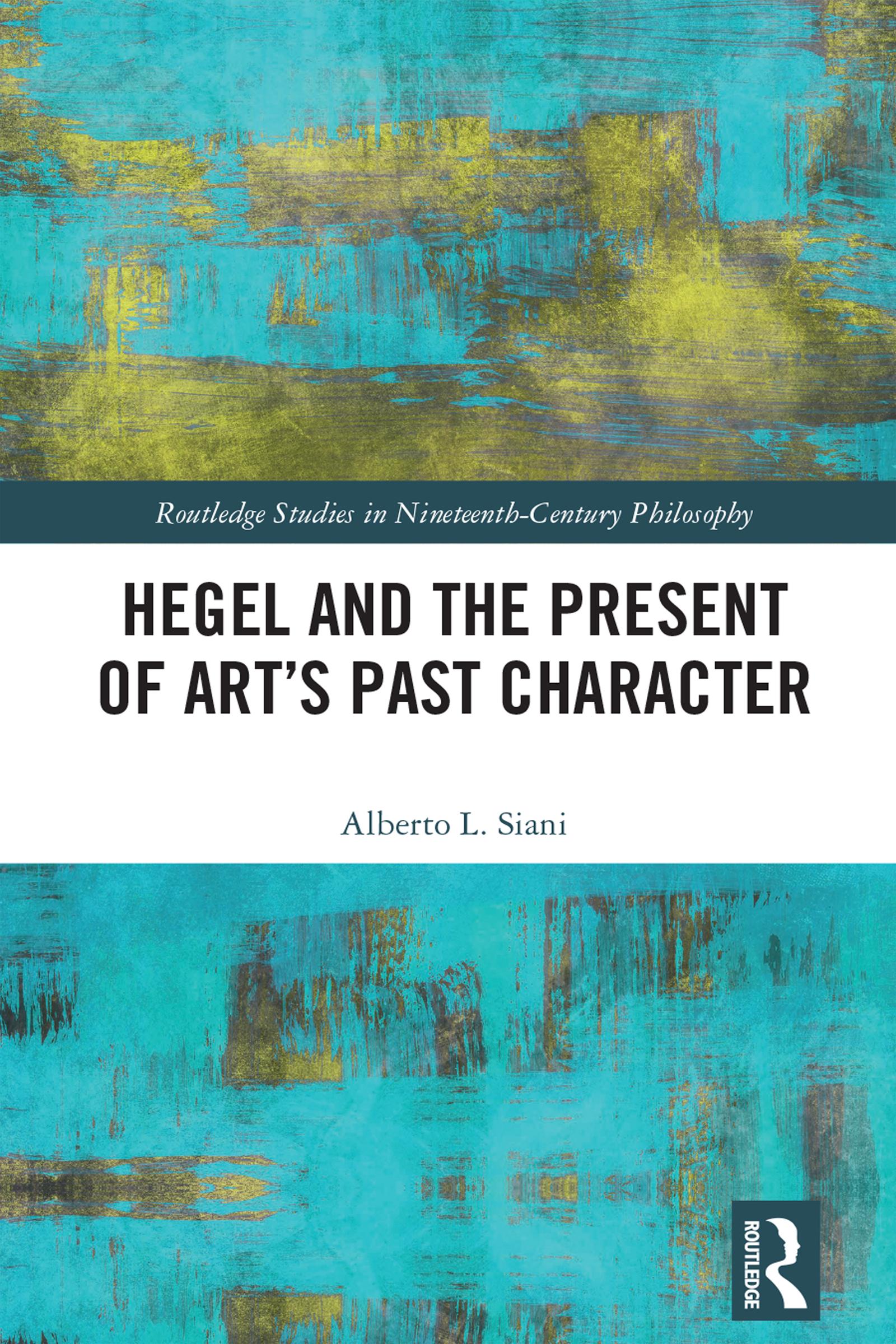
This book reclaims Hegel’s notion of the “end of art”—or, more precisely, of “art’s past character”—not just as a piece of the history of philosophy but as a living critical and interpretive methodology. It addresses the presence of the past character of art in both Hegel and contemporary philosophy and aesthetics.
The book’s innovative contribution lies in unifying the Hegelian thesis with discussions of contemporary art and philosophy. The author not only offers a Hegelian exegesis but also applies the idea of the past character of art to themes that are related to both Hegel’s philosophy, such as the French Revolution and the modern state, Kantian aesthetics, and religion and the sacred space disclosed for art, and going beyond Hegel, such as Celan's poetry, Gramsci's criticism of Croce, human rights, and even the grunge rock band Pearl Jam. Conversely, such non-Hegelian explorations will help enlighten what may look like a specific thread of Hegel’s aesthetics, but can be used to shed light on some core motives of his philosophy. The author’s interpretation of art’s past character reclaims the full value, attractiveness, and philosophical soundness of Hegel’s thesis, while rejecting its interpretation in terms of a complete dissolution of the aesthetic element into the philosophical one.
Hegel and the Present of Art’s Past Character will be of interest to scholars and advanced students working on Hegel, philosophy of art and aesthetics, history of philosophy, political philosophy, and art theory.
Betal enkelt med kort, Klarna, Apple Pay eller Google Pay. Ikke fornøyd? Du har alltid 14 dagers angrerett. Les mer i våre vilkår. Har du spørsmål, send oss en e-post på hello@memmo.org.
Memmo gjør det enklere å studere – uansett hvor du er i verden. Hos oss samler du pensumbøker og smarte studieverktøy på ett og samme sted: sammendrag, quizer, podkaster og flashcards. Og så Ted, din studiekompis som svarer på alt du lurer på. Over 50 000 studenter studerer allerede her – bygget for at du skal lære raskere og stresse mindre.