
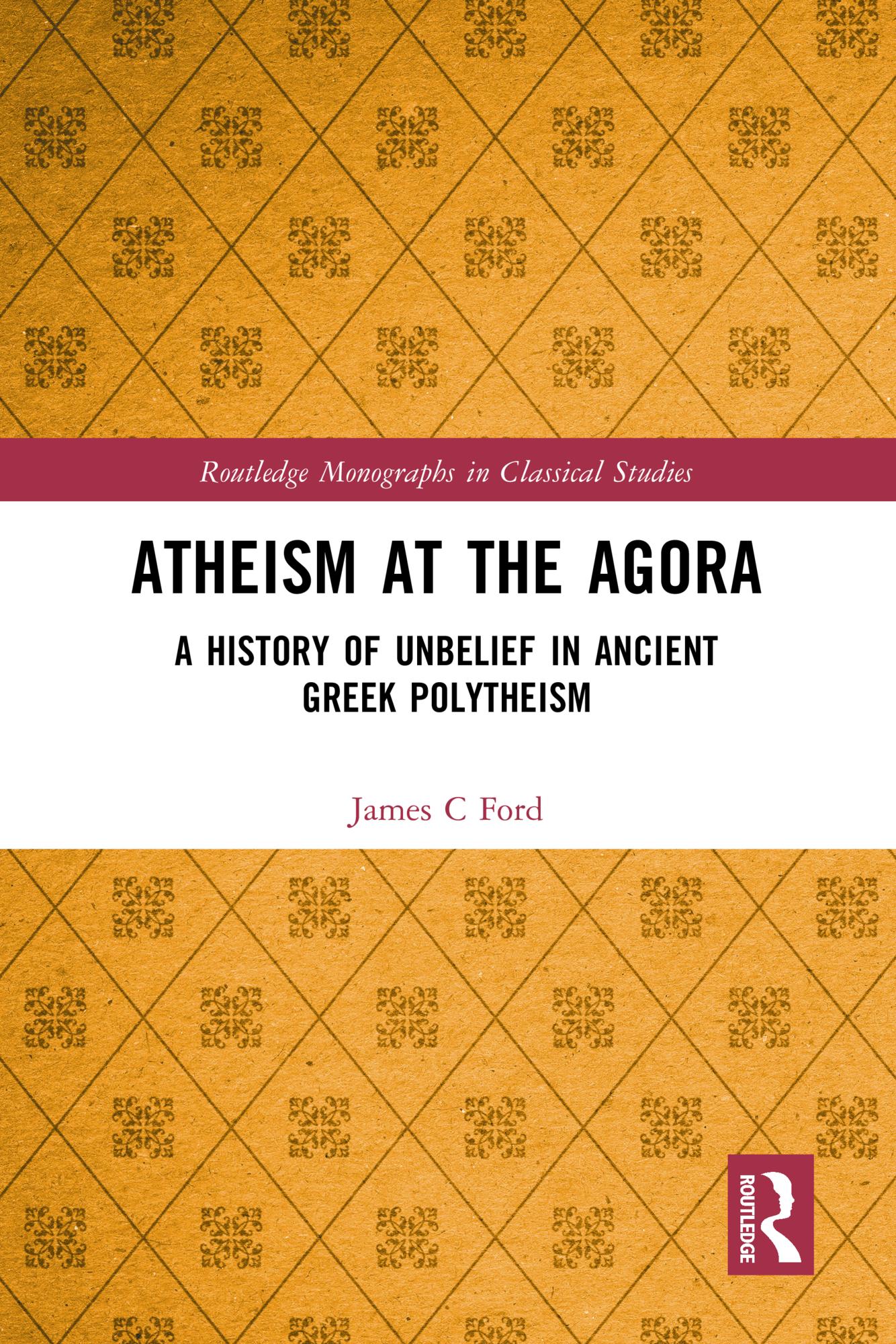
This fresh, comprehensive study of ancient Greek atheism aims to dismantle the current consensus that atheism was ‘unthinkable’ in ancient Greece, demonstrating instead that atheism was not only thinkable but inextricably embedded in the Greek religious environment.
Through careful analysis of a wide range of source material provided in modern English translation, and drawing on philosophy, theology, sociology, and other disciplines, Ford unpicks a two and a half thousand-year history of marginalisation, clearing the way for a new analysis. He lays out in clear terms the nature and form of ancient Greek atheism as the ancient Greeks conceived of it, through a series of themes and lenses. Topics such as religious socialisation, the interaction of atheist philosophy and theology, identity formation through alterity, and the use of atheism in scapegoating are considered not only in broad terms, using a synthesis of modern scholarship to mark out an overview in line with modern consensus, but also by drawing on the unique perspective of ancient atheism Ford is able to provide innovative theories about a range of subjects.
Atheism at the Agora is of interest to students and scholars in Classics, particularly Greek religion and culture, as well as those studying atheism in other historical and contemporary areas, religious studies, philosophy, and theology.
Betal enkelt med kort, Klarna, Apple Pay eller Google Pay. Ikke fornøyd? Du har alltid 14 dagers angrerett. Les mer i våre vilkår. Har du spørsmål, send oss en e-post på hello@memmo.org.
Memmo gjør det enklere å studere – uansett hvor du er i verden. Hos oss samler du pensumbøker og smarte studieverktøy på ett og samme sted: sammendrag, quizer, podkaster og flashcards. Og så Ted, din studiekompis som svarer på alt du lurer på. Over 50 000 studenter studerer allerede her – bygget for at du skal lære raskere og stresse mindre.