
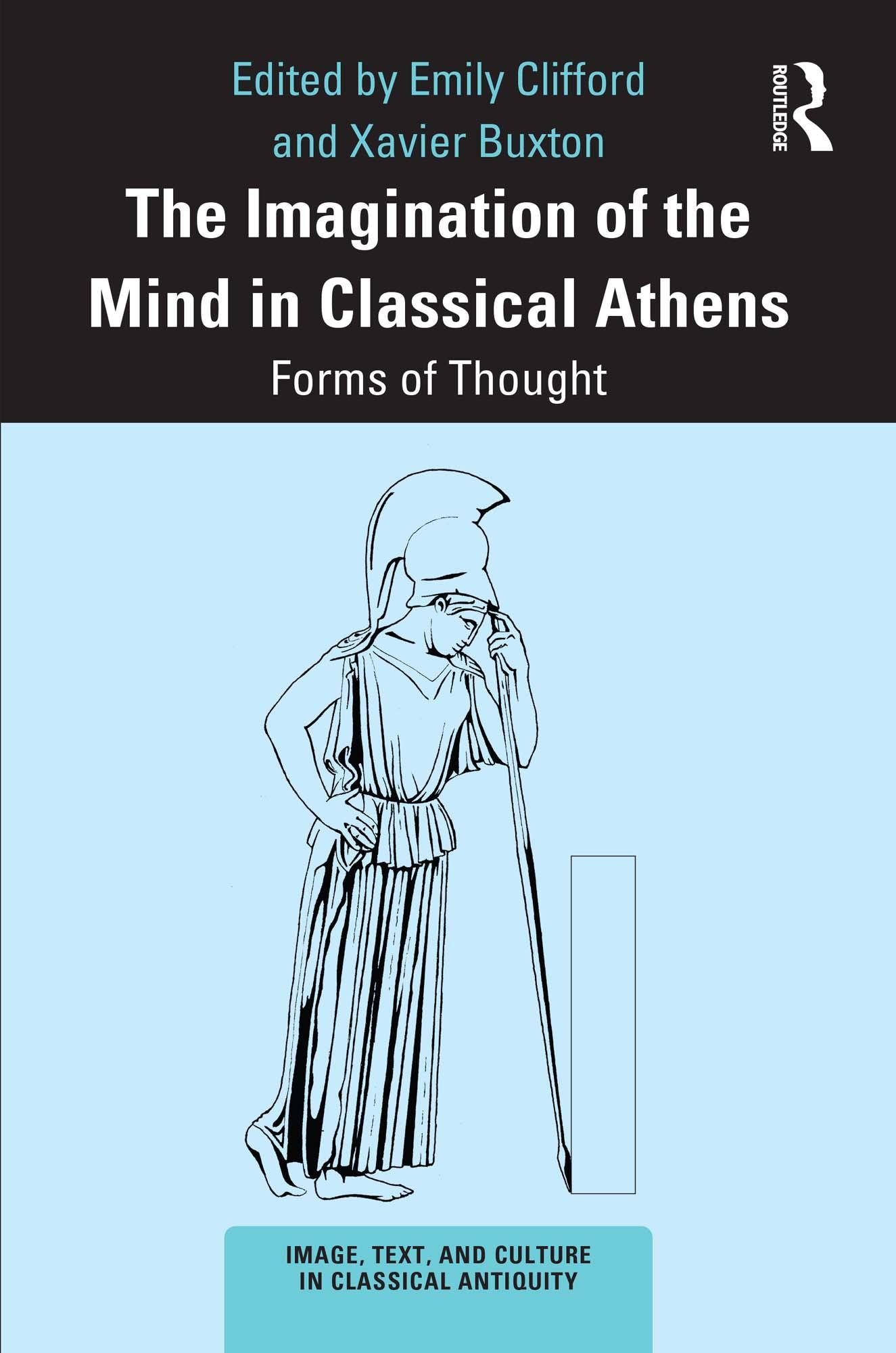
This book explores the imaginative processes at work in the artefacts of Classical Athens. When ancient Athenians strove to grasp ‘justice’ or ‘war’ or ‘death’, when they dreamt or deliberated, how did they do it? Did they think about what they were doing? Did they imagine an imagining mind?
European histories of the imagination have often begun with thinkers like Plato and Aristotle. By contrast, this volume is premised upon the idea that imaginative activity, and especially efforts to articulate it, can take place in the absence of technical terminology. In exploring an ancient culture of imagination mediated by art and literature, the book scopes out the roots of later, more explicit, theoretical enquiry. Chapters hone in on a range of visual and verbal artefacts from the Classical period. Approaching the topic from different angles – philosophical, historical, philological, literary, and art historical – they also investigate how these artefacts stimulate affective, sensory, meditative – in short, ‘imaginative’ – encounters between imagining bodies and their world.
The Imagination of the Mind in Classical Athens offers a ground-breaking reassessment of ‘imagination’ in ancient Greek culture and thought: it will be essential reading for those interested in not only philosophies of mind, but also ancient Greek image, text, and culture more broadly.
Betal enkelt med kort, Klarna, Apple Pay eller Google Pay. Ikke fornøyd? Du har alltid 14 dagers angrerett. Les mer i våre vilkår. Har du spørsmål, send oss en e-post på hello@memmo.org.
Memmo gjør det enklere å studere – uansett hvor du er i verden. Hos oss samler du pensumbøker og smarte studieverktøy på ett og samme sted: sammendrag, quizer, podkaster og flashcards. Og så Ted, din studiekompis som svarer på alt du lurer på. Over 50 000 studenter studerer allerede her – bygget for at du skal lære raskere og stresse mindre.