
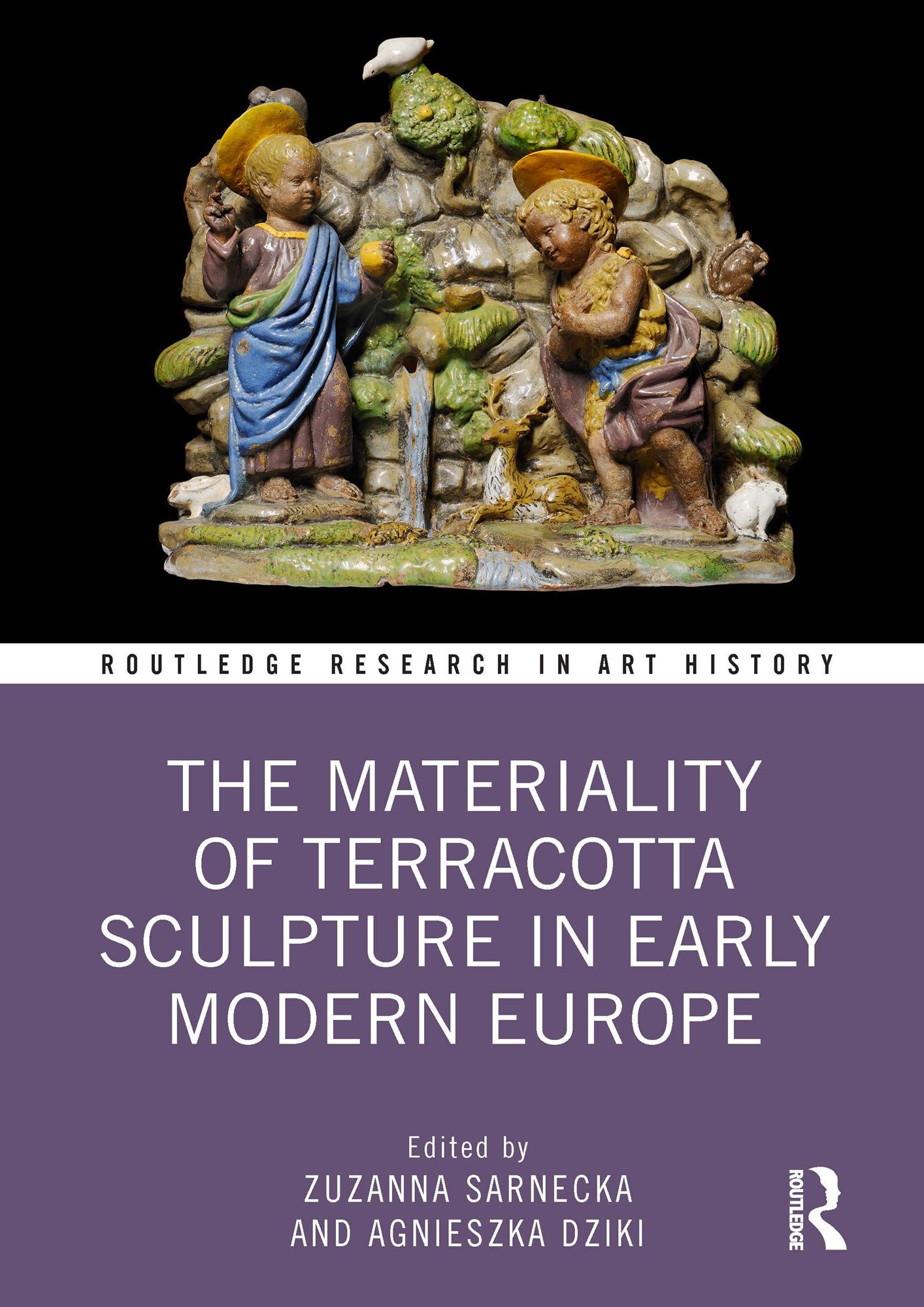
Through meticulously researched case studies, this book explores the materiality of terracotta sculpture in early modern Europe.
Chapters present a broad geographical perspective showcasing examples of modelling, firing, painting, and gilding of clay in Portugal, Spain, Italy, Germany, and the Netherlands. The volume considers known artworks by celebrated artists, such as Luca della Robbia, Andrea del Verrocchio, Filipe Hodart, or Hans Reichle, in parallel with several lesser-studied terracotta sculptures and tin-glazed earthenware made by anonymous artisans. This book challenges arbitrary distinctions into the fine art and the applied arts, that obscured the image of artistic production in the early modern world. The centrality of clay in the creative processes of artists working with two- and three-dimensional artefacts comes to the fore. The role of terracotta figures in religious practices, as well as processes of material substitutions or mimesis, confirm the medium’s significance for European visual and material culture in general.
This book will be of interest to scholars working in art history, Renaissance studies, and material culture.
Betal enkelt med kort, Klarna, Apple Pay eller Google Pay. Ikke fornøyd? Du har alltid 14 dagers angrerett. Les mer i våre vilkår. Har du spørsmål, send oss en e-post på hello@memmo.org.
Memmo gjør det enklere å studere – uansett hvor du er i verden. Hos oss samler du pensumbøker og smarte studieverktøy på ett og samme sted: sammendrag, quizer, podkaster og flashcards. Og så Ted, din studiekompis som svarer på alt du lurer på. Over 50 000 studenter studerer allerede her – bygget for at du skal lære raskere og stresse mindre.