
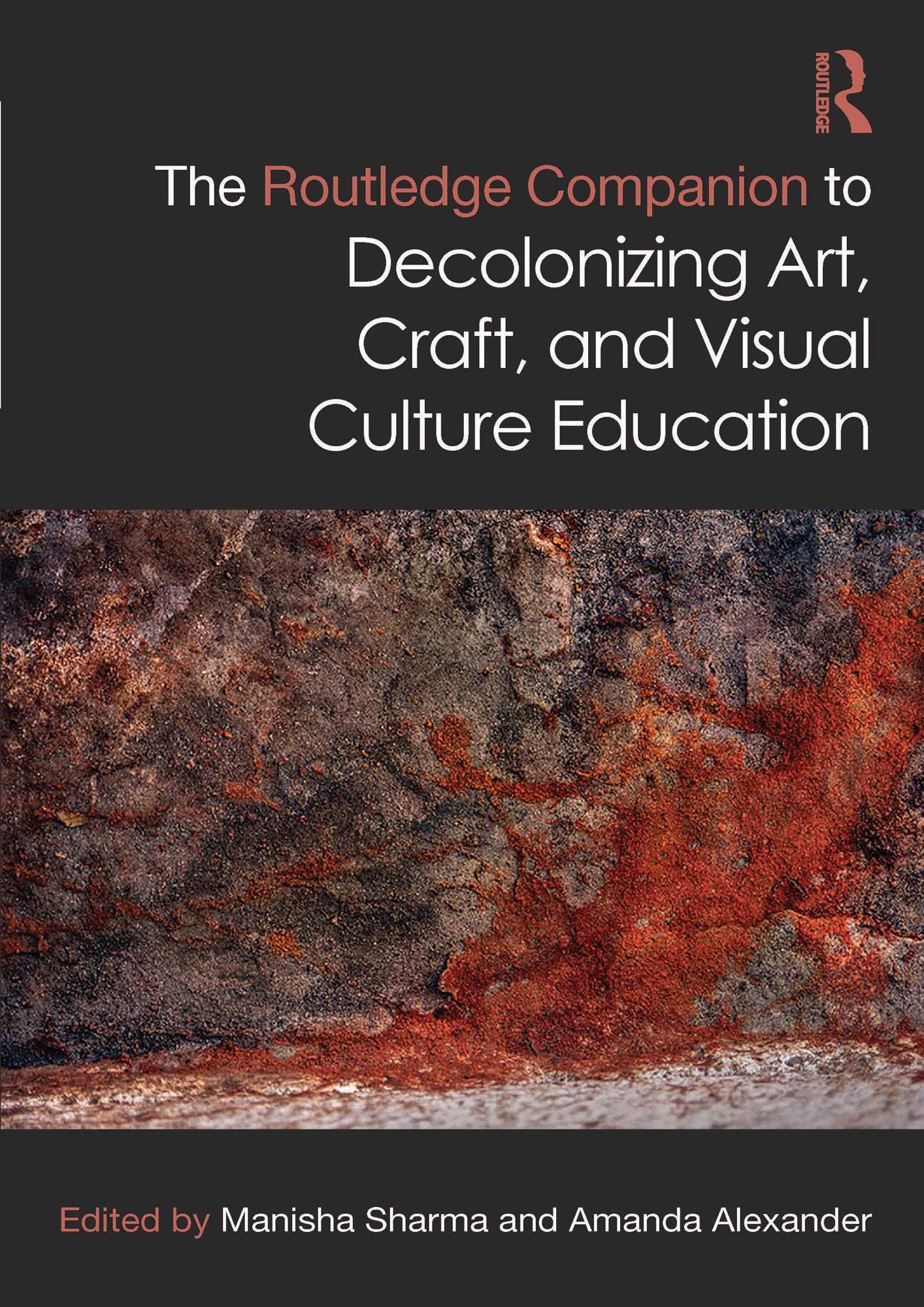
This companion demonstrates how art, craft, and visual culture education activate social imagination and action that is equity- and justice-driven. Specifically, this book provides arts-engaged, intersectional understandings of decolonization in the contemporary art world that cross disciplinary lines.
Visual and traditional essays in this book combine current scholarship with pragmatic strategies and insights grounded in the reality of socio-cultural, political, and economic communities across the globe. Across three sections (creative shorts, enacted encounters, and ruminative research), a diverse group of authors address themes of histories, space and land, mind and body, and the digital realm. Chapters highlight and illustrate how artists, educators, and researchers grapple with decolonial methods, theories, and strategies—in research, artmaking, and pedagogical practice. Each chapter includes discursive questions and resources for further engagement with the topics at hand.
The book is targeted towards scholars and practitioners of art education, studio art, and art history, K-12 art teachers, as well as artist educators and teaching artists in museums and communities.
Betal enkelt med kort, Klarna, Apple Pay eller Google Pay. Ikke fornøyd? Du har alltid 14 dagers angrerett. Les mer i våre vilkår. Har du spørsmål, send oss en e-post på hello@memmo.org.
Memmo gjør det enklere å studere – uansett hvor du er i verden. Hos oss samler du pensumbøker og smarte studieverktøy på ett og samme sted: sammendrag, quizer, podkaster og flashcards. Og så Ted, din studiekompis som svarer på alt du lurer på. Over 50 000 studenter studerer allerede her – bygget for at du skal lære raskere og stresse mindre.