
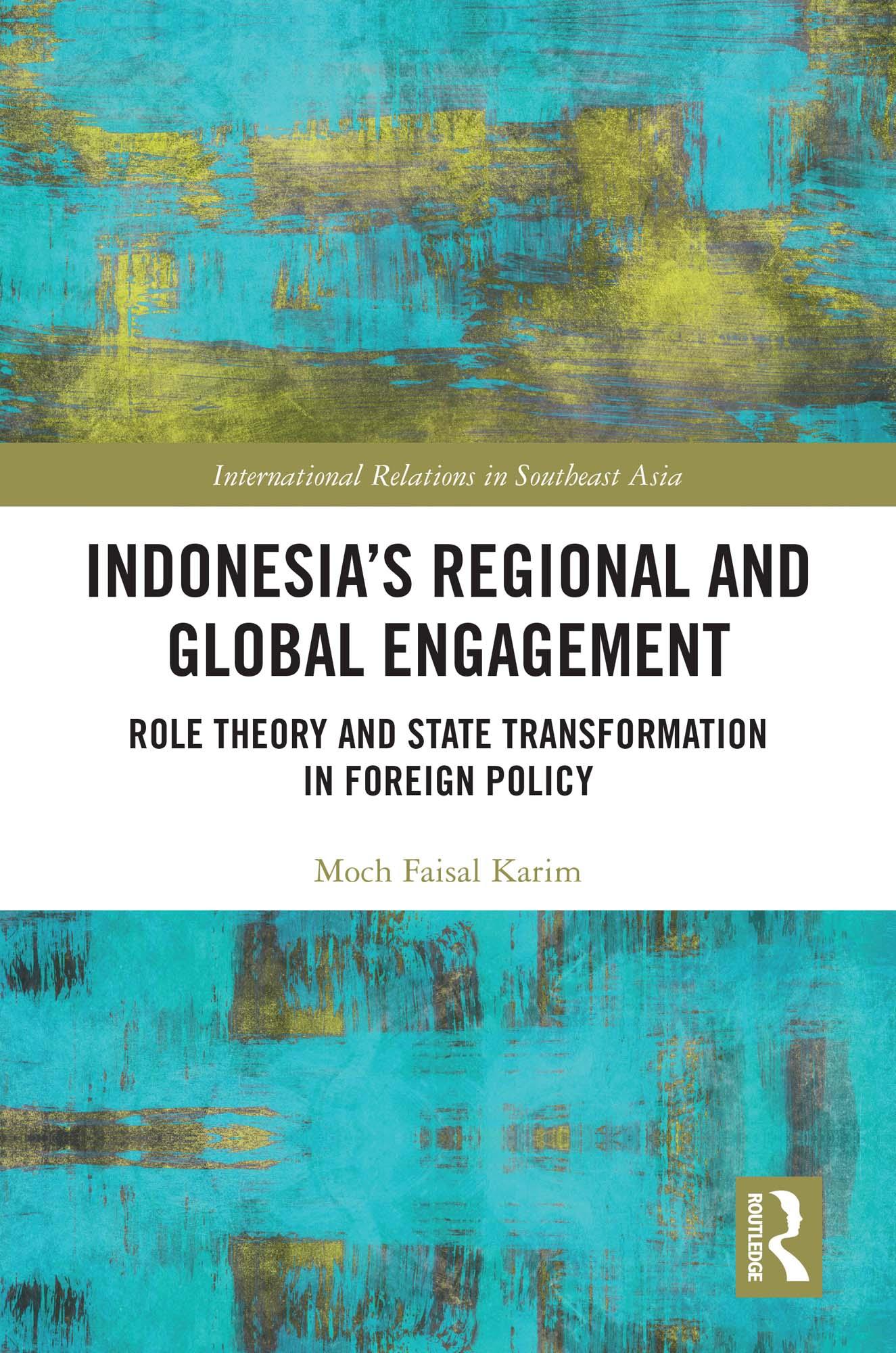
Karim examines the changes and continuity of Indonesia’s foreign policy in the post-authoritarian era, under presidents Susilo Bambang Yudhoyono and Joko Widodo.
Indonesia conceptualised and aimed to adopt four principle roles after 2004 – being a voice for developing countries; being a regional leader; being an advocate for democratic and human rights; and being a bridge-builder. These roles, however, were by no means stable and were constantly being negotiated and contested. Karim analyses the contested nature of Indonesian foreign policy and the limits this places on consistency in enacting these roles. He highlights two drivers for such limitations – conflicting role conceptions and state fragmentation. He develops this argument based on four case studies of Indonesia’s engagement in human rights governance and trade governance at both regional and global levels.
Essential reading for students and scholars of Indonesia’s foreign policy, that will also be of substantial value to those studying policy in Southeast Asia more broadly.
Betal enkelt med kort, Klarna, Apple Pay eller Google Pay. Ikke fornøyd? Du har alltid 14 dagers angrerett. Les mer i våre vilkår. Har du spørsmål, send oss en e-post på hello@memmo.org.
Memmo gjør det enklere å studere – uansett hvor du er i verden. Hos oss samler du pensumbøker og smarte studieverktøy på ett og samme sted: sammendrag, quizer, podkaster og flashcards. Og så Ted, din studiekompis som svarer på alt du lurer på. Over 50 000 studenter studerer allerede her – bygget for at du skal lære raskere og stresse mindre.