
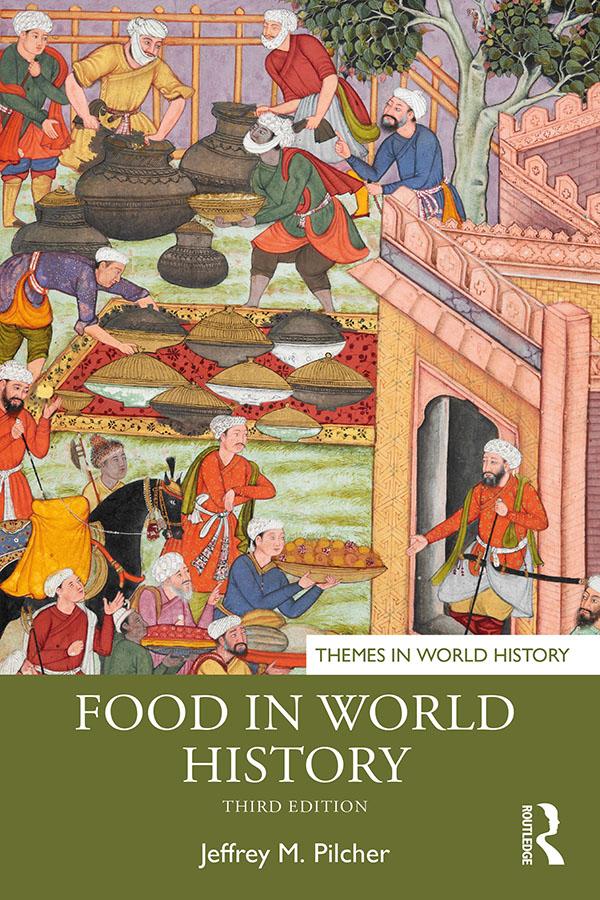
Now in its third edition, Food in World History explores culinary cultures and food politics throughout the world, from ancient times to the present day, with expanded discussions of industrialization, indigeneity, colonialism, gender, environment, and food and power.
It examines the long history of globalization of foods as well as the political, social, and environmental implications of our changing relationship with food, showing how hunger and taste have been driving forces in human history. Including numerous case studies from diverse societies and periods, such as Maya and Inca cuisines and peasant agriculture in the early modern era, Food in World History explores such questions as:
- What social factors have historically influenced culinary globalization?
- How did early modern plantations establish patterns for modern industrial food production?
- How will the climate crisis affect food production and culinary cultures?
- Did Italian and Chinese migrant cooks sacrifice authenticity to gain social acceptance in the Americas?
- Have genetically modified foods fulfilled the promises made by proponents?
With the inclusion of more global examples, this comprehensive survey is an ideal resource for all students who study food history or food studies.
Betal enkelt med kort, Klarna, Apple Pay eller Google Pay. Ikke fornøyd? Du har alltid 14 dagers angrerett. Les mer i våre vilkår. Har du spørsmål, send oss en e-post på hello@memmo.org.
Memmo gjør det enklere å studere – uansett hvor du er i verden. Hos oss samler du pensumbøker og smarte studieverktøy på ett og samme sted: sammendrag, quizer, podkaster og flashcards. Og så Ted, din studiekompis som svarer på alt du lurer på. Over 50 000 studenter studerer allerede her – bygget for at du skal lære raskere og stresse mindre.