
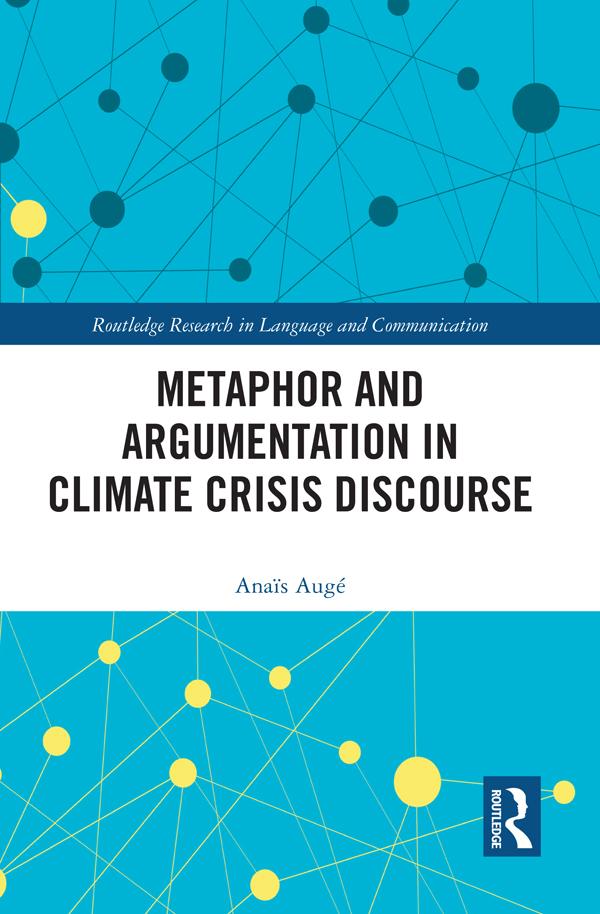
This volume sheds light on the argumentative role of metaphor in climate change discourse, unpacking the ways in which stakeholders use specific metaphors to influence perceptions of the climate crisis.
While existing research has explored the explanatory function of metaphors in communication on climate change, this book offers an alternative view, one which posits that metaphors can go beyond disseminating scientific observations to promoting biases in the depiction of these observations. Augé analyses oft-used ideas in climate change communication, such as greenwashing, drawn from a wide-ranging corpus spanning media discourse, scientific discourse, NGO communications, political speech, and social media messages in English. The book presents an overview of different arguments conveyed through metaphors around five key themes—climate change mitigation; the evolution of climate change; global and local effects; the significance of climate change in specific countries; and the relationship between climate change and other contemporary social issues. The volume highlights how the complexity of climate change often necessitates the use of metaphor and the value of further research on the argumentative function of metaphor in elucidating its ideological dimensions in climate crisis discourse.
This book will be of interest to scholars in discourse analysis, corpus linguistics, cognitive linguistics, and environmental communication.
Betal enkelt med kort, Klarna, Apple Pay eller Google Pay. Ikke fornøyd? Du har alltid 14 dagers angrerett. Les mer i våre vilkår. Har du spørsmål, send oss en e-post på hello@memmo.org.
Memmo gjør det enklere å studere – uansett hvor du er i verden. Hos oss samler du pensumbøker og smarte studieverktøy på ett og samme sted: sammendrag, quizer, podkaster og flashcards. Og så Ted, din studiekompis som svarer på alt du lurer på. Over 50 000 studenter studerer allerede her – bygget for at du skal lære raskere og stresse mindre.