
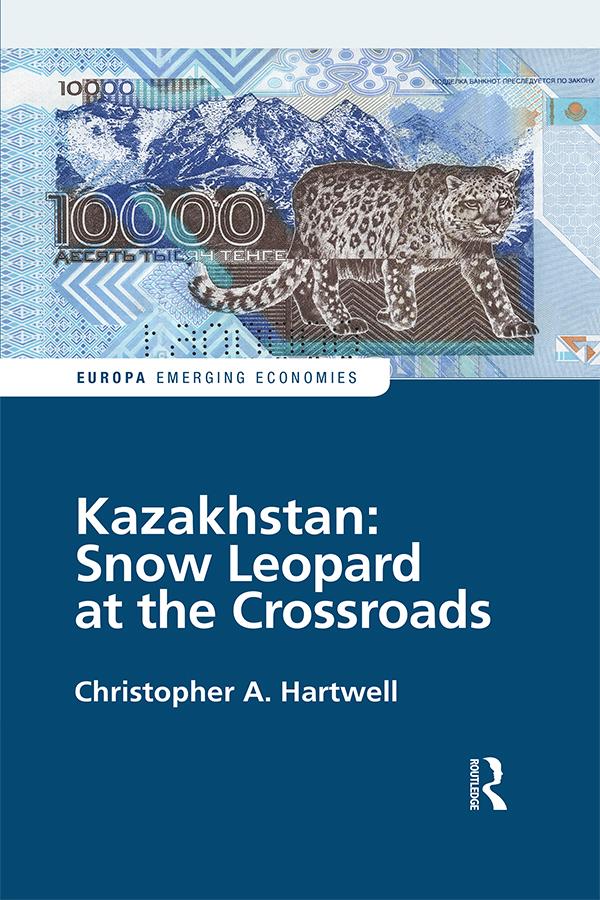
This volume examines the experience of Kazakhstan’s transition over the past 30 years, explaining the political and economic performance of the country since the collapse of the USSR, through the country’s institutions, policy choices, and external environment.
In an exploration of more than 1,000 years of institutional development, the chapters analyse and assess the development of political arrangements and governance, and economic institutions, from pre-Russian colonization through to the Soviet experiment, and then take a magnifying glass to developments in a post-Soviet, independent Kazakhstan. Using a broad range of sources and data across disciplines, this book is the first to explicitly survey Kazakhstan’s transition as a function of its history, its people, and its institutions. Breaking new ground in institutional economics, it provides readers with a comprehensive examination of the history and development of Kazakhstan, and points to where it may be heading in the 21st century.
The subject matter is accessible to a broad academic audience: to scholars in political science, economics, and the history of Central Asia and Russia, as well as to those with an interest in general transition economics.
Betal enkelt med kort, Klarna, Apple Pay eller Google Pay. Ikke fornøyd? Du har alltid 14 dagers angrerett. Les mer i våre vilkår. Har du spørsmål, send oss en e-post på hello@memmo.org.
Memmo gjør det enklere å studere – uansett hvor du er i verden. Hos oss samler du pensumbøker og smarte studieverktøy på ett og samme sted: sammendrag, quizer, podkaster og flashcards. Og så Ted, din studiekompis som svarer på alt du lurer på. Over 50 000 studenter studerer allerede her – bygget for at du skal lære raskere og stresse mindre.