
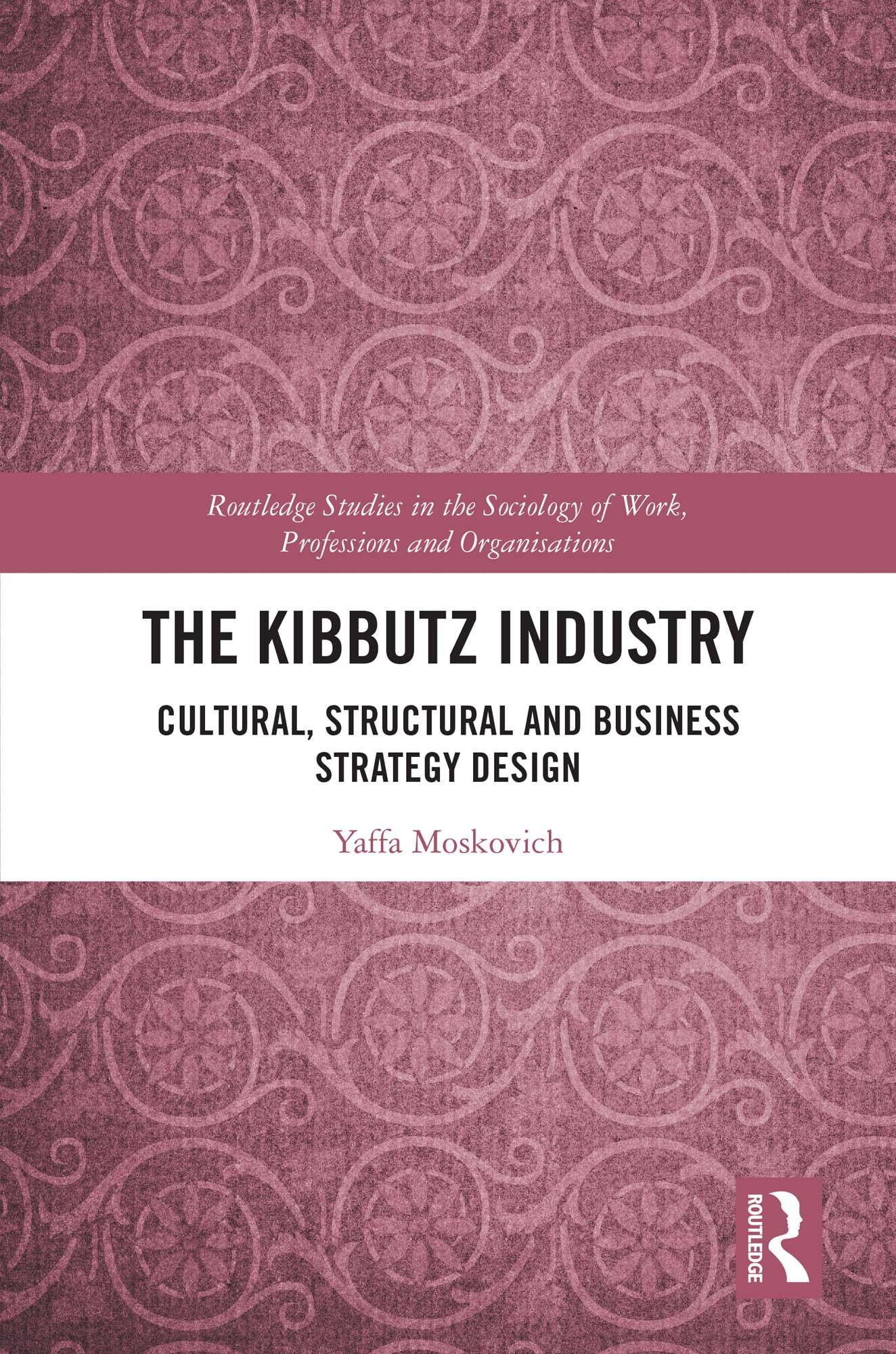
This book examines the changes in many kibbutz factories which have recently transformed from socialist entities, with egalitarian and cooperative relationships, to hierarchical and market-driven structures.
Focusing on five case studies from an ethnographic perspective, the book explores the reasons for this organizational change and examines its ideological, social, and economic causes. Ranging from organizational culture as a tool for economic success to the cooperative clan lifestyle and its organizational experience for improving human life and economic production, the author uncovers and investigates various hidden layers of the organizational culture in the kibbutz, revealing that cultural change in the factories was intended as a way of coping with a changing competitive environment. Adding new typologies for familial business types, demonstrating how hybrid organizational structures have promoted economic success, and examining the lesser-studied communal perspective, it shows how social development can be used to provide a deeper analysis of the kibbutz industry as a microcosm of the changes in communal lifestyle that have recently shifted toward materialism and capitalism. As such, The Kibbutz Industry will appeal to scholars and students with interests in the sociology of organization, business studies, human resource management, and organizational behavior.
Betal enkelt med kort, Klarna, Apple Pay eller Google Pay. Ikke fornøyd? Du har alltid 14 dagers angrerett. Les mer i våre vilkår. Har du spørsmål, send oss en e-post på hello@memmo.org.
Memmo gjør det enklere å studere – uansett hvor du er i verden. Hos oss samler du pensumbøker og smarte studieverktøy på ett og samme sted: sammendrag, quizer, podkaster og flashcards. Og så Ted, din studiekompis som svarer på alt du lurer på. Over 50 000 studenter studerer allerede her – bygget for at du skal lære raskere og stresse mindre.