
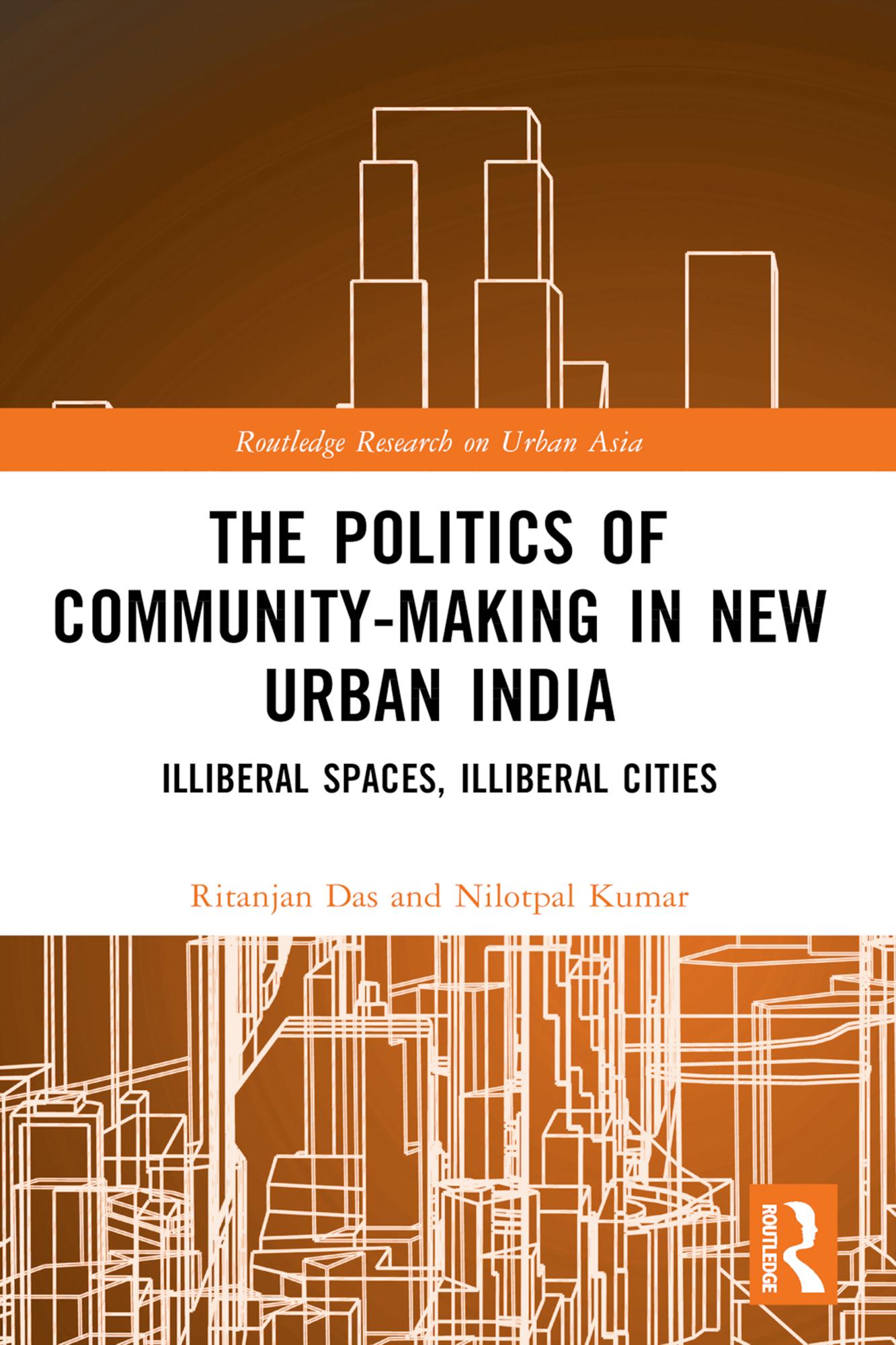
This book explores the relationship between the production of new urban spaces and illiberal community-making in contemporary India. It is based on an ethnographic study in Noida, a city at the eastern fringe of the state of Uttar Pradesh, bordering national capital Delhi.
The book demonstrates a flexible planning approach being central to the entrepreneurial turn in India’s post-liberalisation urbanisation, whereby a small-scale industrial township is transformed into a real-estate driven modern city. Its real point of departure, however, is in the argument that this turn can enable a form of illiberal community-making in new cities that are quite different from older metropolises. Exclusivist forms of solidarity and symbolic boundary construction - stemming from the differences across communities as well as their internal heterogeneities - form the crux of this process, which is examined in three distinct but often interspersed socio-spatial forms: planned middle-class residential quarters, ‘urban villages’ and migrant squatter colonies.
The book combines radical geographical conceptualisations of social production of space and neoliberal urbanism with sociological and anthropological approaches to urban community-making. It will be of interest to researchers in development studies, sociology, urban studies, as well as readers interested in society and politics of contemporary India/South Asia.
Betal enkelt med kort, Klarna, Apple Pay eller Google Pay. Ikke fornøyd? Du har alltid 14 dagers angrerett. Les mer i våre vilkår. Har du spørsmål, send oss en e-post på hello@memmo.org.
Memmo gjør det enklere å studere – uansett hvor du er i verden. Hos oss samler du pensumbøker og smarte studieverktøy på ett og samme sted: sammendrag, quizer, podkaster og flashcards. Og så Ted, din studiekompis som svarer på alt du lurer på. Over 50 000 studenter studerer allerede her – bygget for at du skal lære raskere og stresse mindre.