
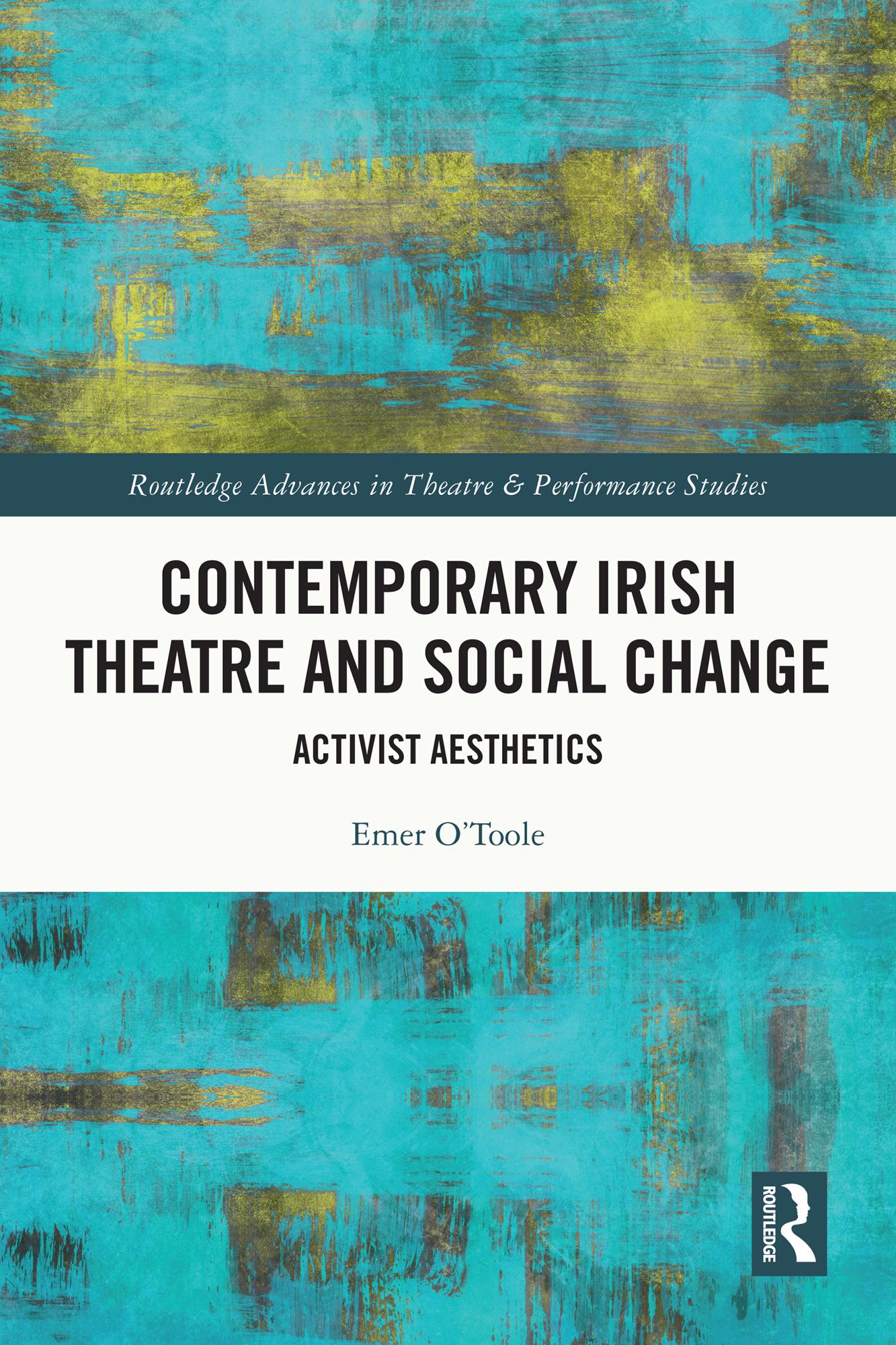
This book uses the social transformation that has taken place in Ireland from the decriminalisation of homosexuality in 1993 to the repeal of the 8th amendment in 2018 as backdrop to examine relationships between activism and contemporary Irish theatre and performance.
It studies art explicitly intended to create social and political change for marginalised constituencies. It asks what happens to theatre aesthetics when artists’ aims are political and argues that activist commitments can create new modes of beauty, meaning, and affect. Categories of race, class, sexuality, and gender frame chapters, provide social context, and identify activist artists’ social targets. This book provides in depth analysis of: Arambe – Ireland’s first African theatre company; THEATREclub – an experimental collective with issues of class at its heart; The International Dublin Gay Theatre Festival; and feminist artists working to Repeal the 8th amendment. It highlights the aesthetic strategies that emerge when artists set their sights on justice. Aesthetic debates, both historical and contemporary, are laid out from first principles, inviting readers to situate themselves – whether as artists, activists, or scholars – in the delicious tension between art and life.
This book will be a vital guide to students and scholars interested in theatre and performance studies, gender studies, Irish history, and activism.
Betal enkelt med kort, Klarna, Apple Pay eller Google Pay. Ikke fornøyd? Du har alltid 14 dagers angrerett. Les mer i våre vilkår. Har du spørsmål, send oss en e-post på hello@memmo.org.
Memmo gjør det enklere å studere – uansett hvor du er i verden. Hos oss samler du pensumbøker og smarte studieverktøy på ett og samme sted: sammendrag, quizer, podkaster og flashcards. Og så Ted, din studiekompis som svarer på alt du lurer på. Over 50 000 studenter studerer allerede her – bygget for at du skal lære raskere og stresse mindre.