
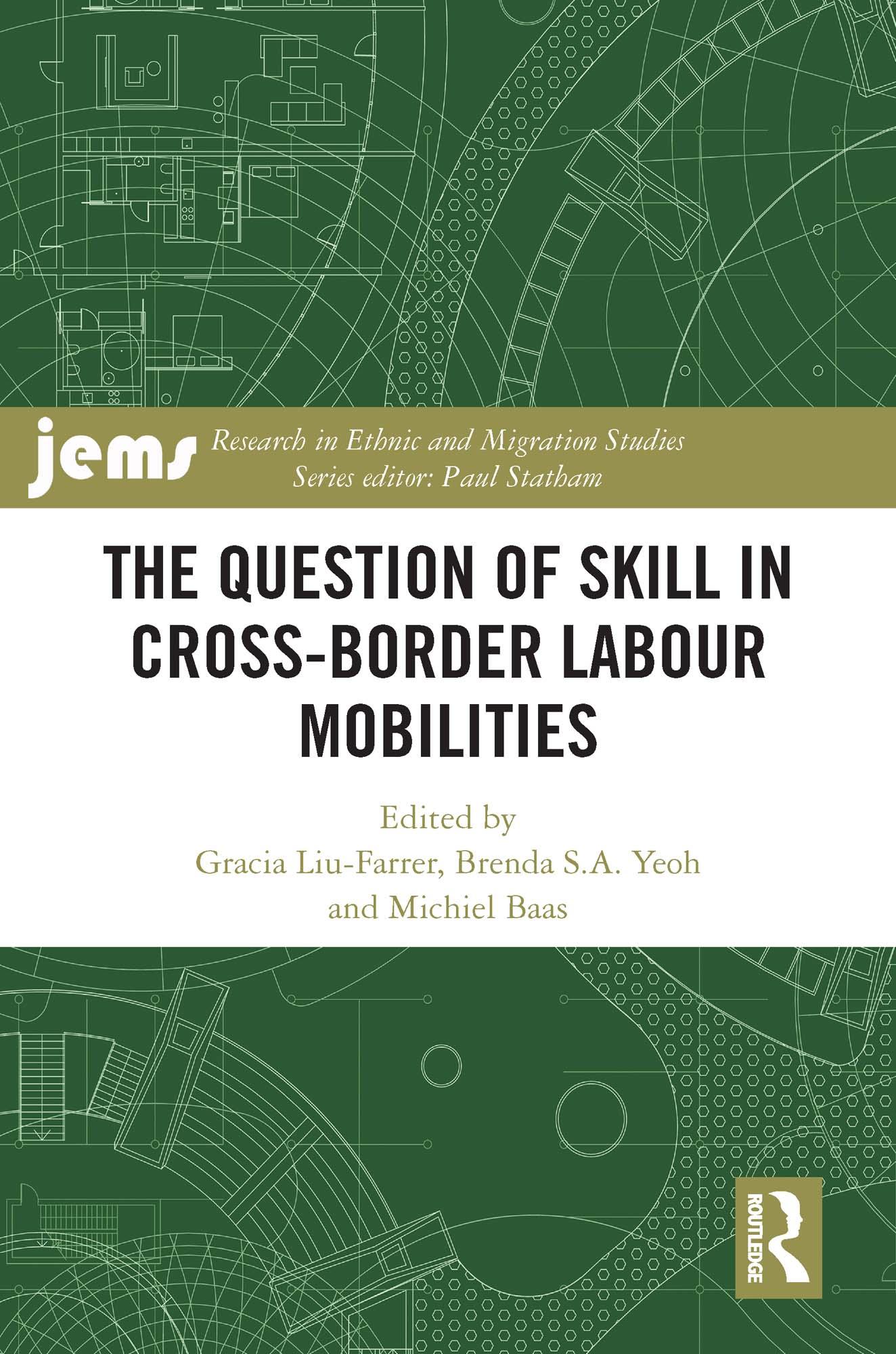
Selecting migrants based on skill has become a widely practised migration policy in many countries around the world. Since the late 20th century, research on 'skilled' and 'highly skilled' migration has raised important questions about the value and ethics of skill-based labour mobility. More recent research has begun to question the concept of skill and skill categorisation in both government policy and academic research. Taking the view that 'skills' are socially constructed categories and highly malleable concepts in practice, this edited volume centres the discussion on the following questions: Who are the arbitrators of skill? What constitutes skill? And how is skill constructed in the migration process and in turn, how does skill affect the mobility? The empirical studies in this volume show that diverse actors are involved in the process of identifying, evaluating and shaping migrant skill. The interpretation of migrants' skill is frequently distorted by their ascriptive characteristics such as race, ethnicity, gender and nationality, reflecting the influence of colonial legacy, global inequality as well as social stratification. Finally, this edited volume emphasises the complex, and frequently reciprocal, relationship between skill and mobility. This book will be of interest to researchers and advanced students of Sociology, Human Geography, Politics, Social Anthropology, Economics, and Social Work. It was originally published as a special issue of the Journal of Ethnic and Migration Studies.
Betal enkelt med kort, Klarna, Apple Pay eller Google Pay. Ikke fornøyd? Du har alltid 14 dagers angrerett. Les mer i våre vilkår. Har du spørsmål, send oss en e-post på hello@memmo.org.
Memmo gjør det enklere å studere – uansett hvor du er i verden. Hos oss samler du pensumbøker og smarte studieverktøy på ett og samme sted: sammendrag, quizer, podkaster og flashcards. Og så Ted, din studiekompis som svarer på alt du lurer på. Over 50 000 studenter studerer allerede her – bygget for at du skal lære raskere og stresse mindre.