
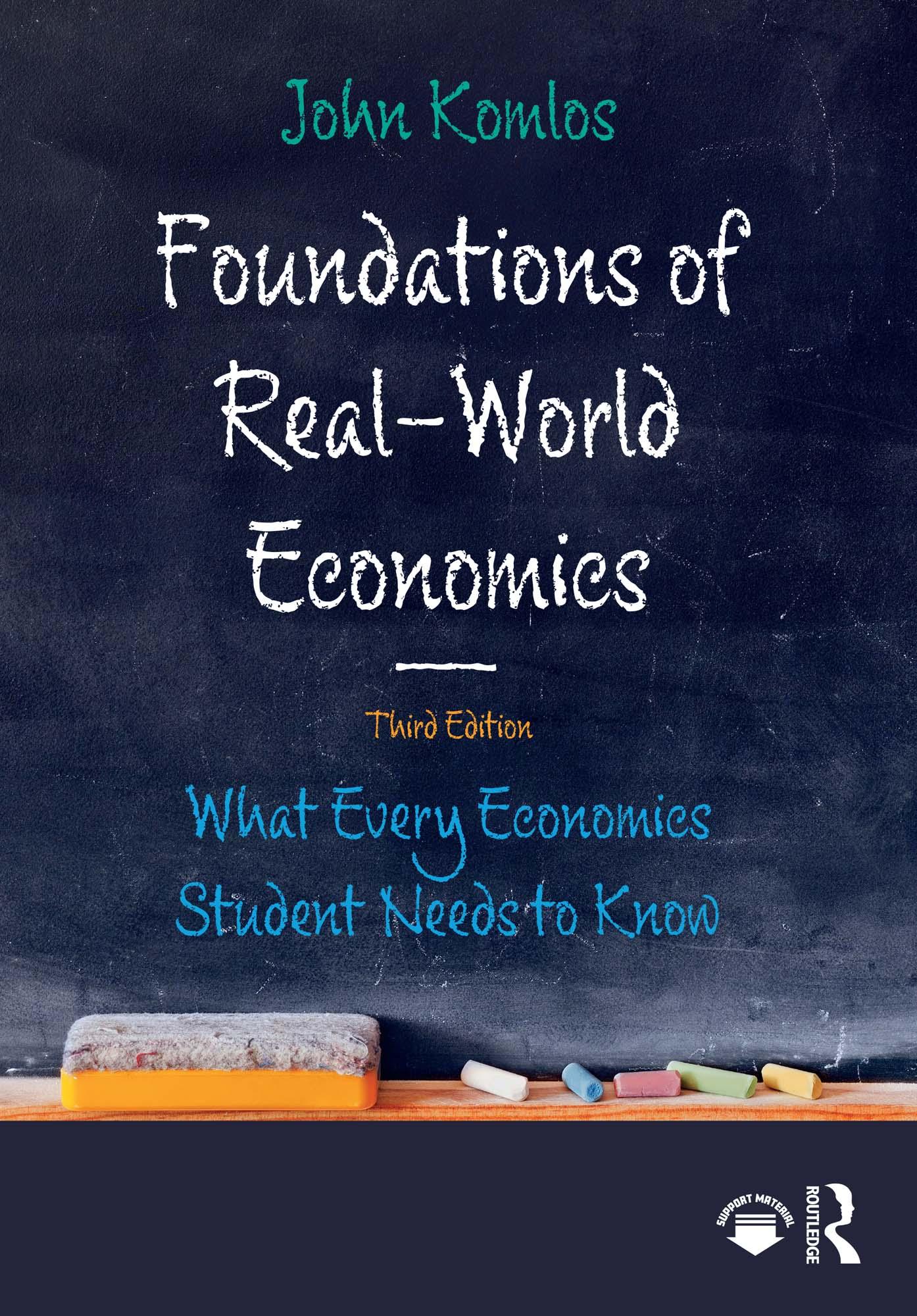
The 2008 financial crisis, the rise of Trumpism, and the other populist movements which have followed in their wake have grown out of the frustrations of those hurt by the economic policies advocated by conventional economists for generations. Despite this, textbooks remain frozen in time, continuing to uphold traditional policies as though nothing has happened.
Foundations of Real-World Economics demonstrates how misleading it can be to apply oversimplified models of perfect competition to the real world. The math works well on college blackboards but not so well on the Main Streets of America. This volume explores the realities of oligopolies, the real impact of the minimum wage, the double-edged sword of free trade, and other ways in which powerful institutions cause distortions in mainstream models. Bringing together the work of key scholars like Kahneman, Minsky, and Schumpeter, this textbook takes into consideration the inefficiencies that arise when the perfectly competitive model is applied to the real world dominated by multinational oligopolies. The third edition has been updated throughout, bringing in new material on the financial crises, the rise of populism, racism, inequality, climate change, and the Covid-19 pandemic.
A must-have for students studying the principles of economics as well as micro- and macroeconomics, this textbook redresses the existing imbalance in economic teaching as John Komlos focuses on the paradigm of humanistic economics.
Betal enkelt med kort, Klarna, Apple Pay eller Google Pay. Ikke fornøyd? Du har alltid 14 dagers angrerett. Les mer i våre vilkår. Har du spørsmål, send oss en e-post på hello@memmo.org.
Memmo gjør det enklere å studere – uansett hvor du er i verden. Hos oss samler du pensumbøker og smarte studieverktøy på ett og samme sted: sammendrag, quizer, podkaster og flashcards. Og så Ted, din studiekompis som svarer på alt du lurer på. Over 50 000 studenter studerer allerede her – bygget for at du skal lære raskere og stresse mindre.