
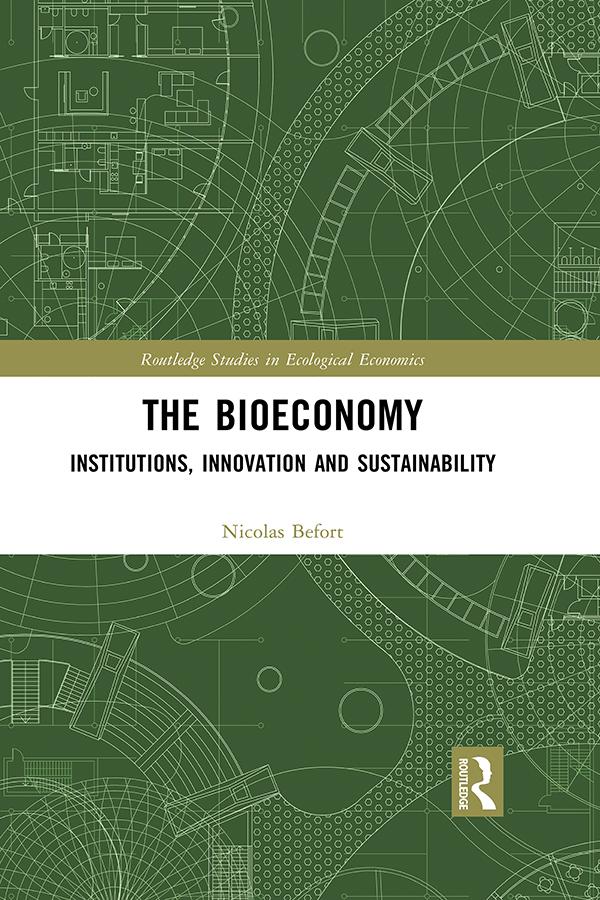
The bioeconomy is steadily becoming more important in regional, national and European public policies. As it encompasses the transformation of agricultural, marine and organic resources into food, feed, fuels, energy and materials, the bioeconomy should become a major new industry, outlining the possibility of a post-fossil future. This book is the first attempt to depict the origins, formation and challenges of this new industry in terms of emerging institutions, innovation and economic strategies. The result of this work is that the substitution of raw materials alone is not enough to get out of the fossil economy.
This book develops a political economy of the ecological transition which theorizes the transition as a new crisis of capitalism. This phase is characterized by stakeholders’ attempts to develop renewed rationales and strategies to take control of the reorganization of flows of natural resources, their outcomes and their evaluation. The proposed framework considers recent results in four complementary research strands: transition studies, institutional economics, ecological economics and the evolutionary economics of innovation.
The book will be of interest to researchers interested in the development of the bioeconomy, and both researchers and students seeking to understand the role of heterodox economics in the ecological transition.
Betal enkelt med kort, Klarna, Apple Pay eller Google Pay. Ikke fornøyd? Du har alltid 14 dagers angrerett. Les mer i våre vilkår. Har du spørsmål, send oss en e-post på hello@memmo.org.
Memmo gjør det enklere å studere – uansett hvor du er i verden. Hos oss samler du pensumbøker og smarte studieverktøy på ett og samme sted: sammendrag, quizer, podkaster og flashcards. Og så Ted, din studiekompis som svarer på alt du lurer på. Over 50 000 studenter studerer allerede her – bygget for at du skal lære raskere og stresse mindre.