
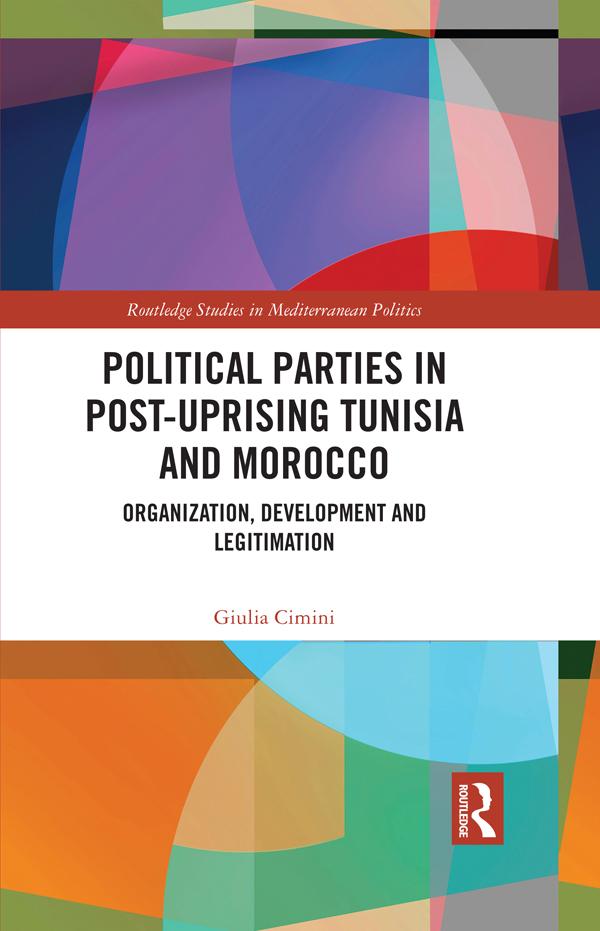
This book offers a comparative, theory-grounded study of Maghrebi political parties since the Arab uprisings, specifically focused on Tunisia and Morocco in the first decade after the 2011 watershed elections.
Based on primary sources, including in-depth interviews and updated party statutes and bylaws, the author introduces four case studies of key Islamist and anti-Islamist parties, exploring their organisational standing, internal working, and legitimating assets. By dwelling into a topic long neglected, the author provides insight into the "hybrid" nature of political parties in the Maghreb, oscillating between juxtaposed traditional and modern discourses and ambivalent sources of political authority. As such, it is hybridisation that shapes parties’ organisational choices and development and accounts for differences within parties. In the wake of political liberalisation, the author argues that political parties have become increasingly distant from society, distrusted by a large part of the citizenry. Ultimately, the Tunisian and Moroccan cases invite reflection on similar phenomena taking place within the Middle East and North Africa region, and even outside of it.
Bridging disparate disciplines, including comparative politics, area studies, and contemporary Middle Eastern history, the book will be of interest to a broad range of graduate-level students and academics.
Betal enkelt med kort, Klarna, Apple Pay eller Google Pay. Ikke fornøyd? Du har alltid 14 dagers angrerett. Les mer i våre vilkår. Har du spørsmål, send oss en e-post på hello@memmo.org.
Memmo gjør det enklere å studere – uansett hvor du er i verden. Hos oss samler du pensumbøker og smarte studieverktøy på ett og samme sted: sammendrag, quizer, podkaster og flashcards. Og så Ted, din studiekompis som svarer på alt du lurer på. Over 50 000 studenter studerer allerede her – bygget for at du skal lære raskere og stresse mindre.